Professional Vinyl Siding Replacement | Southern Maine Siding

Vinyl siding replacement starts behind the panels: we strip the old siding, replace any soft sheathing, and wrap and flash every window and door before the first new course goes up. For most southern Maine houses vinyl is the sensible siding on price, provided each panel is nailed loose enough to move.

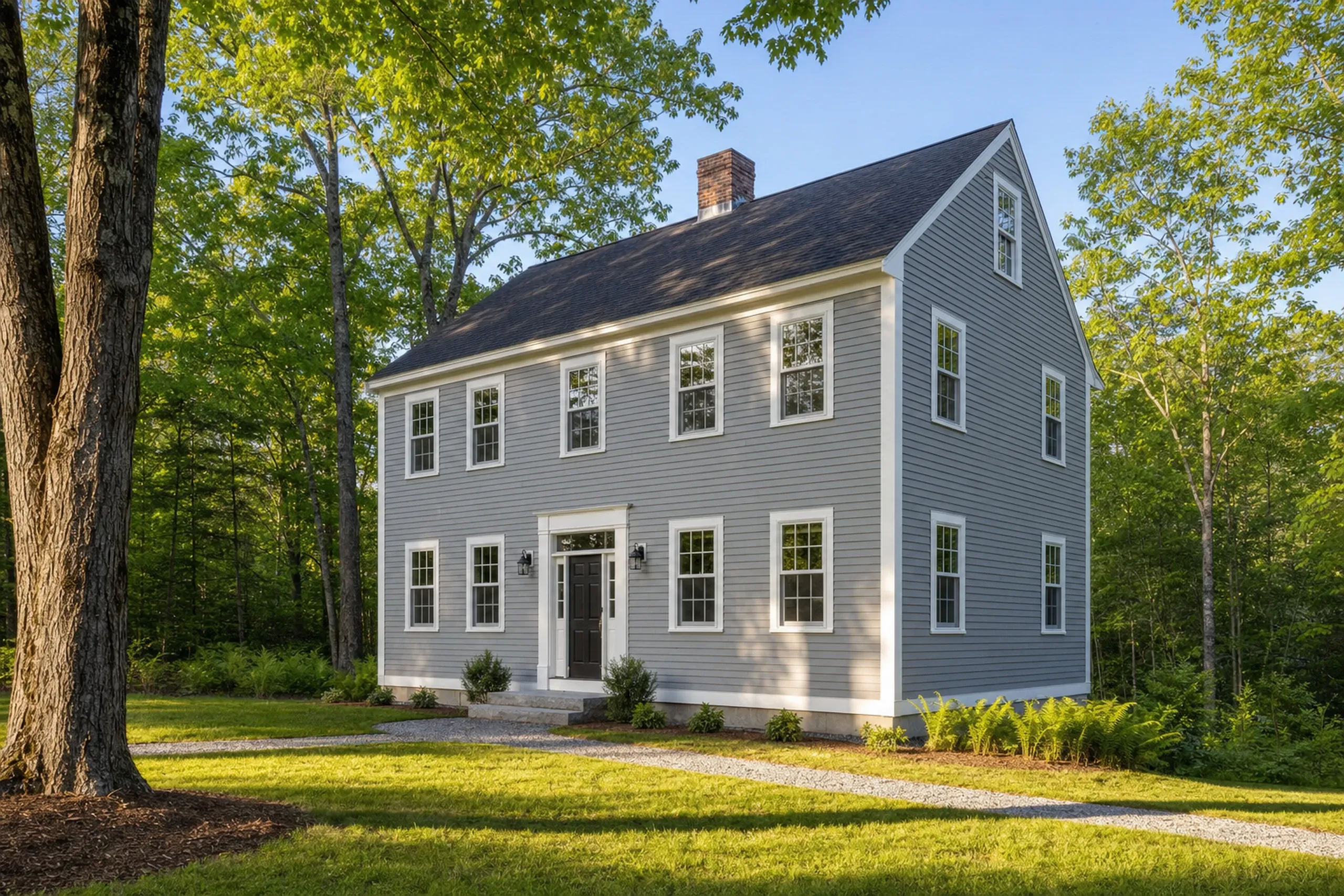
Vinyl siding replacement on a southern Maine raised ranch: finished light gray vinyl lap siding, white corner posts and window trim, maple trees on a wooded lot, early summer.
  • Old siding off, sheathing checked
  • Every opening flashed before panels
  • Panels nailed loose so they move

This page is about re-siding a house in vinyl across southern Maine: removing worn vinyl, wood or aluminum, fixing the wall underneath, and putting up new panels, soffit and trim over a fresh water-resistive barrier.

Southern Maine Siding treats the panel as the final layer of a wall built to drain. Rot comes out before anything new goes on, openings are flashed, and each course is fastened so heat and cold can slide it without a ripple.

The figure to keep: vinyl here averages $1,000 to $1,250 per square, or 100 square feet of wall, across many quotes. That makes it the least costly of the four sidings we install.

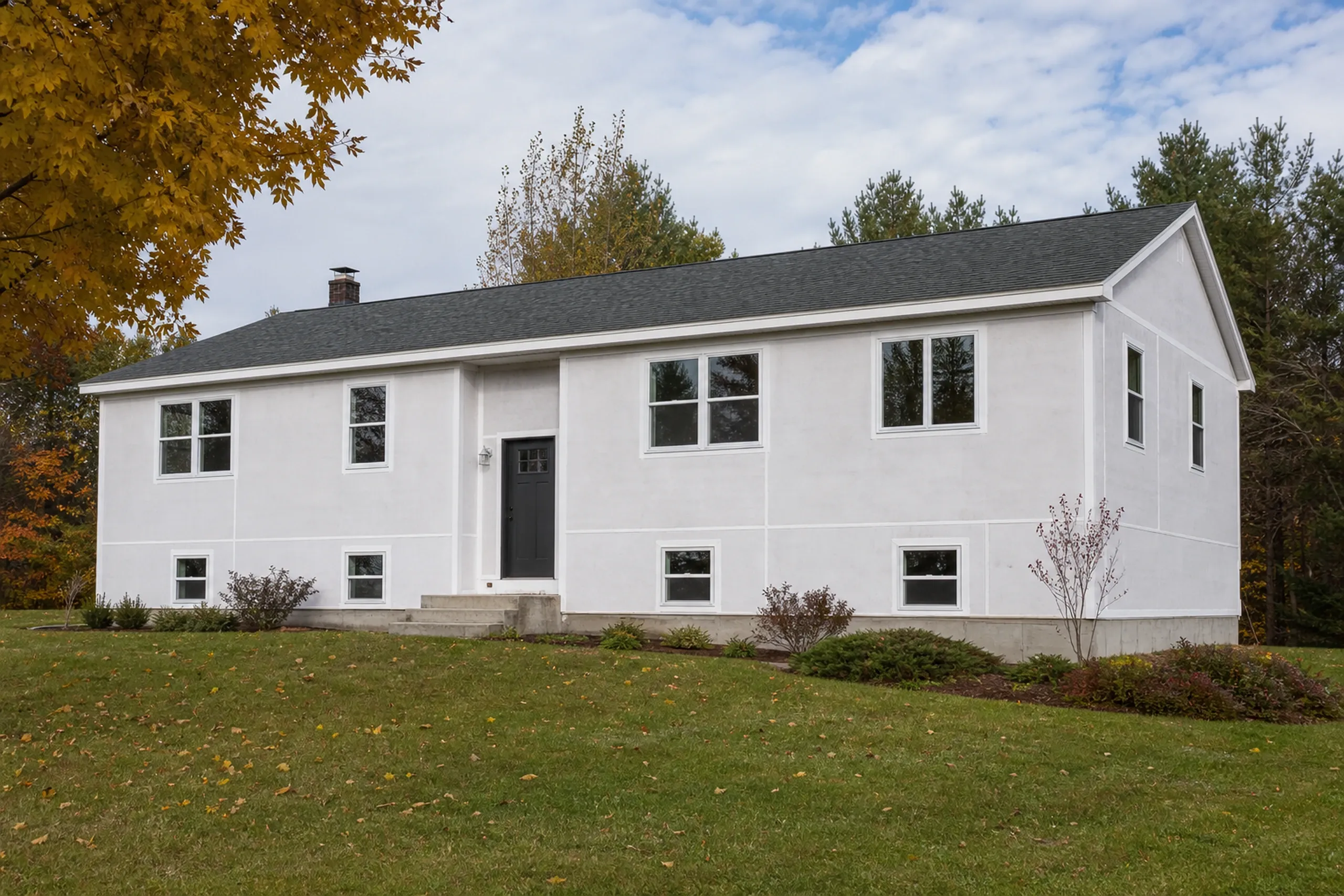
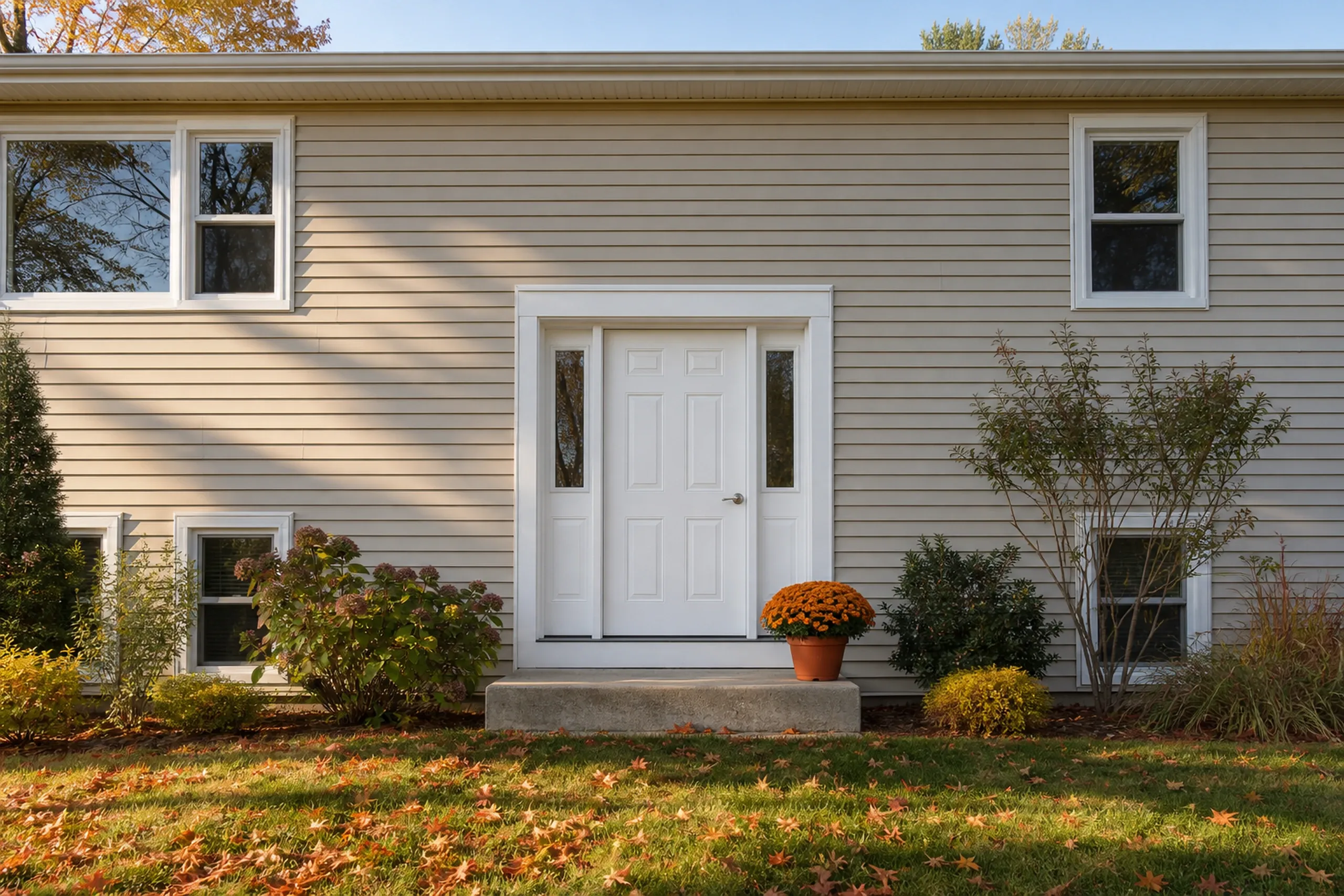
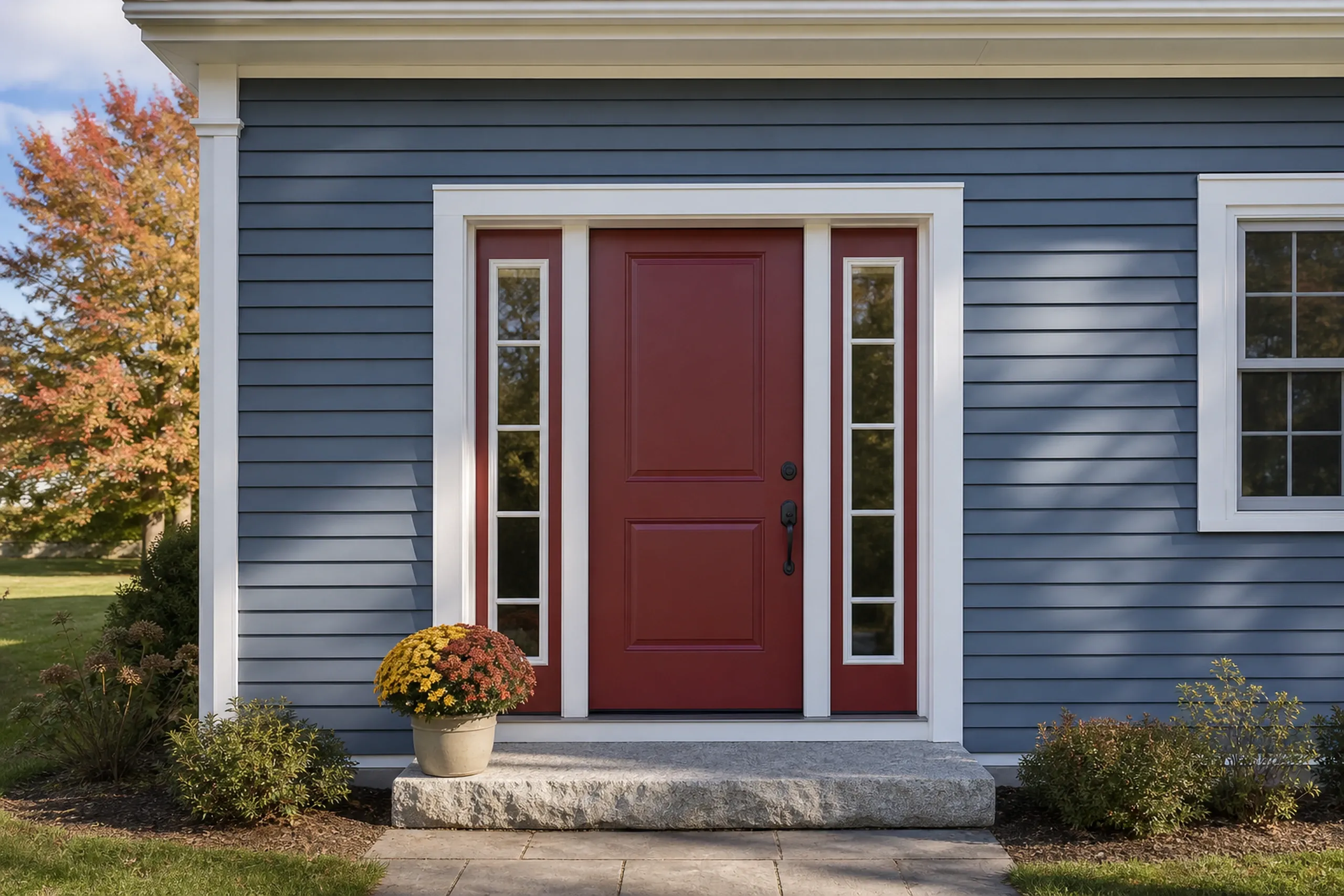
Southern Maine re-sided vinyl front entry: Front entry of a re-sided southern Maine raised ranch in October, shot vertically, a white six-panel door with two narrow sidelights, a single wide concrete step and landing, wheat-colored vinyl lap siding and white trim around the door, a pot of orange mums, maple leaves on the lawn.
  • Sheathing checked on every wall
  • Old siding hauled away
  • Corrosion-resistant fasteners

Why Does Vinyl Siding Ripple, Buckle or Leak?

Vinyl siding ripples, buckles or leaks mostly because of how it was hung, not because of the panel. The Vinyl Siding Institute says a 12 foot 6 inch panel can grow half an inch or more as it warms, so each nail and each gap must allow for it.

  • Nails centered in the slots and left slightly proud, never driven tight or through the face
  • Real head flashing over each window and door, since a J-channel leg is no substitute
  • A starter strip matched to the panel lock, and no caulk at corners, channels or laps

What Makes a Vinyl Re-Side Last on a Maine House?

A vinyl re-side lasts on a Maine house when the panel suits the wall and the crew hangs it for heat, cold and wind.

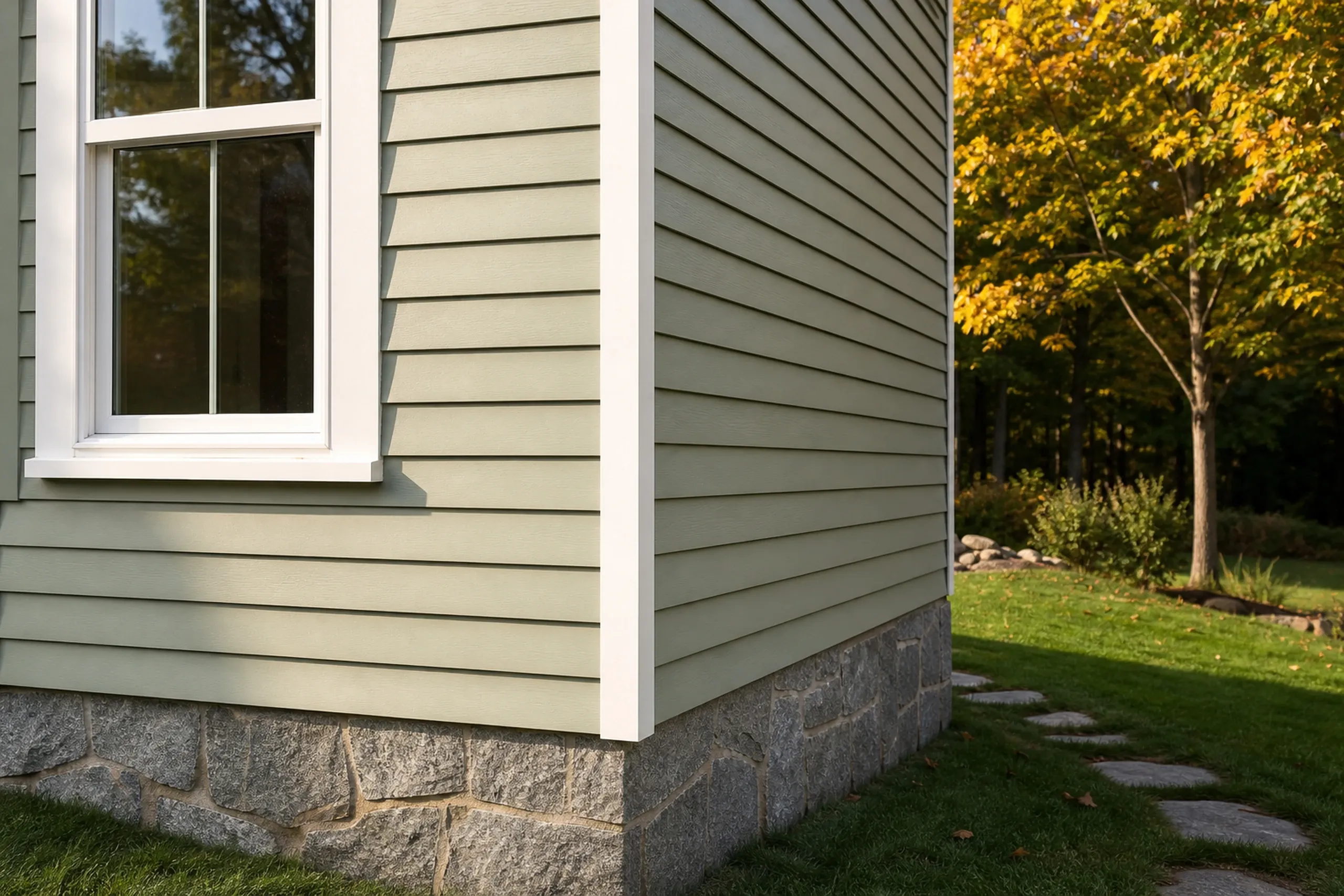
Vinyl siding on a southern Maine colonial: close view of finished sage green Dutch lap vinyl panels meeting a white vinyl outside corner post, even shadow lines, early fall sun.

Where Vinyl Siding Earns Its Keep

Vinyl costs the least per square of the four sidings we put up, and the Vinyl Siding Institute's installation manual says every certified panel is tested for wind load and labeled with a design pressure rating. Model codes call for certification to ASTM D3679, shown by a label on the carton.

Panels differ more than most buyers expect. One large maker lists its lines from 0.040 to 0.048 inch thick and says the thicker ones generally take impact and weather better, usually at a higher price.

The VSI manual covers lap profiles from single to triple, plus Dutch lap, board and batten and vertical panels, so a ranch and a farmhouse colonial can each get a face that suits it.

The tradeoff is movement. Vinyl grows and shrinks with every swing in temperature, and the manual warns that a saw rushed through a panel in deep cold can chip or crack it.
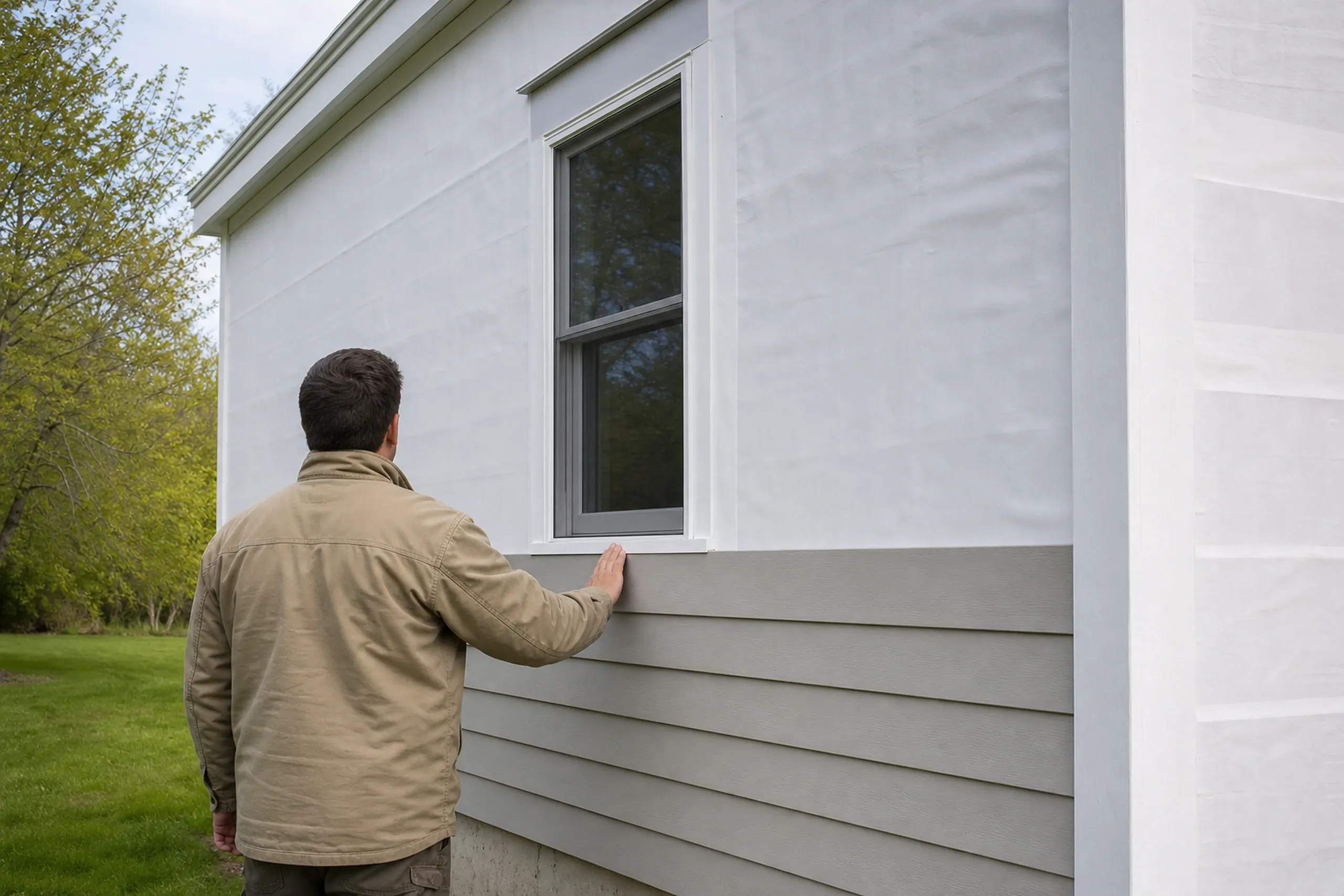
Vinyl install on a coastal southern Maine cape: new pale gray vinyl panels over plain white housewrap below a window with metal head flashing, one gloved hand, late spring.

How We Hang Vinyl for Salt Wind and Cold Snaps

Most owners judge a vinyl job by its color, yet the layer under the panels decides whether the wall stays dry. VSI calls vinyl a cladding and a supplemental rainscreen, never the water-resistive barrier, so a new barrier goes on first and laps over the flashing at each opening, as the Department of Energy's drainage plane guide describes.

Near salt water we use the corrosion-resistant fasteners VSI calls for (aluminum or stainless steel with aluminum trim) and favor the double or rolled-over nail hem VSI says high-wind panels carry. Where a roof meets a sidewall we add kick-out flashing, which the manual notes some cold-climate localities require.

Below 40 degrees F, VSI widens the clearance at openings and stops from 1/4 inch to 3/8 inch, and the panel maker's own instructions win wherever the two differ.

Mike Guertin of Fine Homebuilding warns that panels butted tight into their channels can buckle once the weather turns hot, so we leave that room on every course.

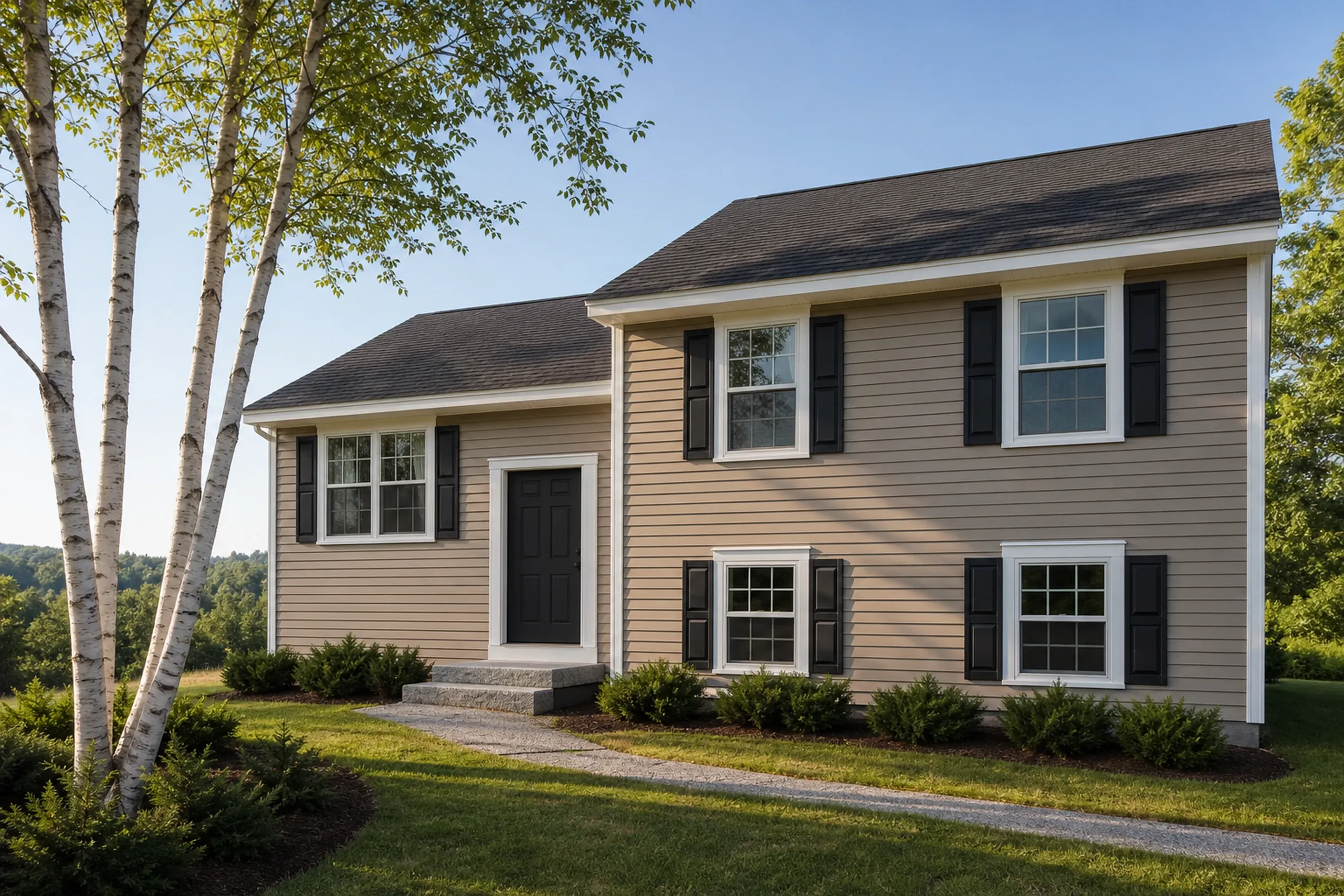
Finished vinyl siding on a southern Maine split-level: clay-colored vinyl lap siding on both levels with white trim and black shutters, a lawn and birch trees, midsummer.

Vinyl, LP or Hardie: Which Fits Your House?

Vinyl at $1,000 to $1,250 per square is our starting point for a ranch, raised ranch, cape or plain colonial with ordinary exposure. LP SmartSide averages $1,500 to $1,875 and James Hardie fiber cement $1,625 to $2,000, so each step up adds real money across a 25-square house.

We steer owners toward board siding when a wall has a reason to want it: a painted wood look the street expects, or a face that takes full wind off open water. Otherwise vinyl hung right is money well spent, and the difference can pay for rot repair or insulated panels.

What Vinyl Siding Services Do We Offer?

Every vinyl job we take on covers the wall from the sheathing out to the last piece of trim.

  • Old siding torn off and hauled away, with rotted sheathing replaced before anything new goes on
  • A new water-resistive barrier, flashed windows and doors, a matched starter strip, corner posts and J-channel
  • Standard or insulated vinyl panels, vented or solid soffit, fascia, and trim at windows, doors and gables

Over old asbestos-cement shingle, or clapboard under lead paint, we also quote a cover-over in new vinyl on any wall that is flat and dry. The EPA's lead renovation rule covers painted surfaces on houses built before 1978, and it shapes how those tear-offs are planned.

How Do We Re-Side a House in Vinyl, Step by Step?

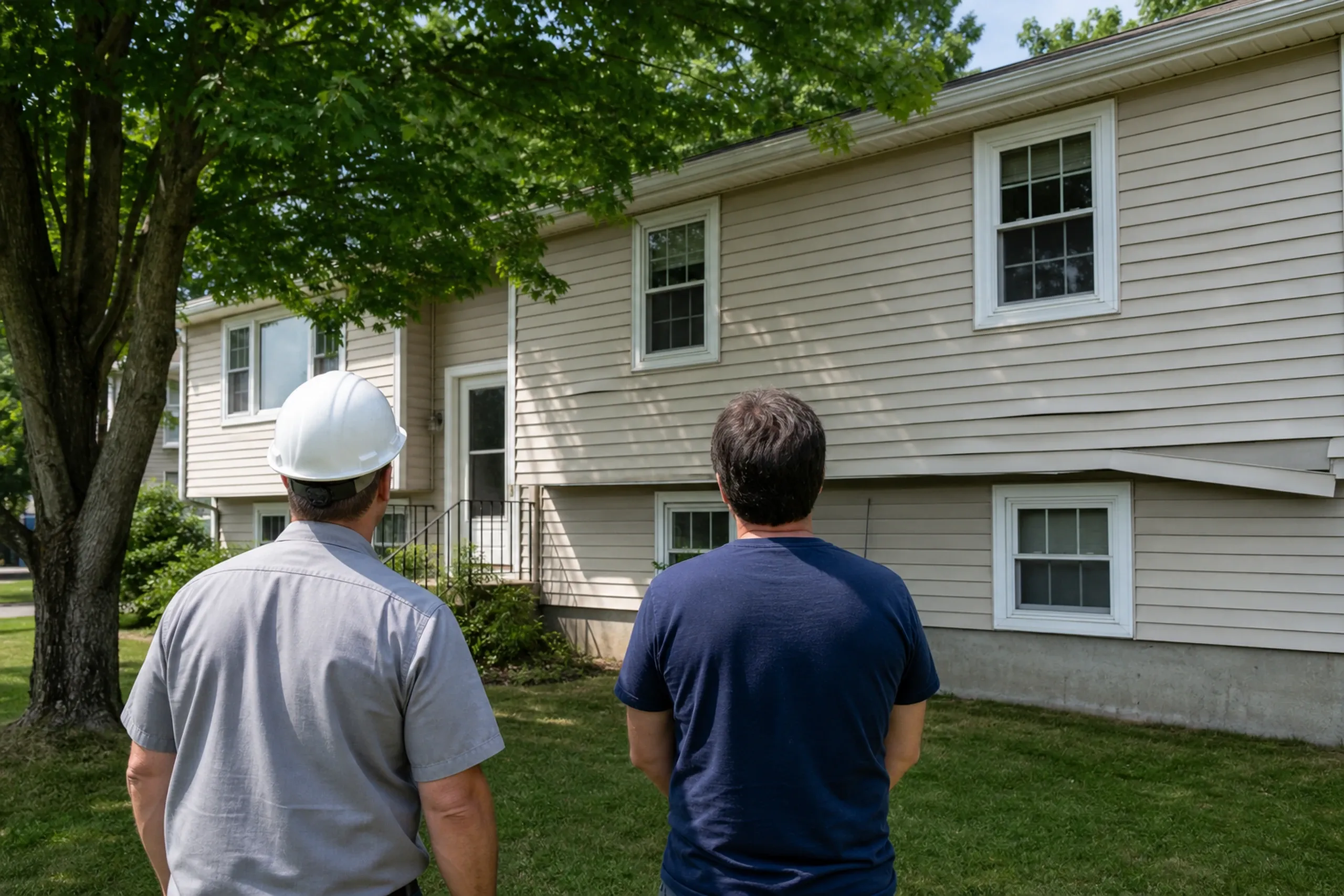
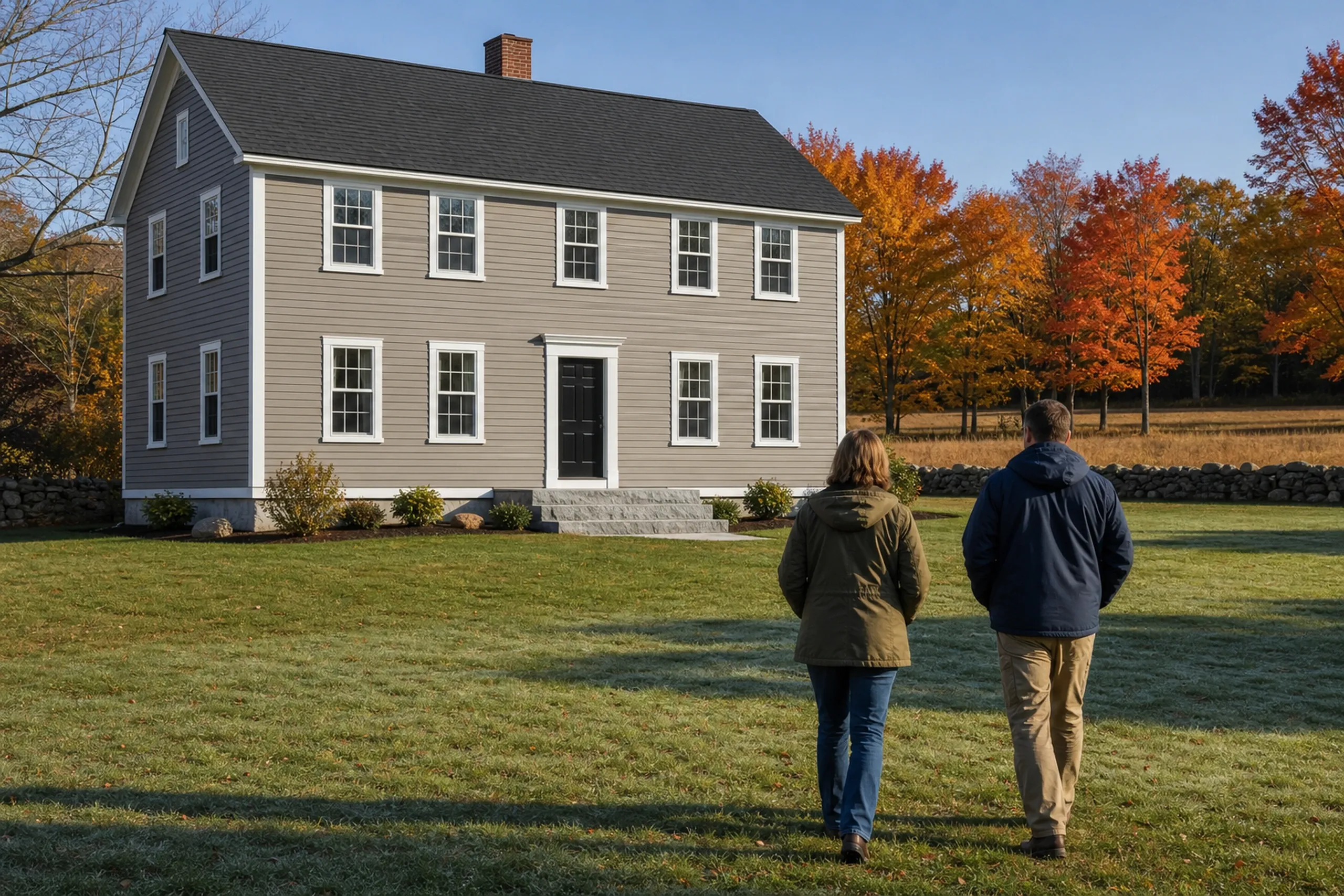
  1. Southern Maine vinyl siding first visit: Standing on the lawn in front of a southern Maine raised ranch, two people, a siding installer and a homeowner, seen from behind, look at old tan vinyl siding that has faded chalky pale and bowed outward in long waves, one lower panel hanging loose at its edge, summer sun.

    Step 1: We open the wall before we price it.

    With your go-ahead we pull back siding where rot hides first (a sill, a corner, a window), and the findings go into the written scope.

  2. Southern Maine vinyl J-channel and starter strip stage: Vinyl siding in-progress on a southern Maine raised ranch at the J-channel and starter strip stage, white J-channel running around a window opening, a straight starter strip nailed along the bottom of the wall and plain white housewrap covering everything above, early autumn light.

    Step 2: You get a written price and a contract to sign.

    Maine statute 10 MRSA ยง1487 puts any home job over $3,000 under a signed written contract with a down payment of no more than a third, and our vinyl jobs follow it.

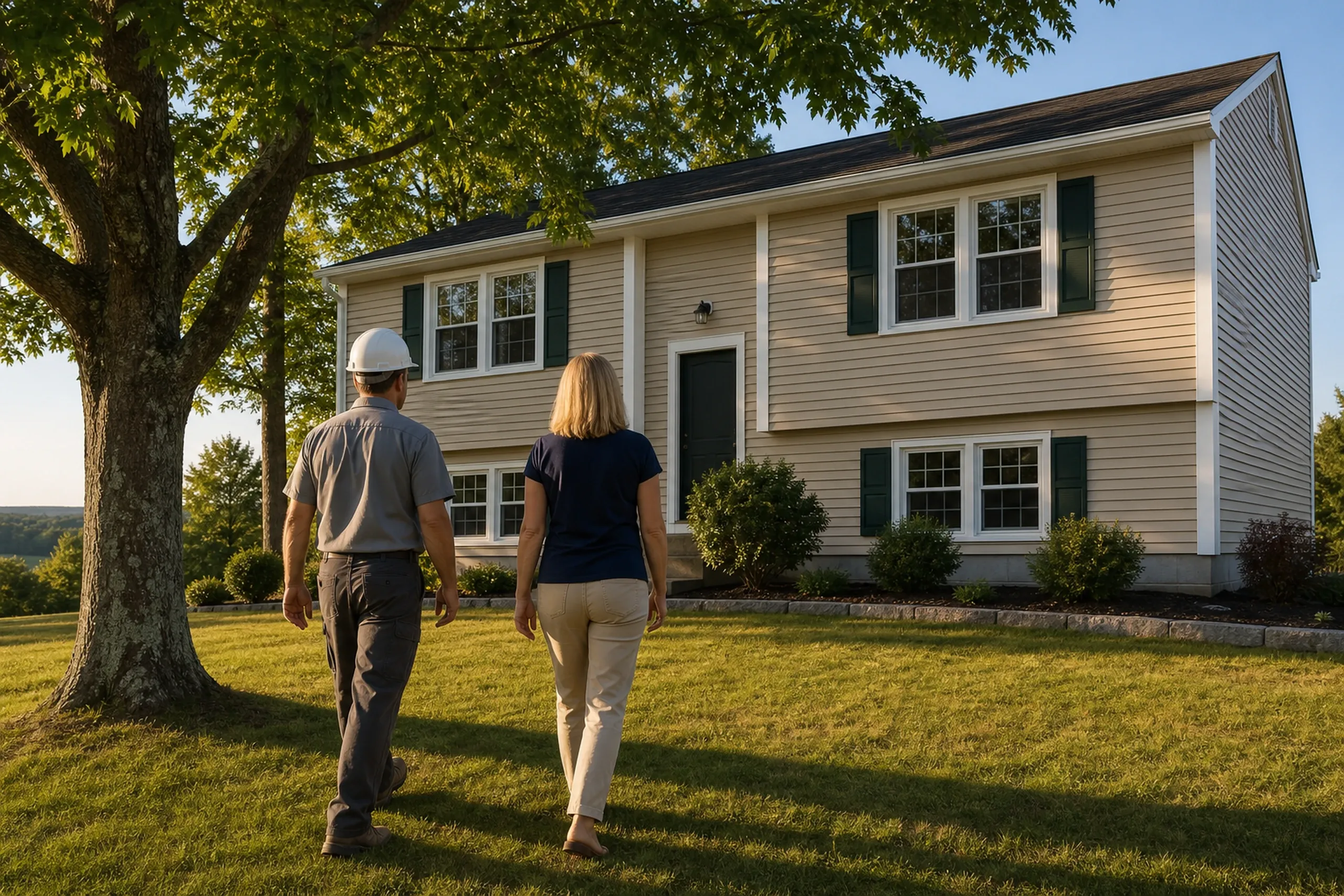
  3. Southern Maine vinyl siding final walkaround: Walking the front lawn of a re-sided southern Maine raised ranch, two people, a siding installer and a homeowner, seen from behind, look over new wheat-colored vinyl lap siding with white corner posts, white window trim and forest-green shutters, summer light, a maple in full leaf.

    Step 3: One face of the house at a time, then a final walk.

    We take each side from stripping to its last course before opening the next, and at the end we circle the whole house with you.

When Is Vinyl Siding Replacement the Right Call?

Vinyl siding replacement makes the most sense on southern Maine ranches, capes, split-levels and plain colonials, where the goal is a dry, tidy wall at the lowest cost per square. Spend more only where the house or its exposure gives you a reason.

Vinyl is the wrong call on a shingle-style cottage that was built to wear cedar, and it is never right over rot: the VSI manual says vinyl must not go on over rotting wood. If a wall is badly out of flat, the old siding comes off or gets furred out first, as that manual directs.

Each extra layer has a cost as well. Martin Holladay of Green Building Advisor notes that stacked siding thickens the wall until windows and doors look sunken, one more reason we strip to the sheathing whenever the old layer allows.

A few storm-cracked panels are a different matter: VSI's manual shows how one panel is unzipped and swapped, so a torn corner may only need siding repair.

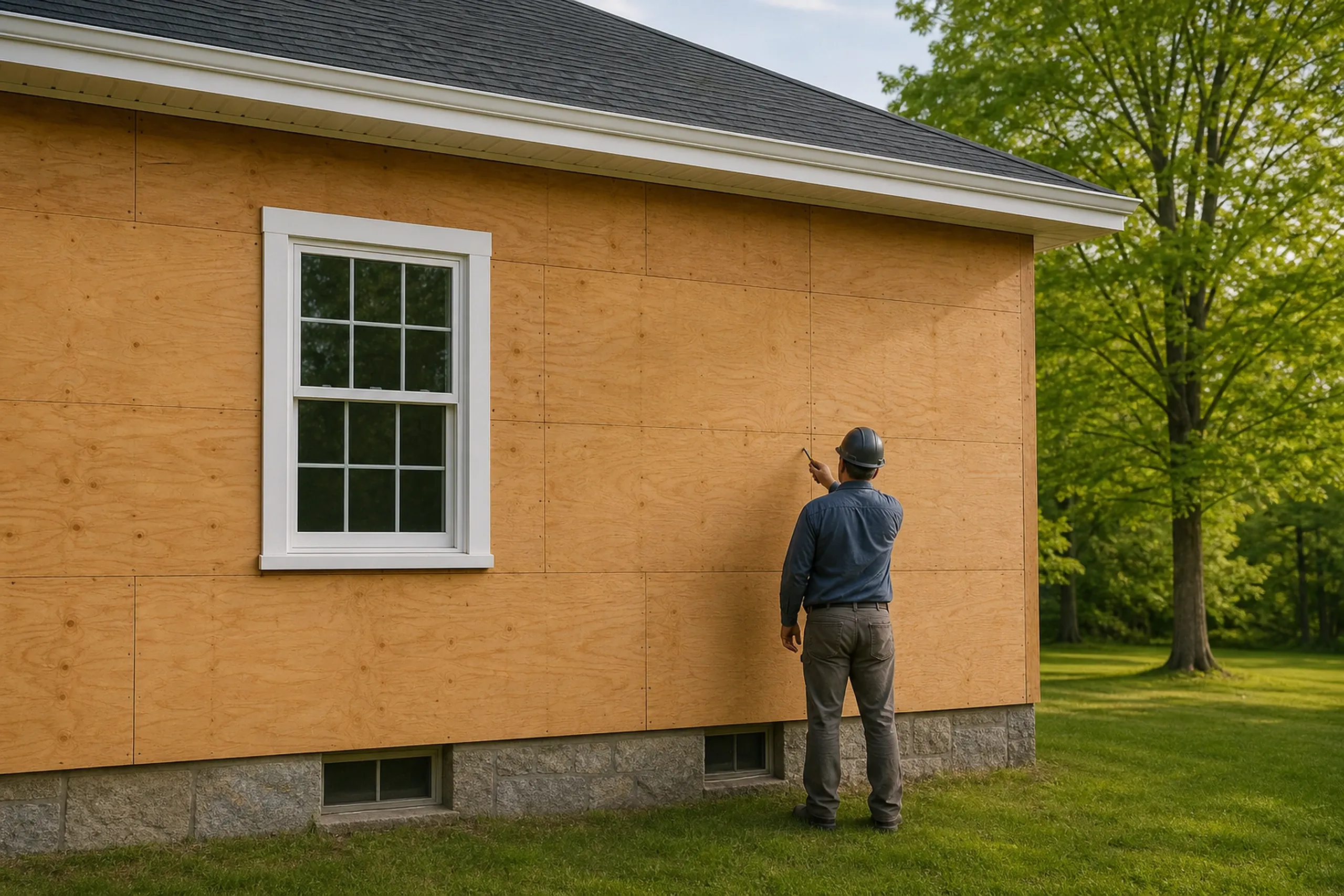
Vinyl re-side prep on a southern Maine cape: one installer seen from behind pressing a screwdriver into bare plywood sheathing beside a window on a stripped wall, late spring.

Who Should Re-Side in Vinyl, Where, and When?

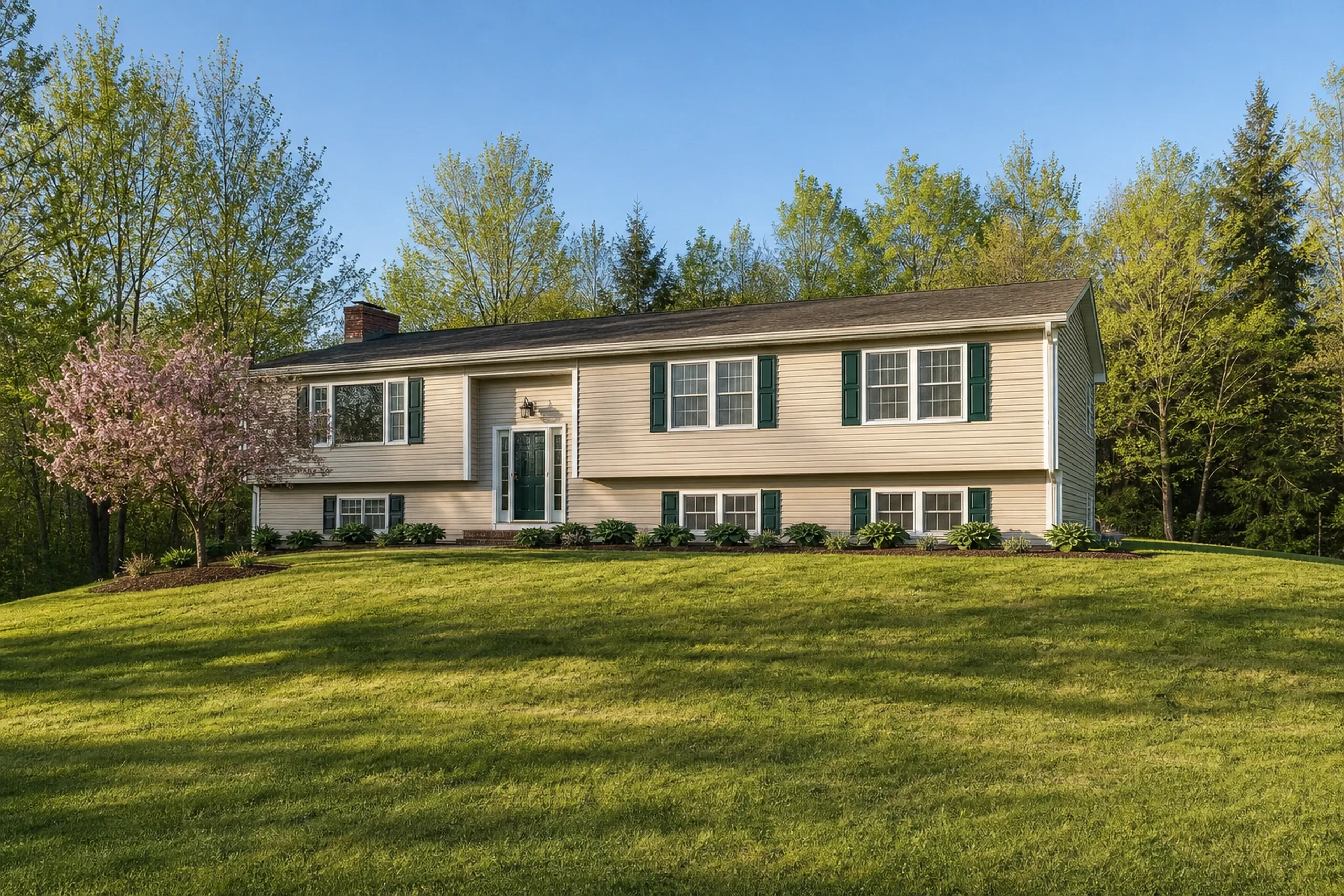
Southern Maine re-sided vinyl house in spring: A re-sided southern Maine raised ranch in late spring, wheat-colored vinyl lap siding with white corner posts and window trim, forest-green shutters, a mulched bed of hostas, a flowering crabapple in bloom and a mown lawn on a gentle slope under soft morning light.

Who gets the most out of new vinyl?

Owners who get the most out of new vinyl have cracked, faded, wavy or loose panels, or tired wood or aluminum siding on a house where price leads the decision. A shingled cottage owner usually gets more from cedar.

Where on the house can a vinyl job stop?

A vinyl job can stop at one wall or wrap the whole exterior, though a single new wall rarely matches its sun-faded neighbors. On a bleached house we usually recommend doing every side at once.

When is the best season for vinyl siding work?

The best season for vinyl siding work runs from spring through fall, when panels cut cleanly and lie flat. Colder installs use the wider clearances and slower cuts VSI sets for cold weather.

How Much Does Vinyl Siding Replacement Cost?

Vinyl siding replacement costs $1,000 to $1,250 per square (100 square feet of wall) in southern Maine, covering tear-off, new wrap and flashing, trim and haul-away. Those figures are averages drawn from many quotes, useful for testing a budget, and your own walls set the real number.

How Much Does Vinyl Siding Replacement Cost?
House sizeVinyl, installed
Small20 to 25 squares$20,000 to $31,000
Medium25 to 32 squares$25,000 to $40,000
Large32+ squaresfrom $32,000

Averages of many southern Maine vinyl quotes, never a quote for your house; whatever the tear-off exposes (rot, failed flashing, damaged framing) can lift a job above its row.

What moves a vinyl price most after the panel itself?

After the panel itself, the biggest mover in a vinyl price is what stripping the walls reveals: wet sheathing, rotted sills or flashing that never worked. Second stories, walls that are hard to reach, and a long run of windows, gables and trim push it up next.

What does putting vinyl over the old siding save?

Putting vinyl over the old siding saves the tear-off and the disposal, and it is the usual answer over asbestos-cement shingle or wood under old lead paint. It is off the table on any wall that is soft or water-stained, because rot has to come out first.

Is insulated vinyl worth paying more for?

Insulated vinyl earns its higher price when you want the siding itself to add continuous insulation: VSI rates it at R-2.0 or more under ASTM D7793. We price it beside standard panels on the same written quote so the difference is plain.

How Do You Get a Price on New Vinyl Siding?

You get a price on new vinyl siding by sending a free estimate request; then we come out, check beneath the old siding and hand you a written number. Nothing is owed until you have signed the contract.