Skilled LP Siding | Southern Maine Siding

LP siding is LP SmartSide engineered wood lap board, put on an existing house in place of worn clapboards, hardboard or vinyl and painted like wood. It holds up on a southern Maine wall when its cut ends, joints and paint get the care LP's instructions spell out.

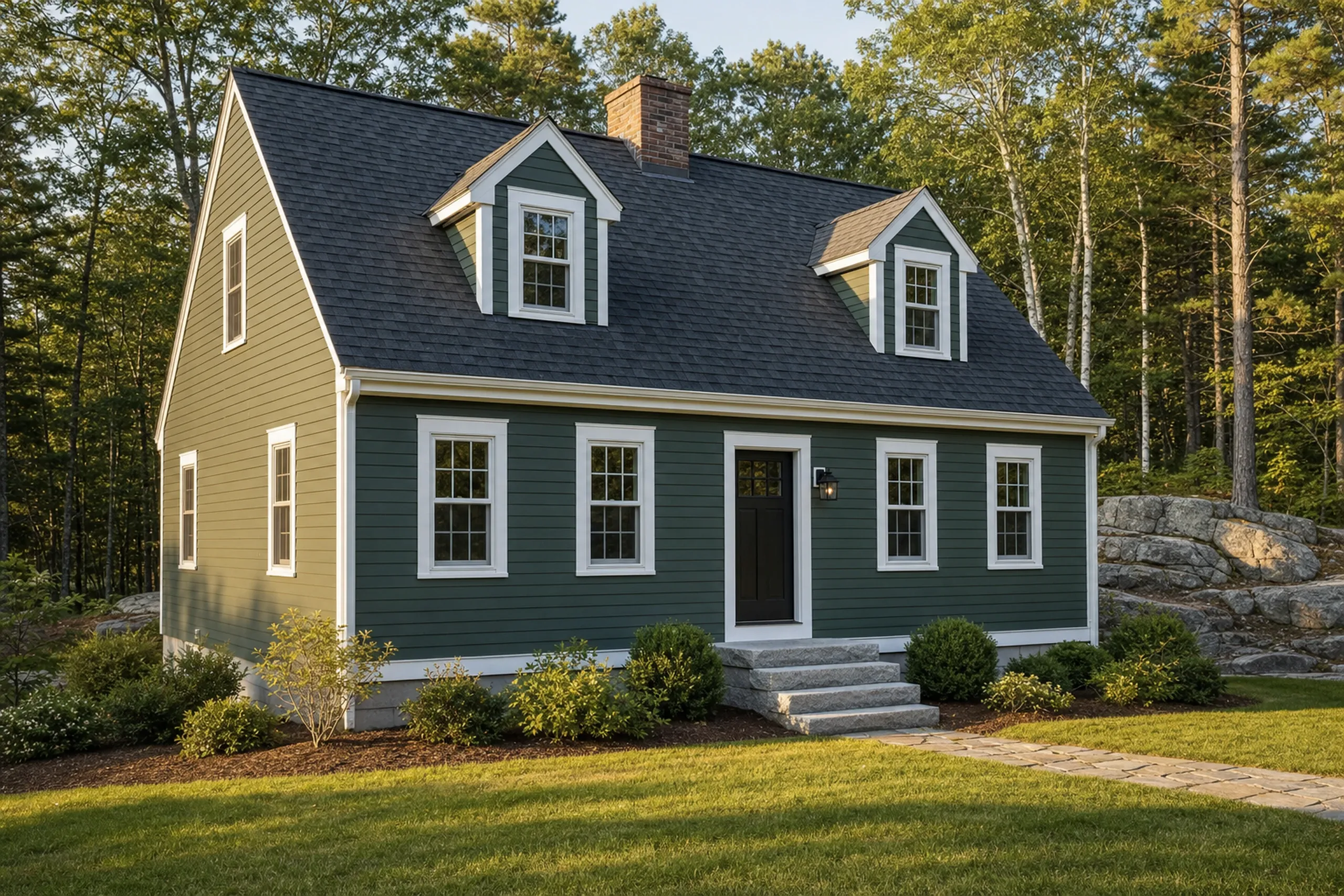
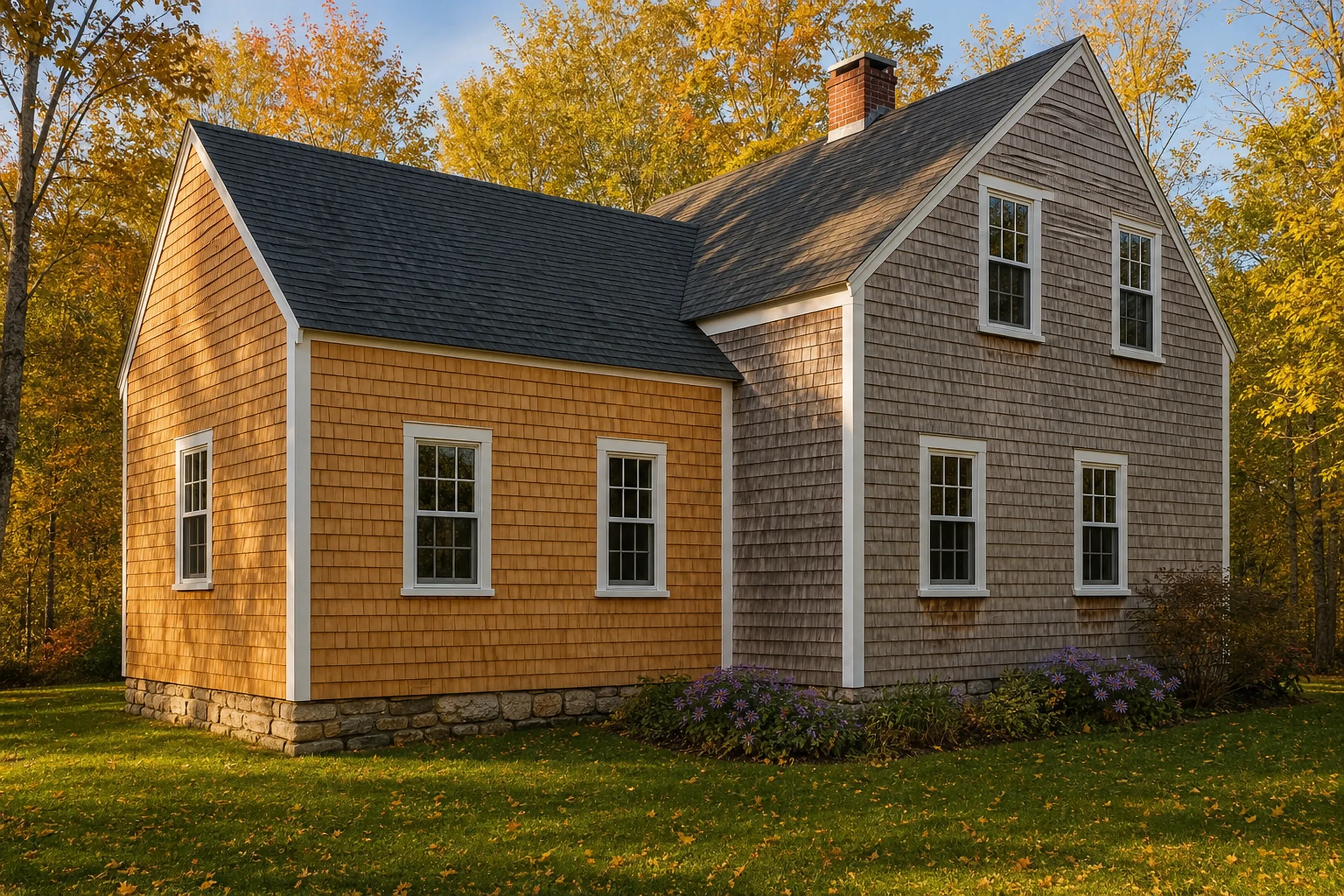
LP siding on a southern Maine cape: finished engineered wood lap boards painted deep sage green with bright white corner trim and window surrounds, granite steps at the door and a mown lawn, early summer.
  • Every cut end sealed
  • Paint planned inside 180 days
  • Old siding hauled away

This page covers LP siding, the LP SmartSide line of engineered wood lap boards, panels and trim, installed on existing southern Maine houses after the old siding comes off and the wall behind it gets checked.

LP SmartSide suits owners after a painted wood wall that costs less per square than James Hardie fiber cement. Its weak points are cut edges, joints and paint, so we seal every cut, gap every butt joint and set the paint plan in writing.

The figure to keep: LP SmartSide averages $1,500 to $1,875 per square installed across southern Maine, an average of many quotes rather than a price for your walls.

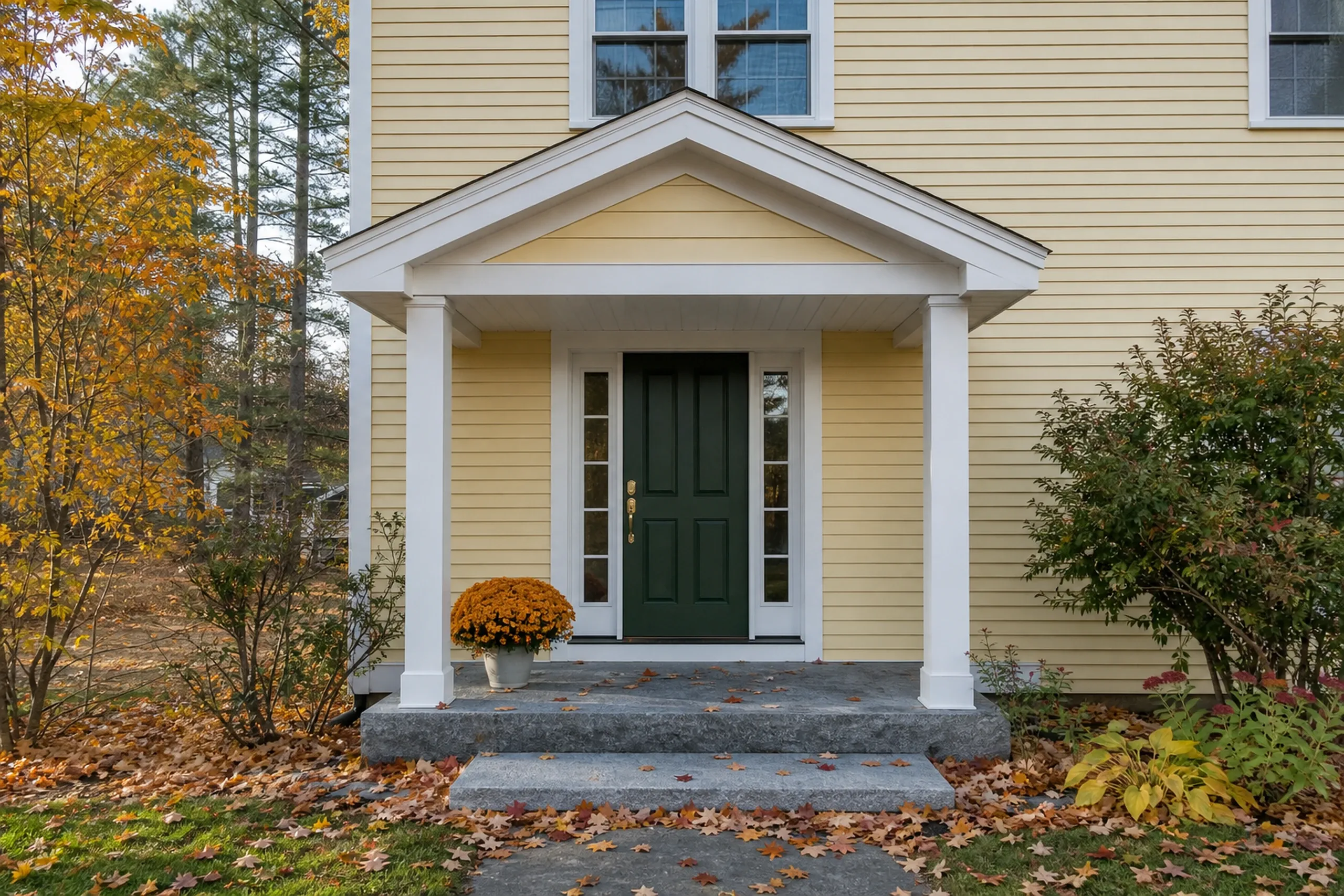
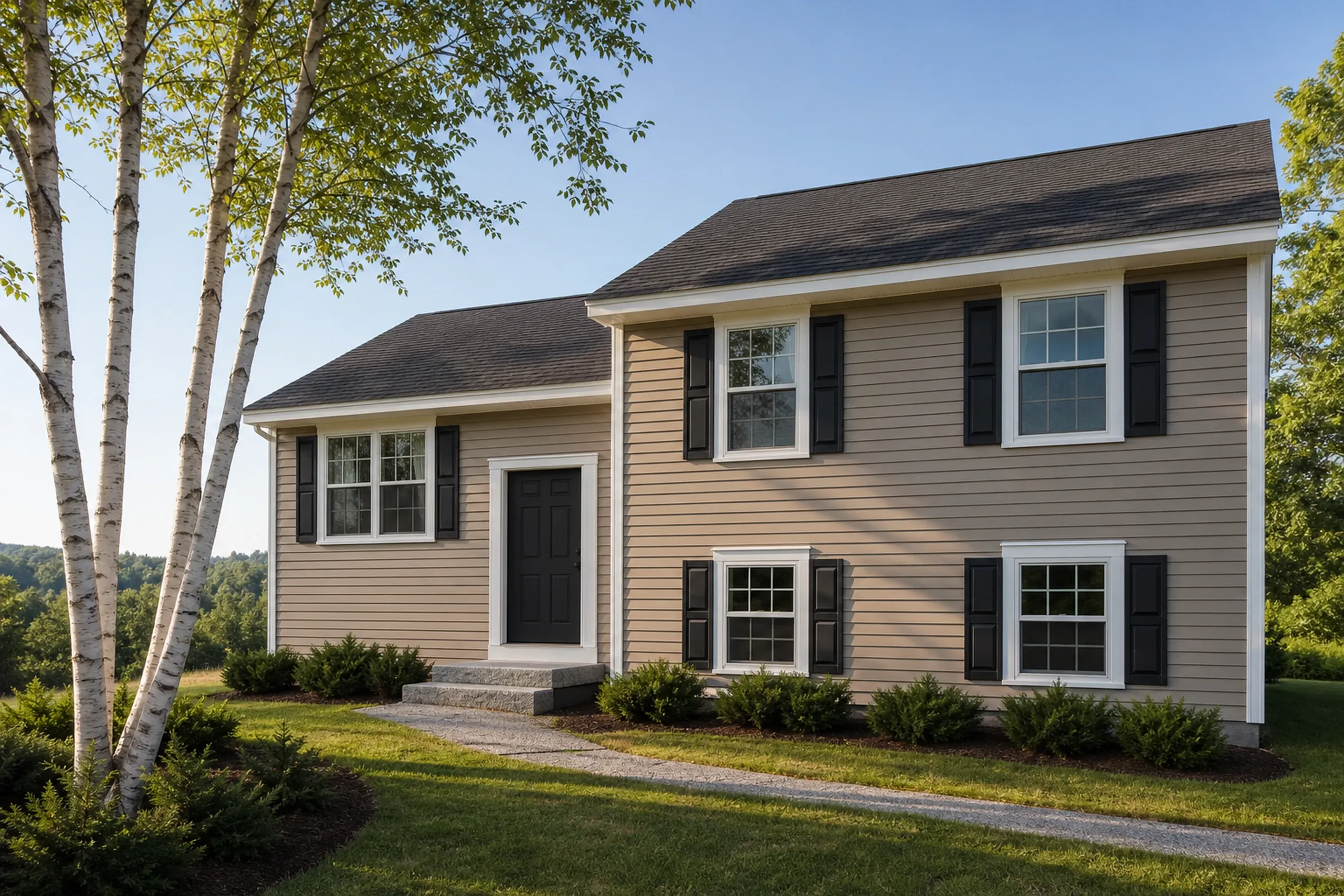
Southern Maine re-sided LP front entry: Front entry of a re-sided southern Maine split-level in October, shot vertically, a dark green door with two sidelights, a broad granite landing, butter-yellow LP lap siding and white trim around the entry, a pot of orange mums and fallen maple leaves.
  • Siding is all we do
  • Cut ends sealed
  • One wall open at a time

Why Do Homeowners Choose Us for LP SmartSide?

Homeowners choose us for LP SmartSide because we handle it as wood that has to be protected, sealing each cut and flashing each opening before the boards close the wall. Siding is all we do, so LP's rules are routine for us.

  • Every field cut sealed with paint or caulk, as LP requires for exposed edges
  • The 3/16 inch gap LP specifies at butt joints, with the cut ends caulked
  • New housewrap and kick-out flashing under the boards, never the old paper patched

What Are the Pros and Cons of LP SmartSide Siding?

The pros and cons of LP SmartSide siding trace back to one fact: treated wood strands that read as painted clapboards still behave like wood.

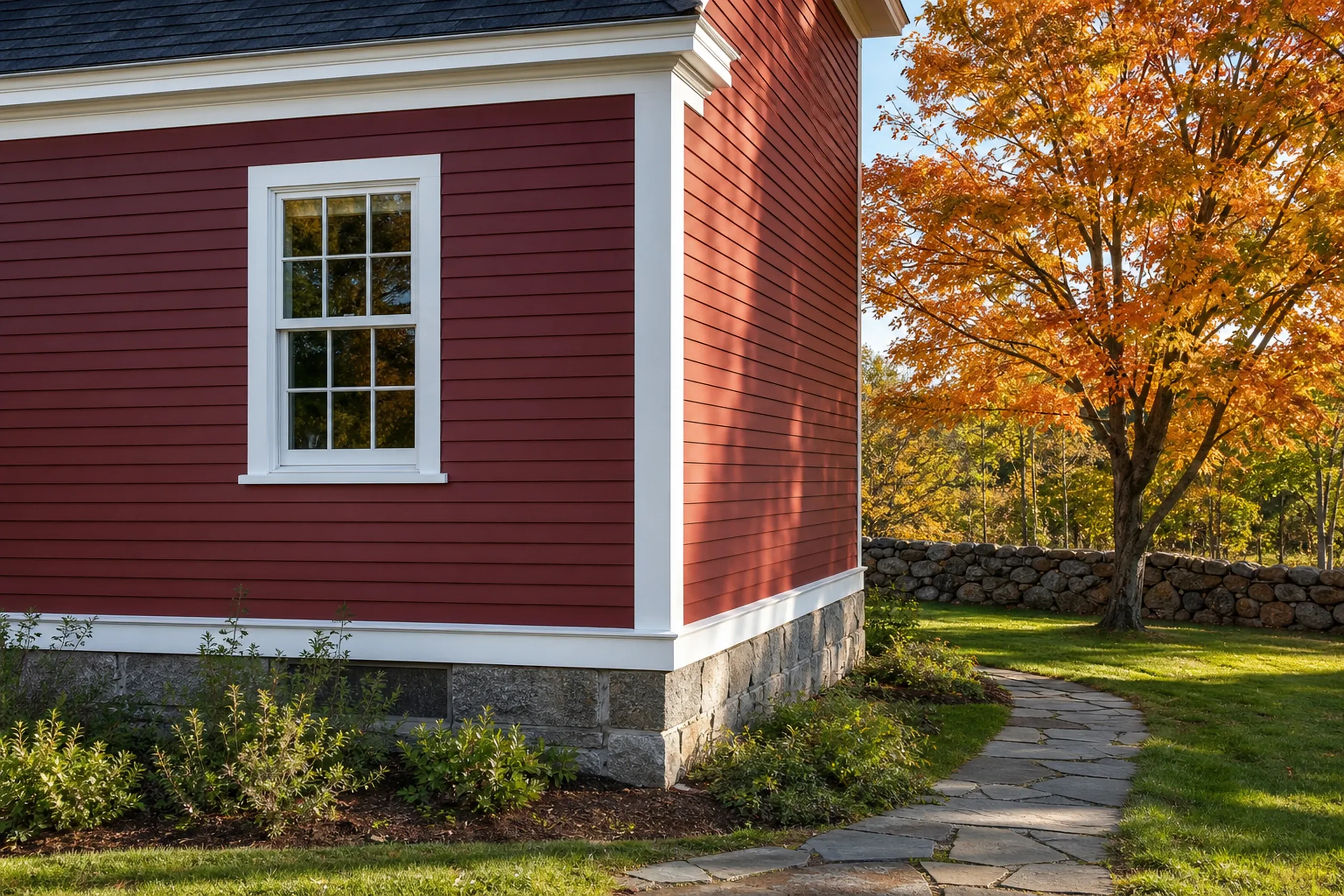
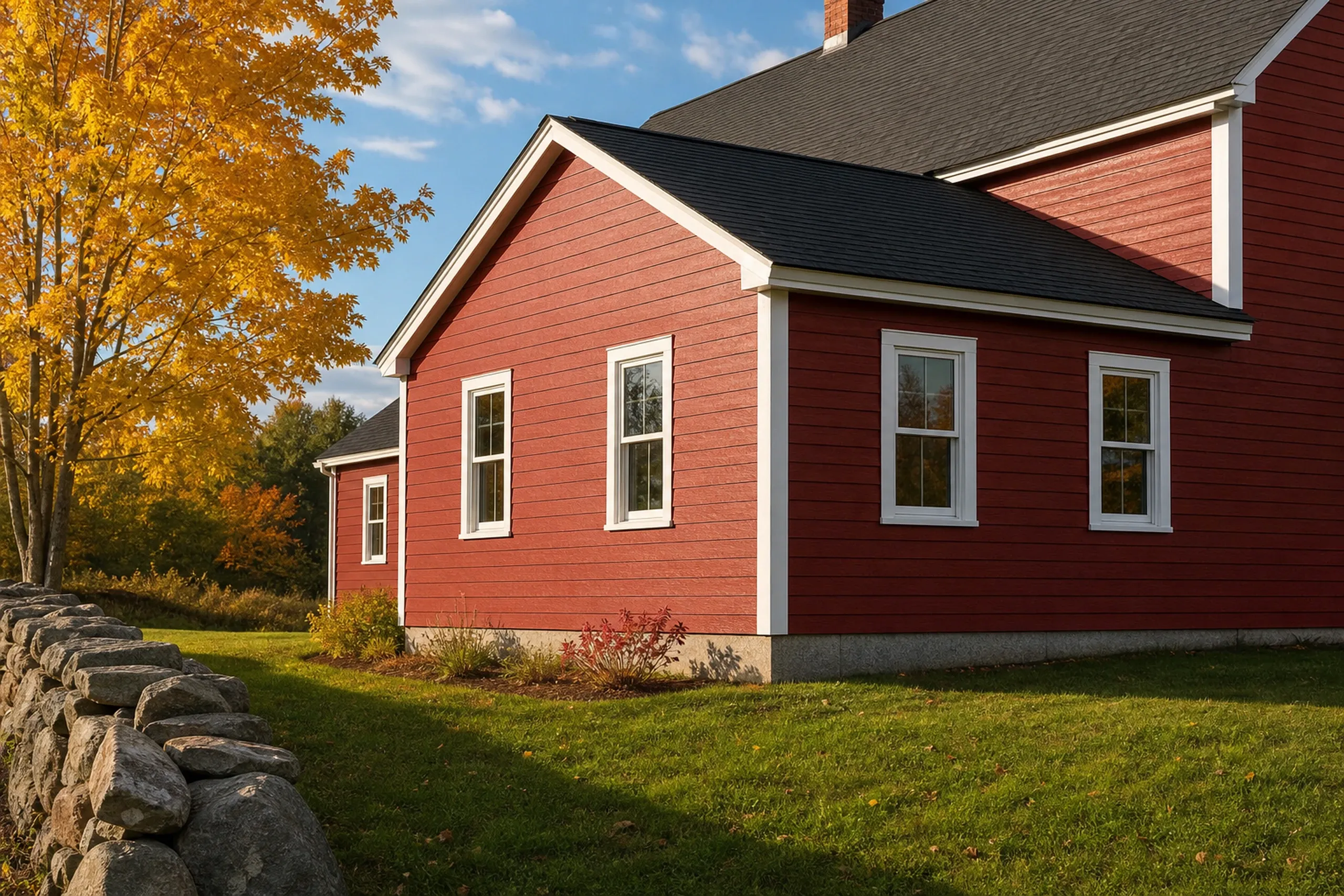
LP SmartSide cedar texture lap siding up close on a southern Maine farmhouse ell: painted barn-red engineered wood boards with an embossed wood-grain face, straight shadow lines and a white corner board, early fall light.

What LP SmartSide Does Well, and Where It Falls Short

LP states that every SmartSide board is treated to the core with zinc borate, along with binders and waxes, then bonded to a water-resistant, resin-saturated overlay, a process it calls SmartGuard. LP also states the trim and siding resist freeze-thaw damage, which every Maine wall puts to the test.

The limits are the ones wood always carries. LP says SmartSide is designed for above-ground use, is not for curved walls, and rates the lap siding Class C (III) under ASTM E84, short of a Class A rating.

Stain is the other boundary. LP says transparent and semi-transparent stains are not for SmartSide, so an owner who wants open wood grain on the wall is really shopping for cedar shingle siding.
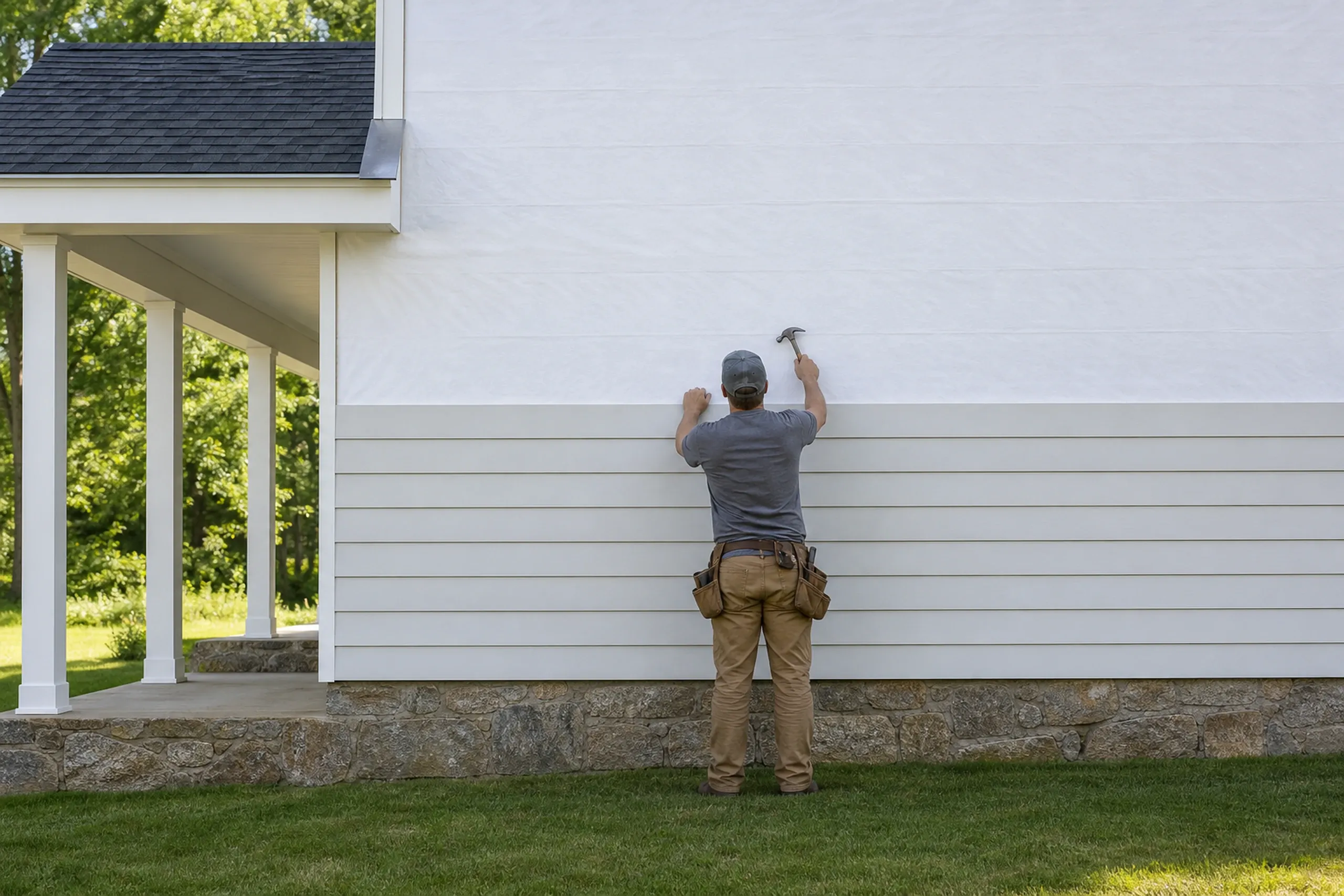
LP lap siding going on over housewrap: a single installer, back to the camera, nailing a primed engineered wood board to a cape sidewall wrapped in plain unmarked white housewrap, a metal kick-out flashing where the porch roof meets the wall, southern Maine summer.

How We Install LP SmartSide Against Maine Weather

Ice dams and blowing rain hunt for the edges of an engineered wood wall, so LP requires a code-approved water-resistive barrier behind the siding. It also calls for kick-out flashing where an eave meets a wall, and says siding and trim must stop short of that flashing and of any gutter.

LP explains that the boards grow slightly in length as they settle to the moisture in the local air, which is why it calls for a 3/16 inch gap at vertical joints. We keep that gap, caulk the field-cut ends, and lap each course at least the 1 inch LP recommends.

Clearances from the ground, the roof and any deck come from LP's current application instructions, checked before every job. LP also allows its siding over rigid foam up to 1 inch thick with longer nails, a chance to add exterior insulation while the wall is open.

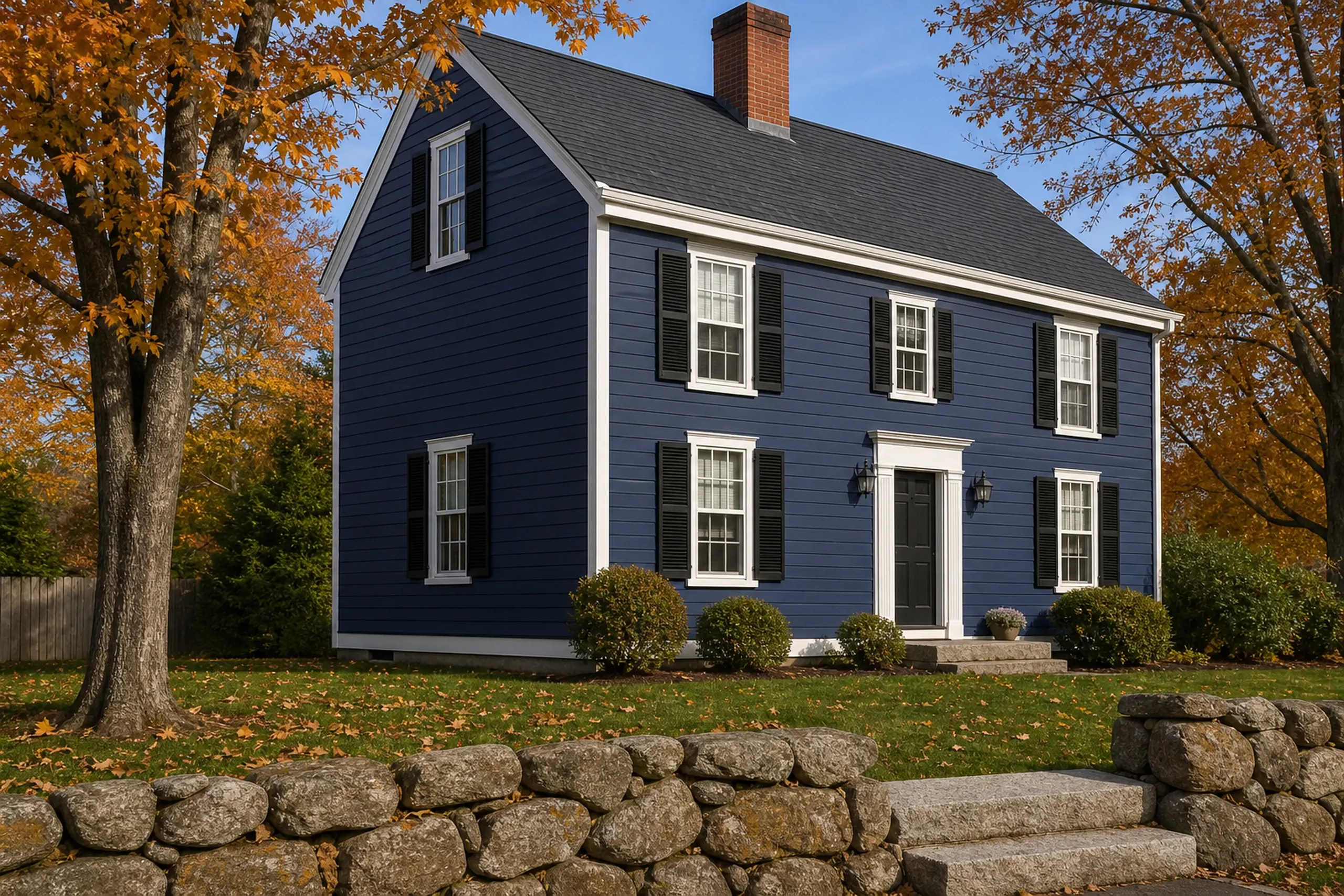
LP SmartSide siding on a two-story southern Maine colonial: finished lap boards painted navy blue with white trim, black shutters and a red brick chimney, maple trees turning orange in early fall.

LP SmartSide Against Vinyl, Hardie and Cedar

LP SmartSide averages $1,500 to $1,875 per square here, next to vinyl's $1,000 to $1,250. The extra buys a board that paints like wood and sits firm on the wall, where a vinyl panel has to hang loose so it can move with the heat.

On a tight budget, vinyl siding replacement is still the honest pick for most houses. Against Hardie siding, LP says SmartSide cuts with common woodworking tools, while James Hardie classifies its fiber cement as noncombustible and asks for dust-controlled cutting.

Cedar shingles run about $2,500 a square, the top of the range. LP is the cheaper way to a painted wall; cedar is the wall that turns silver on its own.

What LP Siding Services Do We Offer?

Each LP job covers the wall behind the boards, not only the boards.

  • LP SmartSide lap, panel and trim, on one wall or the whole house
  • Old siding stripped, sheathing checked and rotted sections replaced
  • Housewrap, window and kick-out flashing, sealed joints and cut ends

LP states ExpertFinish boards arrive coated in a 100% acrylic exterior paint in a satin sheen, while primed boards get painted on site. Your scope names which of the two you are getting before the first board goes up.

How Does an LP Siding Project Run?

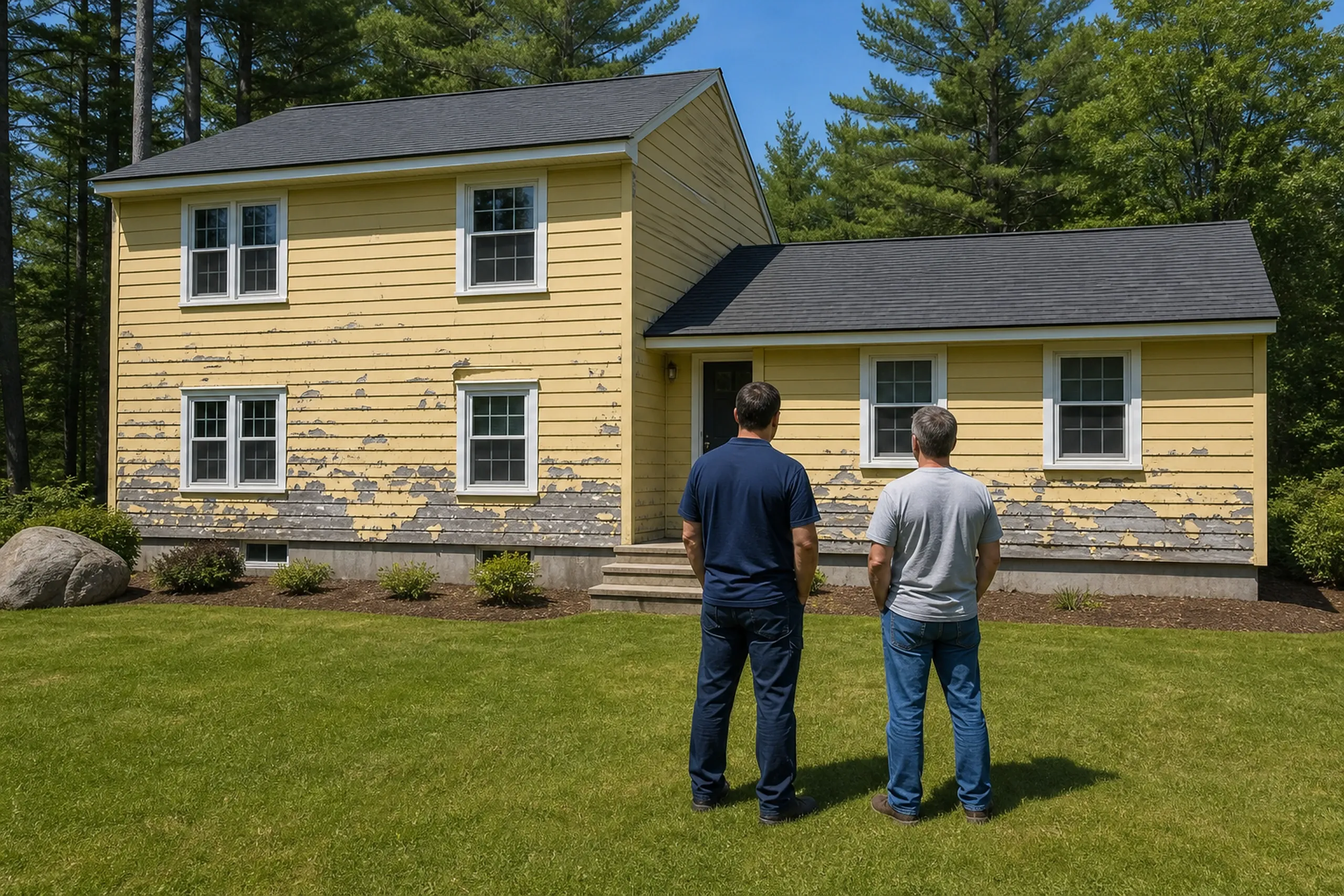
  1. Southern Maine LP siding first visit: In front of a southern Maine split-level, two people, a siding installer and a homeowner, seen from behind, study old painted wood siding with swollen lower boards, yellow paint peeling off in curled strips and bare gray patches along the bottom courses, summer sun.

    Step 1: A look behind the old siding first.

    With your go-ahead we pry back a few courses low on the wall, at a corner and under a window, and a pre-1978 house gets its old paint handled under the EPA's Renovation, Repair and Painting rule.

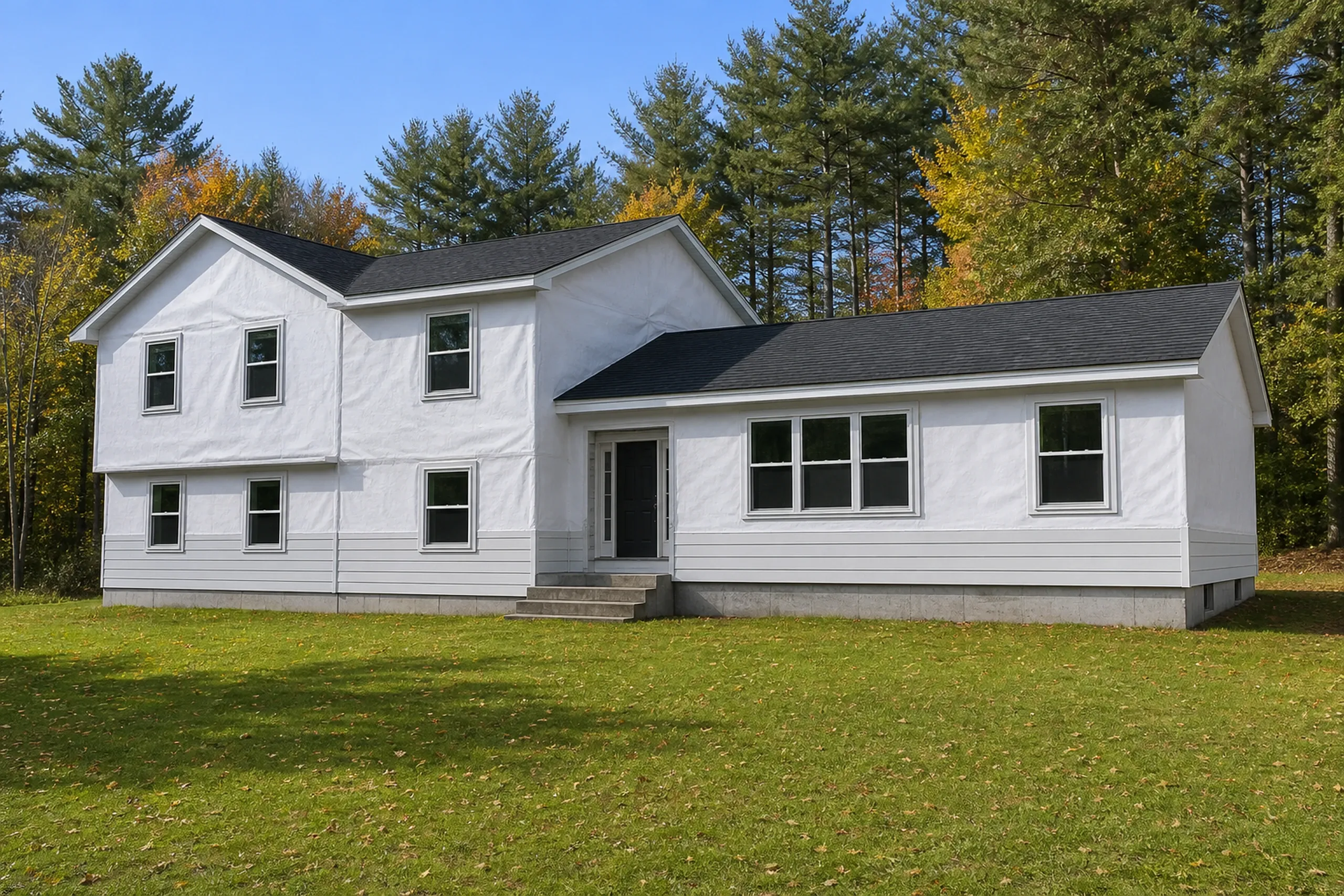
  2. Southern Maine LP lap boards first courses stage: LP lap siding in-progress on a southern Maine split-level at the first courses of primed lap boards stage, smooth primed boards nailed in straight rows along the bottom of the wall with plain white housewrap covering everything above them, early autumn light.

    Step 2: Your price and contract on paper.

    The board line, the finish plan and the price are all written down, and Maine law requires both signatures on any contract above $3,000 and keeps the opening payment to a third of the price or less.

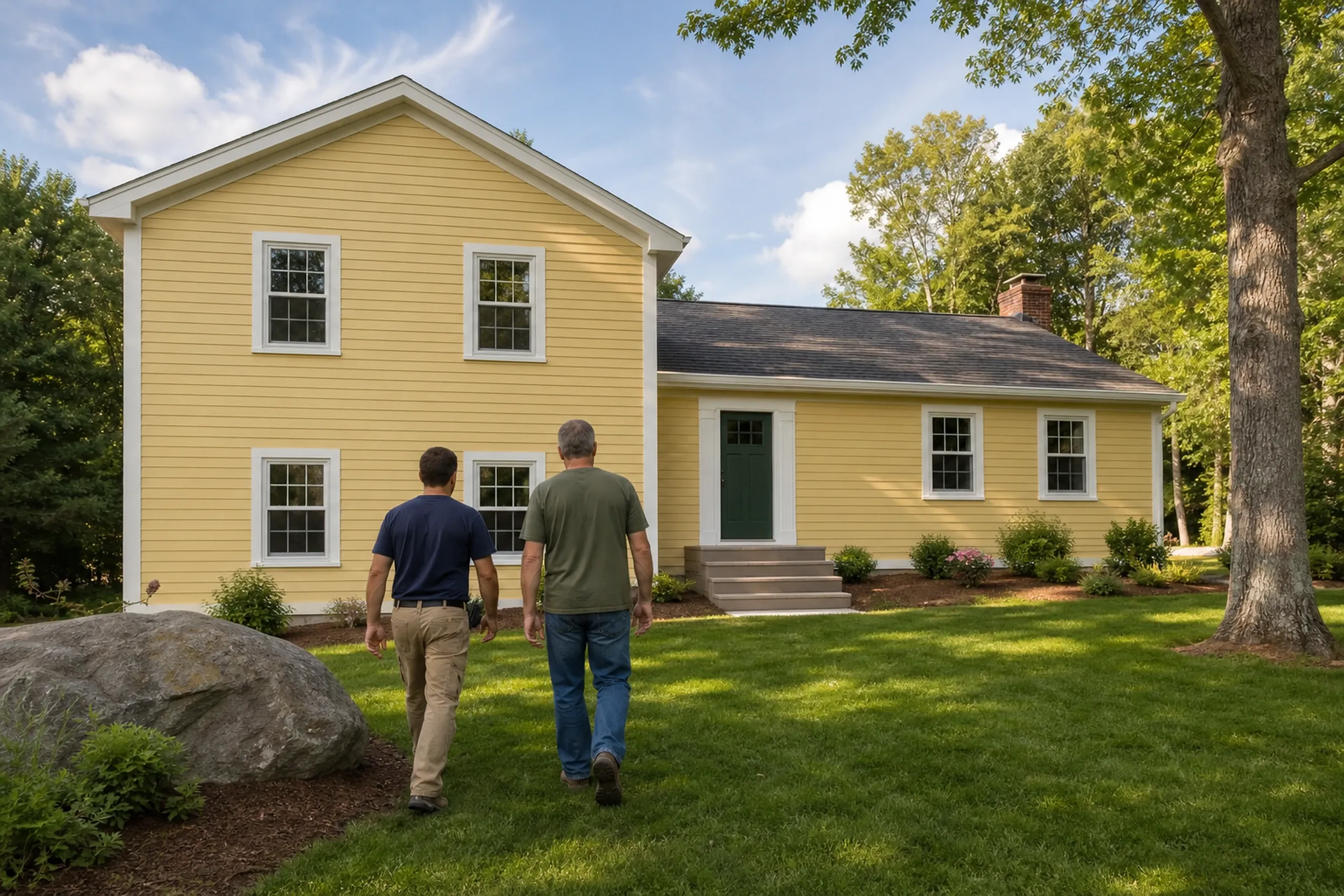
  3. Southern Maine LP siding final walkaround: Circling a re-sided southern Maine split-level, two people, a siding installer and a homeowner, seen from behind, walk across the lawn toward smooth butter-yellow LP lap siding with crisp white corner and window trim and a dark green front door, summer light.

    Step 3: LP goes on in sections, then a final check.

    We strip and board one elevation at a time, and at the end we circle the house with you, checking each joint and cut end.

Is LP Siding the Right Siding for Your House?

LP siding is the right siding when you want painted lap boards at a price between vinyl and fiber cement, on a house with dry sheathing and walls well clear of the soil. We recommend it most on colonials, capes and 1970s ranches with decent overhangs.

LP siding is the wrong pick where a wall runs close to the ground, mulch or a low deck, because LP says the boards are designed for above-ground use and must never touch the ground. It is wrong for a round tower or a curved bay too, since LP says bending stresses the overlay.

LP's own document is the LP SmartSide Prorated 50-Year Limited Warranty, which for boards bought on or after 08/01/2025 pays labor and material on covered substrate damage for the first 5 years, then material only, reduced 2.22% a year. It covers the original buyer, the original owner of the house and the next owner, cannot pass beyond them, and turns on its own terms, so read LP's warranty before you count on it.

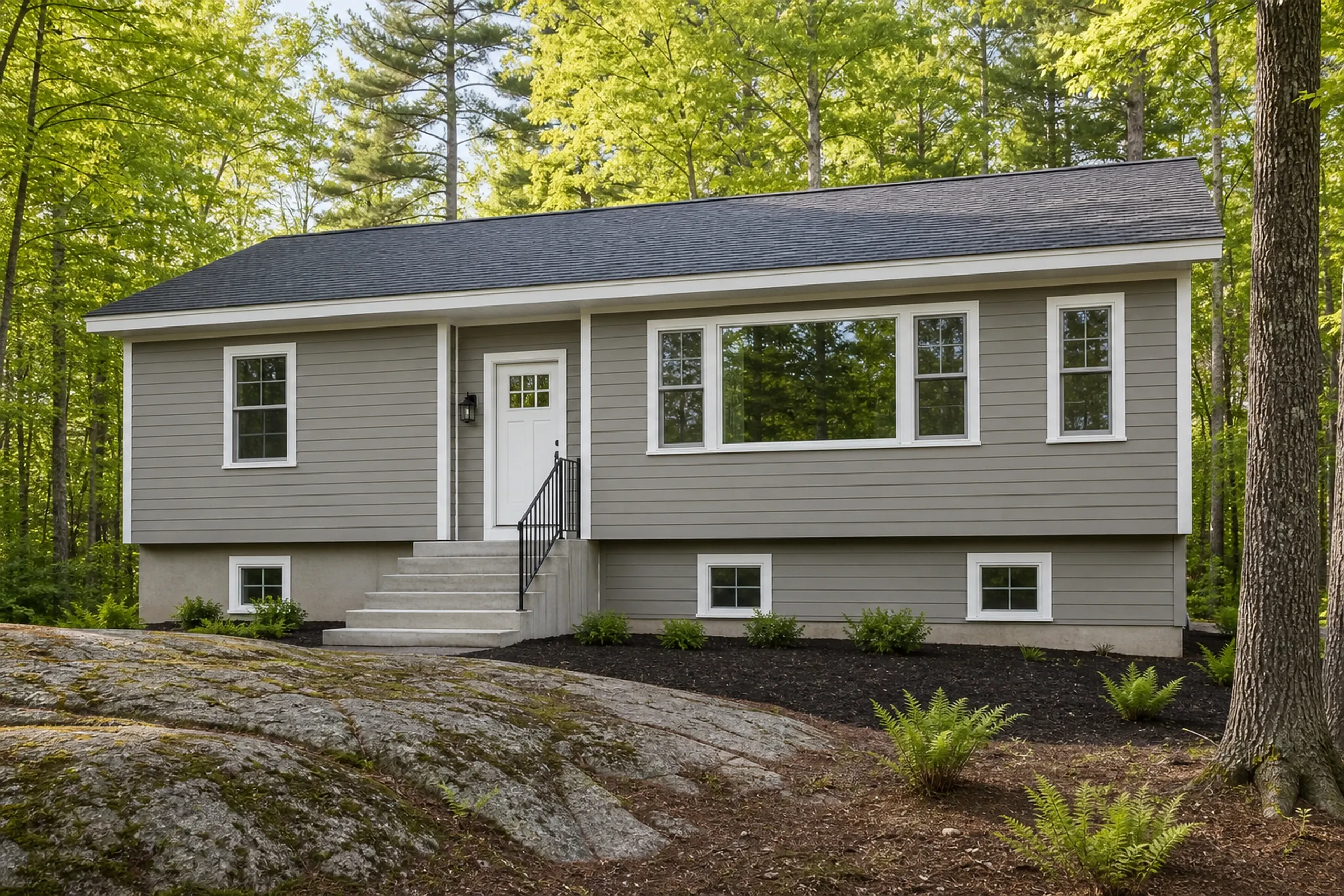
LP SmartSide lap siding on a raised ranch on a wooded southern Maine lot: freshly painted warm gray lap boards with white trim, a clear band of concrete foundation between the bottom course and the mulched bed, late spring.

Who Picks LP SmartSide, for Which Walls, and When?

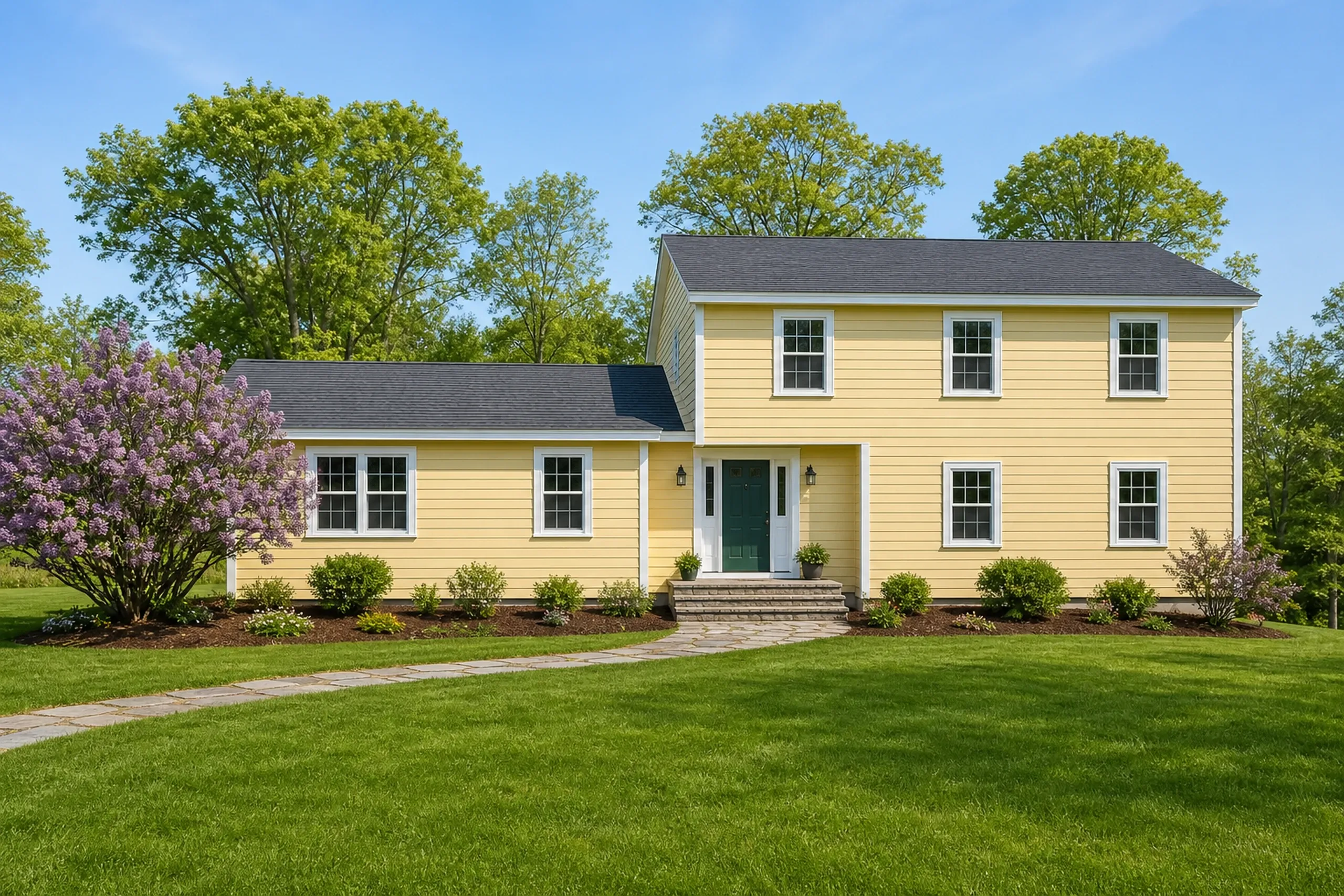
Southern Maine re-sided LP house in spring: A re-sided southern Maine split-level in late spring, butter-yellow painted LP lap siding with white trim and a dark green door, lilacs in bloom beside the lawn, mulched beds, a flagstone walk and fresh green maples under a soft morning sky.

Who is LP SmartSide a good fit for?

LP SmartSide is a good fit for owners who want the look of painted clapboards and will repaint when the paint maker says to, since LP sets no repaint interval of its own. Owners swapping out tired hardboard or wavy vinyl on a cape or colonial are the usual match.

Where on a house should LP SmartSide go?

LP SmartSide belongs on walls, gables and trim that shed water, well above the ground. LP also warns against growing ivy on engineered wood siding, because the roots can work between planks and raise the risk of rot.

When should LP SmartSide go up and get painted?

LP SmartSide should go up between spring and fall, while the boards and the sheathing are dry, and LP says to paint it as soon as possible or within 180 days. LP calls for a 100% acrylic exterior paint made for wood and engineered wood, accepts oil paint, and rules out vinyl-based paint.

How Much Does LP Siding Cost Per Square?

LP siding costs about $1,500 to $1,875 per square installed in southern Maine, where one square means 100 square feet of wall surface. That band is the middle of many local quotes, a budgeting tool, never the price of your house.

How Much Does LP Siding Cost Per Square?
House sizeLP SmartSide, installed
Small20 to 25 squares$30,000 to $47,000
Medium25 to 32 squares$37,500 to $60,000
Large32+ squaresfrom $48,000

Averaged from many southern Maine LP SmartSide quotes and never a bid: old siding removed, wrap, flashing, trim and cleanup all counted, with hidden rot able to raise it. LP and SmartSide are registered trademarks of Louisiana-Pacific Corporation. We are an independent installer and are not affiliated with LP.

What raises an LP siding price beyond the boards?

Beyond the boards, an LP siding price rises with what the tear-off finds: soft sheathing, a rotted sill or window flashing that quit long ago. Extra stories, steep ground under a wall and heavy trim add more.

Can new LP SmartSide go over the old siding to save money?

New LP SmartSide can go over old wood or wood composite siding only when that layer is flat and sound, LP says, with a water-resistive barrier between the two. That cover-over skips tear-off and disposal and leaves lead-painted clapboards undisturbed, but a soft wall comes off, and asbestos-cement shingles get LP's rules checked first.

Why does this page show no LP repair price?

There is no repair price here because fixing an LP wall turns on how many boards swelled or cracked, how high they sit and whether water reached the sheathing, so we price it after a visit. When most of a side has failed, re-siding that side usually beats patching it.

How Do You Get an LP Siding Price?

You get an LP siding price by sending a free estimate request, after which we come out, check what the old boards are covering and write up the number. To weigh LP against the other four, see all five of our siding services.