

Reliable Siding Repair | Southern Maine Siding

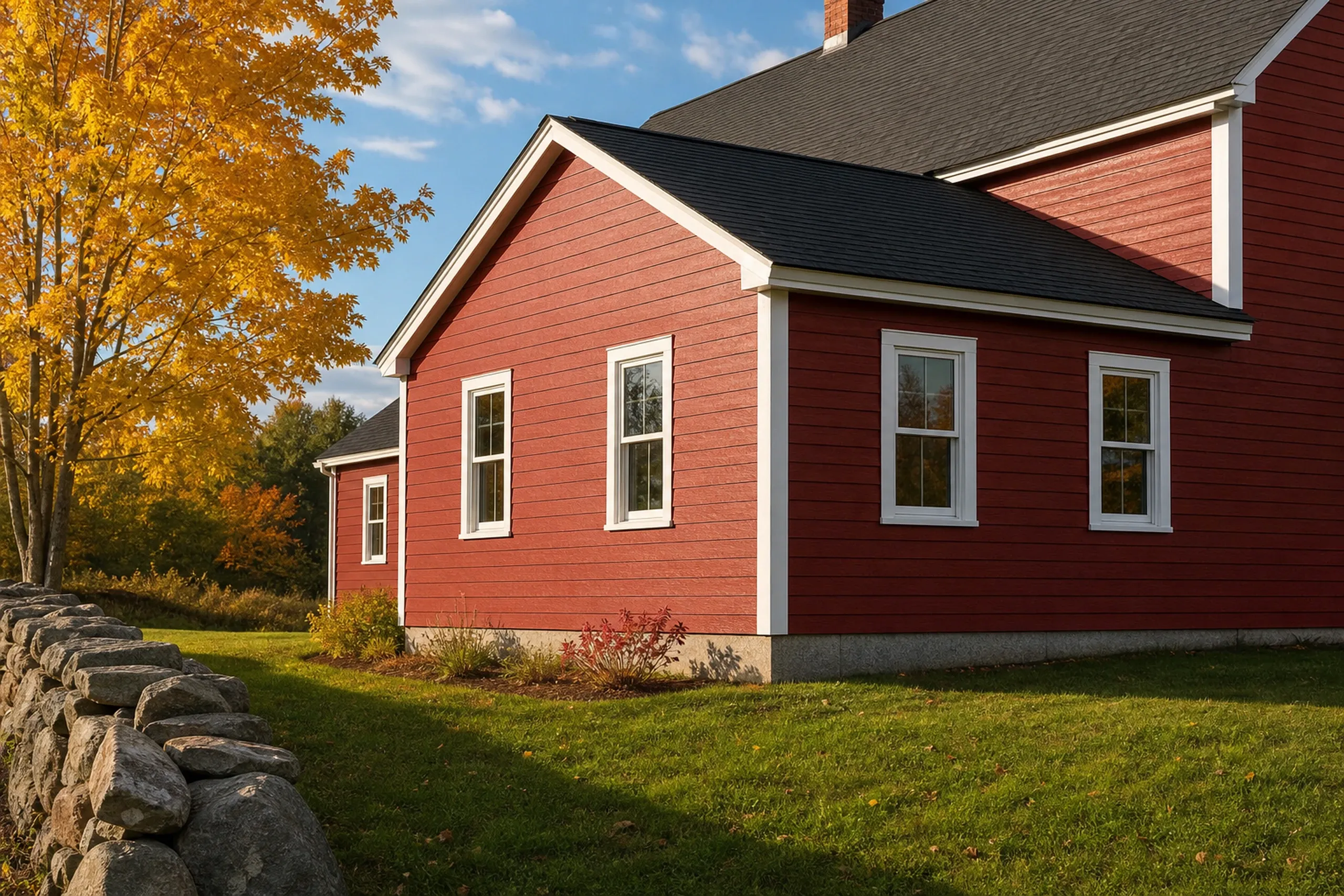
Siding repair is only half done if the new piece goes back over the same leak, so we trace where the water came in, fix the wrap, flashing and sheathing behind the damage, then fit pieces that match the wall around them. We repair vinyl, wood clapboard, cedar shingles, fiber cement and engineered wood.

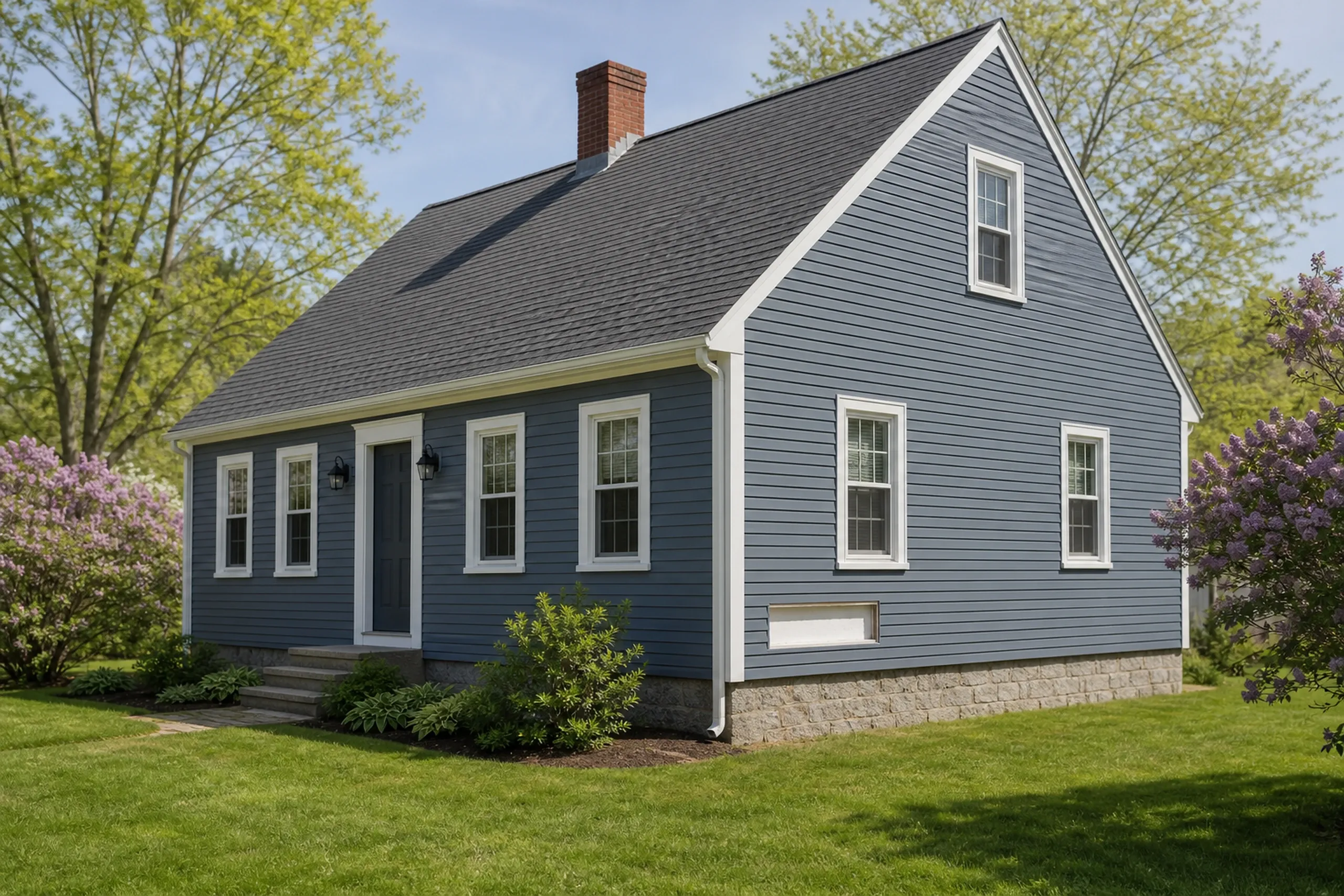
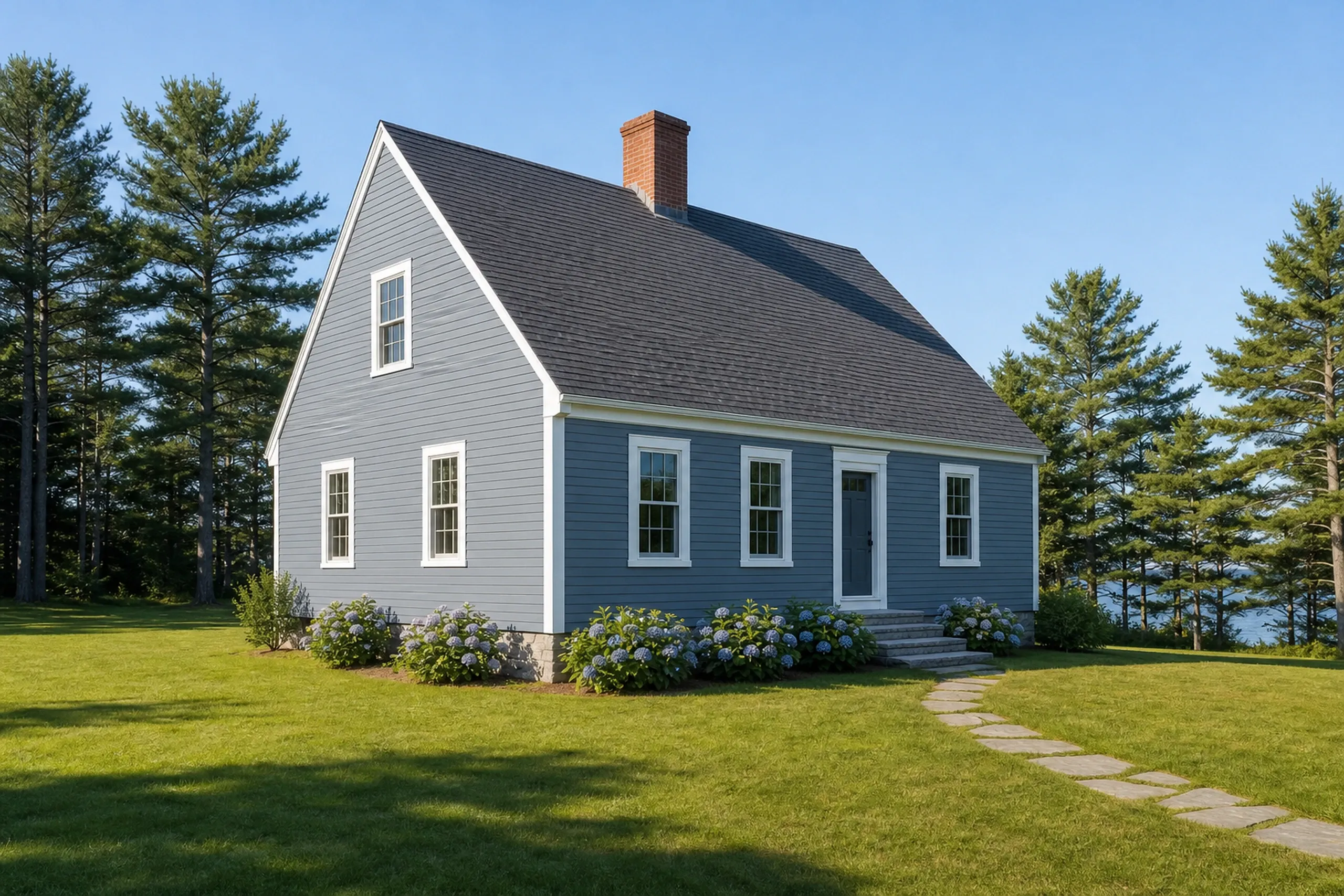
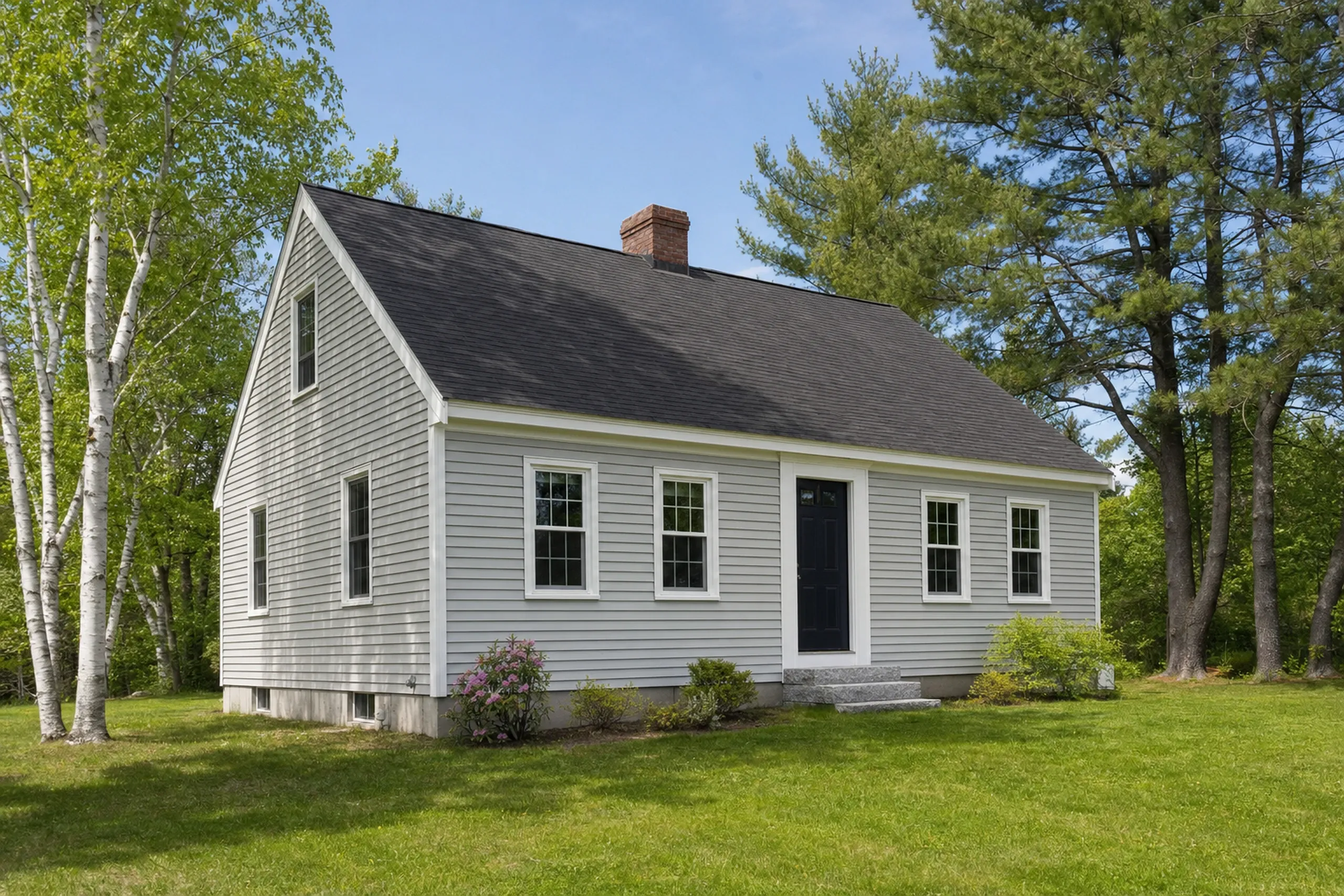
Siding repair on a southern Maine cape: three new light gray vinyl panels below a front window blending into the older gray vinyl wall, white corner posts and trim, late spring.
  • Water source traced first
  • New pieces matched to the wall
  • Priced in writing after a visit

This page covers siding repair on southern Maine houses: replacing cracked, loose or rotted pieces of vinyl, wood clapboard, cedar shingle, fiber cement or engineered wood, along with the wrap, flashing and sheathing behind them.

A repair suits damage that stays in one place, such as a storm-torn corner, a stain under a roof edge or a handful of soft shingles. Southern Maine Siding looks for why the water got in before cutting anything out, so the fix answers the cause and not only the stain.

The point to keep: repairs carry no price list on this site. Each one is priced after a visit, by how many pieces are involved, how high they sit and what the wall behind them shows.

Southern Maine repaired siding front entry: Front entry of a re-sided southern Maine cape in early autumn, shot vertically, a deep red door with two narrow sidelights, a granite step, blue-gray vinyl lap siding repaired and blended smoothly into the older wall around the door, white trim and corner post, a pot of mums.
  • Leak traced before patching
  • Sheathing checked behind damage
  • Matched to the old wall

Why Does a Siding Patch So Often Fail?

A siding patch so often fails because it replaces the piece you can see and leaves the water path behind it open. Mike Guertin of Fine Homebuilding says vinyl siding leaks a lot, so the housewrap or tar paper behind it has to stay whole.

  • The water source found first: a roof edge, a window head, a gutter end or a missing kick-out
  • Sheathing behind the damage tapped and probed, with soft boards cut out and replaced
  • New pieces matched in profile, reveal and finish to the wall they sit in

What Siding Repairs Do We Handle Most Often?

Most siding damage falls into one of three patterns, and each pattern gets its own fix.

Vinyl panel repair on a southern Maine split-level: one installer seen from behind holding the course above open with a zip tool as a new tan vinyl panel slides in, early fall.

Cracked, Loose or Storm-Torn Vinyl Panels

A cracked vinyl panel is one of the simpler repairs on a house, because each course locks into the one below it. The Vinyl Siding Institute's manual describes unzipping the panel above with a zip lock tool, pulling the nails from the broken piece, locking in a new one and zipping the upper course back down.

A split corner post can be fixed in place too: VSI's method cuts away the face, keeps the nail hem and pocket, and snaps a new corner over what remains. Matching is the harder part, since Family Handyman notes that sun fades vinyl and an older style and color can be tough to find.

Vinyl also stiffens below freezing and may crack as it is handled, Family Handyman warns. Panel repairs that can wait, wait for a milder day.
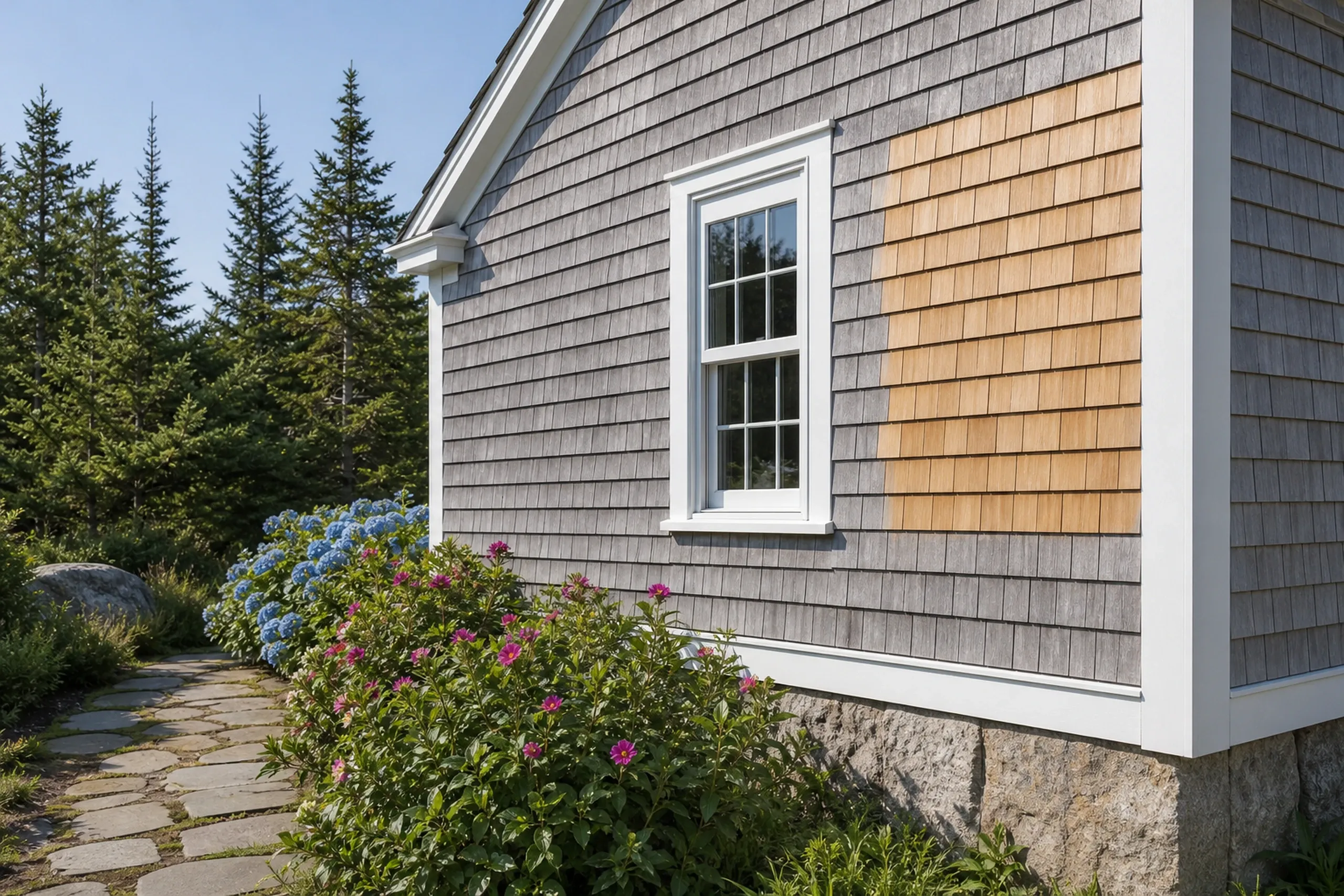
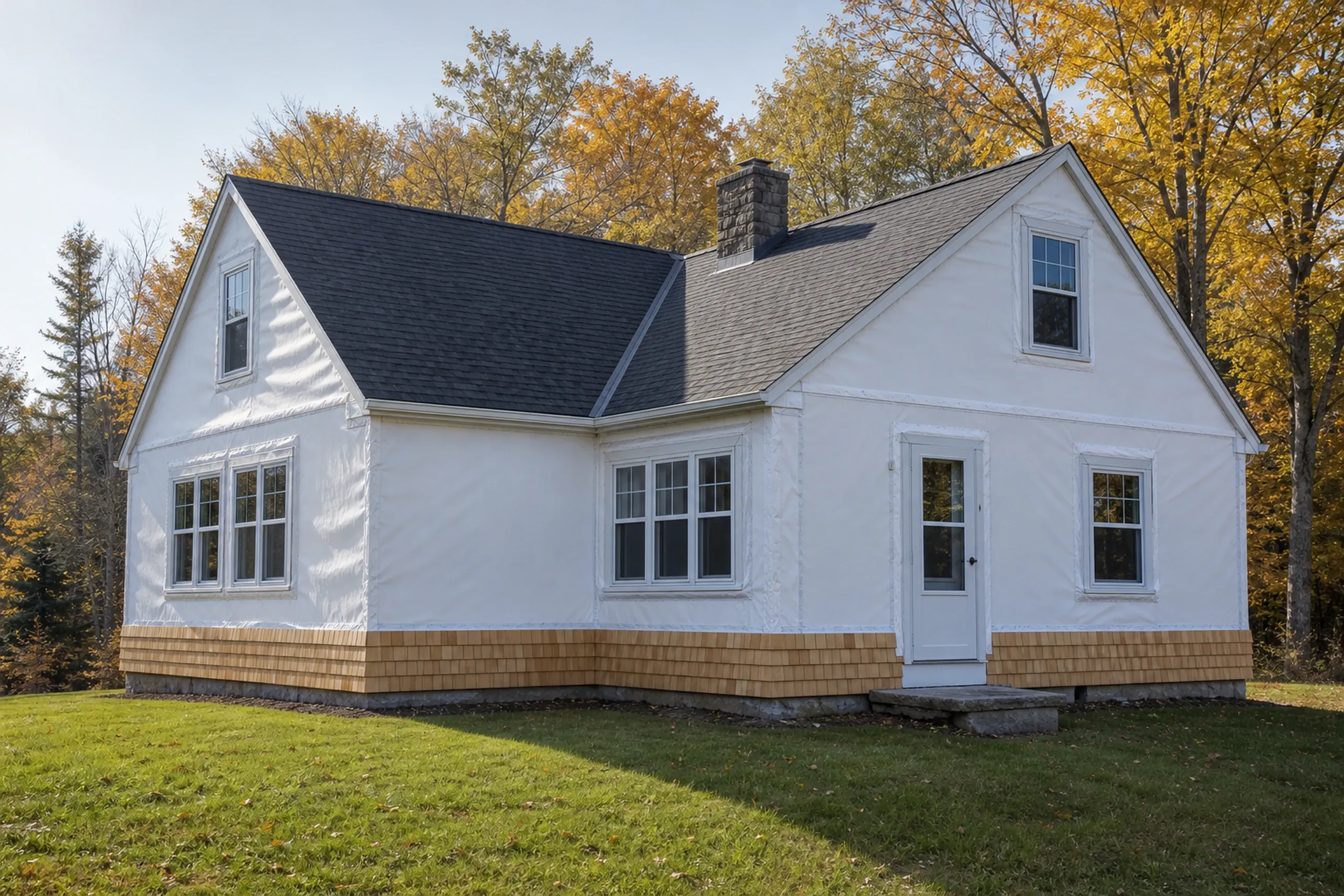
Cedar shingle repair on a southern Maine shingle-style cottage: fresh honey-colored cedar shingles set into older silver-gray shingles beside a white window casing, midsummer.

Wood, Fiber Cement and Cedar Shingle Damage

A split clapboard rarely needs the whole board replaced. Fine Homebuilding's Andy Engel removes only the section between the defect and the nearest end joint, fastens just one edge of the new piece so it can move, and primes all six sides with oil-based primer on a painted wall.

For shingles, This Old House says any that feel soft or crumble should come out, and new ones go in about 1/8 inch apart, nailed 3/4 to 1 inch from each edge with galvanized nails. When curling and soft spots cover a whole shingled wall, laying fresh cedar shingle siding over new wrap beats chasing single shingles.

Board siding has its own rules. James Hardie says small cracks, chips and dents in its fiber cement can be filled with a cementitious patching compound, and LP SmartSide instructions require every exposed cut of siding and trim to be sealed with paint or sealant.

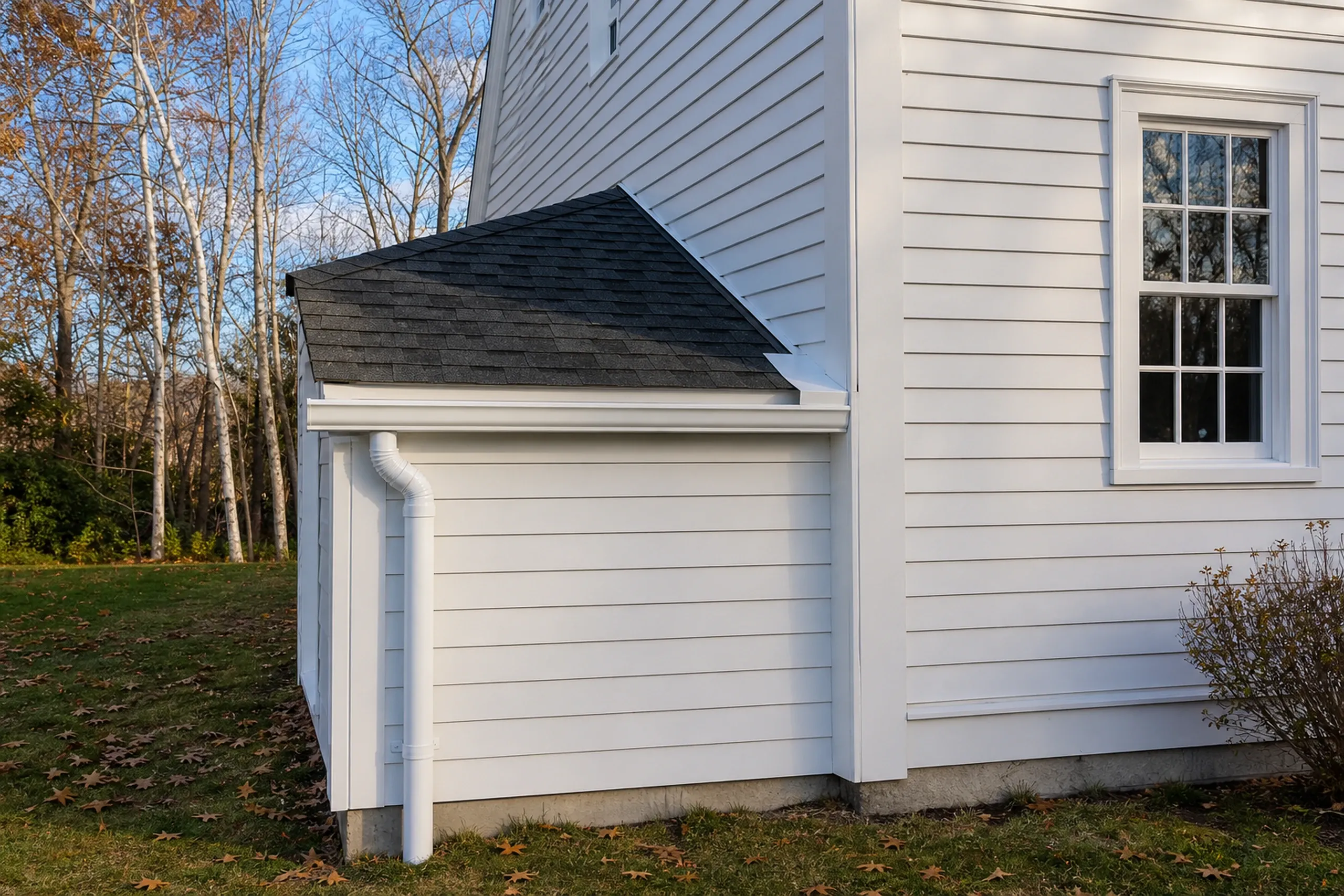
Kick-out flashing on a southern Maine colonial: a bent metal kick-out at the foot of a roof-to-wall joint turning water into the gutter, repaired white lap siding below, late fall.

Water Stains Below a Roof Edge or Window

Stains, peeling paint or soft spots under a roof line usually trace back to water rather than to the siding itself. Building Science Corporation explains that an ice dam forms when meltwater from a warmer upper roof refreezes at the cold eaves, and the leakage can damage the sheathing and the walls below.

Where a roof meets a sidewall, the fix often includes a kick-out flashing that sends water into the gutter. LP's instructions call for one at every eave-to-wall joint, with the siding kept at least 1 inch off the roofing and 6 inches above finish grade.

Window leaks start at the head more often than owners expect. Guertin cautions that the top leg of a J-channel cannot serve as head flashing, so a repair below a window begins by checking what sits above it.

What Siding Repair Services Do We Offer?

Our repair work covers the siding and the wall layers it is there to protect.

  • Vinyl panels and corner posts, wood clapboards, cedar shingles, fiber cement and engineered wood boards replaced and matched
  • Leaks traced at roof edges, windows, doors and gutters, with rotted sheathing and trim rebuilt
  • Failed caulk and storm damage fixed, then paint, stain or touch-up to blend the repaired section

About three in four American homes built before 1978 still contain some lead-based paint, the EPA notes, and its Renovation, Repair and Painting rule sets how that paint may be disturbed. On an older painted house we ask the year it was built at the very first visit.

How Does a Siding Repair Job Run?

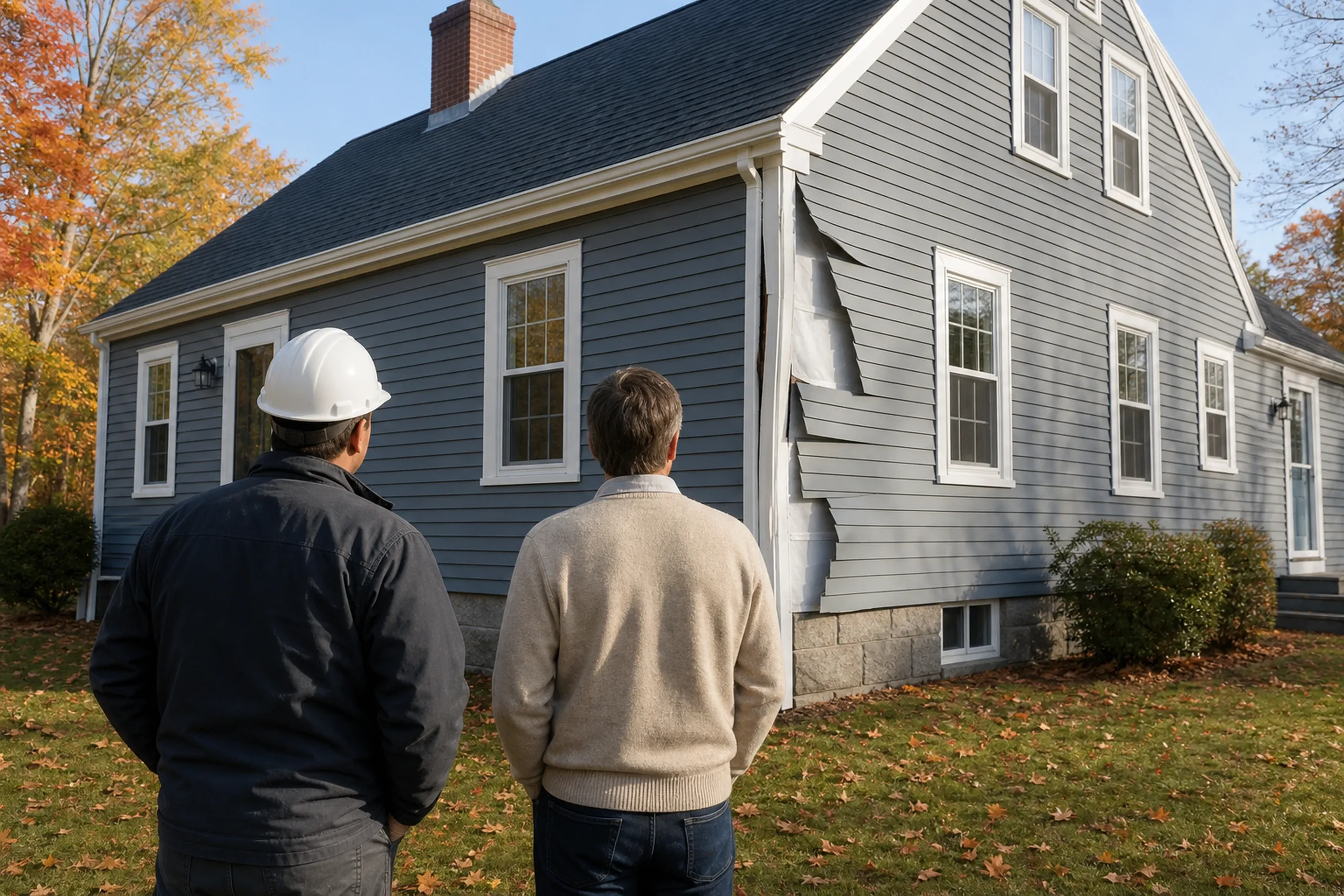
  1. Southern Maine siding repair first visit: At the corner of a southern Maine cape on an October morning, two people, a siding installer and a homeowner, seen from behind, look at a storm-torn corner where the vinyl corner post has split open and three cracked blue-gray panels hang away from the wall.

    Step 1: We find the cause before we quote.

    We look at the damage and at the roof edge and window head above it, and where you allow it we open a piece to see the sheathing.

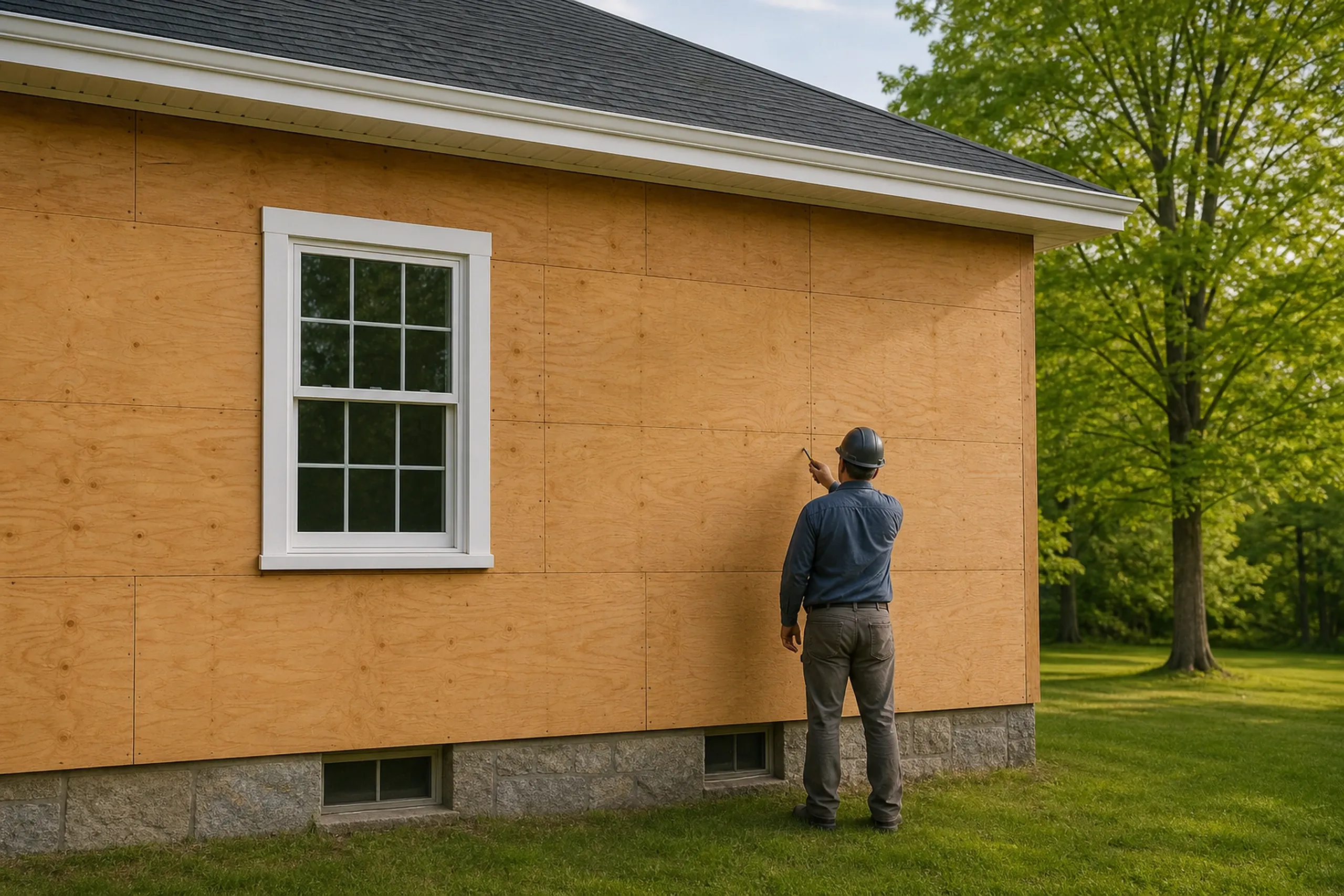
  2. Southern Maine siding repair damaged courses stage: Siding repair in-progress on a southern Maine cape at the damaged courses cut out stage, a clean rectangular opening in the blue-gray vinyl wall beside the corner showing plain white housewrap behind it, intact panels above and below, late spring light.

    Step 2: A written price, a signed contract, then the work.

    Every repair gets a written scope naming each piece and layer we replace. On larger jobs, Maine's contract law for home construction also demands a signed agreement and keeps the deposit at or below one third of the total.

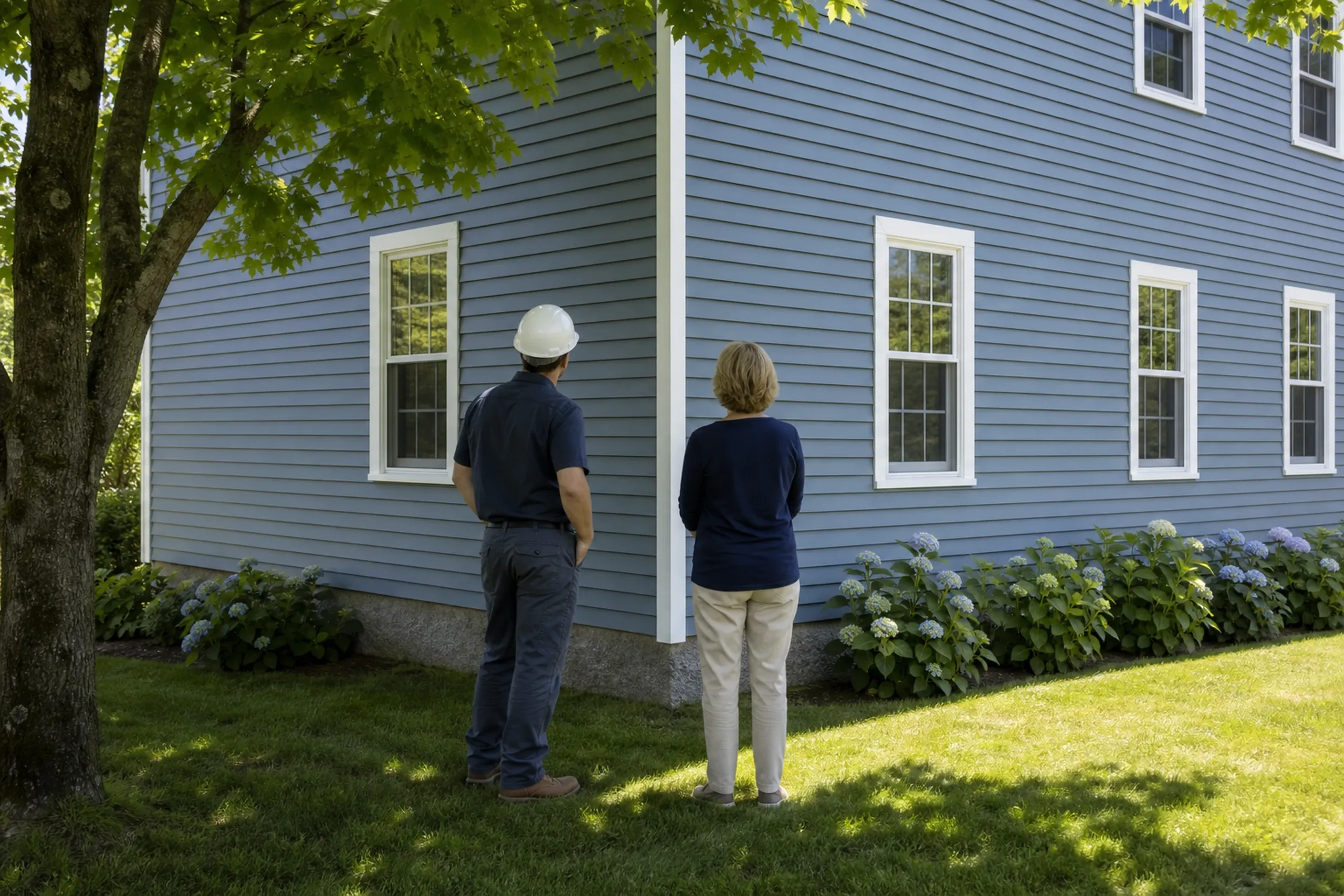
  3. Southern Maine siding repair final walkaround: Beside a southern Maine cape with its storm-torn corner now re-sided, two people, a siding installer and a homeowner, seen from behind, study the repaired wall where new blue-gray vinyl panels and a fresh white corner post blend into the older siding, summer afternoon light.

    Step 3: The repair, then a look together.

    We rebuild the layers behind the damage, set the matched pieces and finish them, then walk the repaired wall with you.

When Is Siding Repair the Wrong Call?

Siding repair is the wrong call once the damage stops being one spot and becomes a pattern: rot on two or more walls, panels cracking across a sun-faded house, or shingles curling over a whole side. At that point we will tell you plainly that re-siding the wall, through vinyl siding replacement or the original material, is the better use of your money.

Repair is the right call when one event did the harm, such as a storm, a fallen limb or one leaking roof edge, and the wall around it is sound. It also needs a material that can still be matched, because a patch should blend into the wall it sits in.

Rot changes the plan. LP's instructions say siding should not go over rain-soaked or buckled sheathing, and VSI says vinyl never goes over rotting wood, so if opening the wall shows rot spreading past the damaged section, we stop and show you before going further.

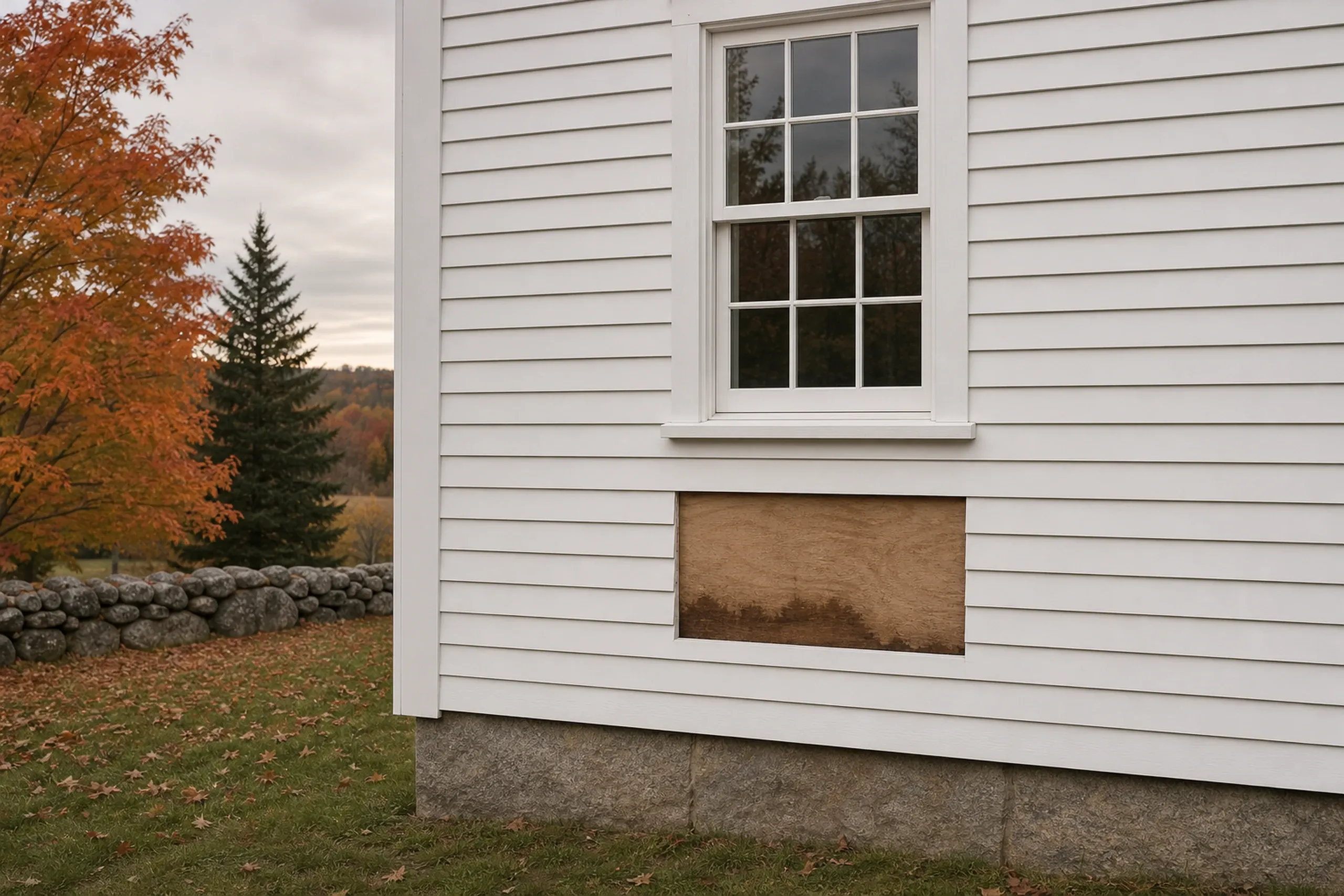
Siding repair stage on a southern Maine colonial: a section of white wood clapboard cut out below a window, water-darkened sheathing showing behind it, overcast fall day.

Who Needs Siding Repair, Where, and When?

Southern Maine repaired siding house in summer: A southern Maine cape with its repaired corner re-sided in matching blue-gray vinyl that blends into the older wall, white corner posts and trim, a mown lawn, hydrangeas in bloom along the foundation and a stone path, bright summer afternoon.

Who should call about a siding repair?

Homeowners who should call about a siding repair have cracked, loose, warped or missing pieces, a soft spot, or a stain spreading down a wall. One side torn up by a storm is a classic repair.

Where on a house does siding damage usually start?

Siding damage usually starts where water collects or the siding sits too close to something: under roof edges, below window heads and near the ground. This Old House's Tom Silva says siding set tight to a sloped roof often gets damaged, and he prefers a 2 inch gap there.

When should siding damage be repaired?

Siding damage should be repaired soon after it shows, because the wrap behind a broken or missing piece takes the weather directly until it is covered again. Wood and board repairs can go ahead in most seasons, while vinyl panels do best on milder days.

How Much Does Siding Repair Cost?

The cost of a siding repair comes from what the visit finds, which is why this site publishes no repair price list. We look at the damage first, then send a written price for that wall. What moves a repair price: - How many pieces are damaged and how high they sit, since a second-story repair needs staging a first-floor one does not - What waits behind them: sound sheathing, or rot and failed flashing that must be fixed first - How hard the old siding is to match, and whether a full run of new siding would cost less than a careful patch

  • How many pieces are damaged and how high they sit, since a second-story repair needs staging a first-floor one does not
  • What waits behind them: sound sheathing, or rot and failed flashing that must be fixed first
  • How hard the old siding is to match, and whether a full run of new siding would cost less than a careful patch

Why is there no siding repair price list here?

There is no siding repair price list here because two repairs that look alike from the lawn can be very different once the first piece comes off. We would rather price yours from a visit than post a number that changes when the wall opens.

When can a replacement run cost less than a patch?

A replacement run can cost less than a patch when the old material is discontinued, faded past matching, or damaged in several places along one wall. Running new siding corner to corner on that wall ends the hunt for parts and reads as one surface.

Does finding rot change the repair price?

Finding rot does change the repair price, because the sheathing or trim behind the siding has to be rebuilt before new pieces go on. If rot turns up once the wall is open, we show you and agree on the added work in writing before carrying on.

How Do You Get a Siding Repair Looked At?

Getting a siding repair looked at starts with a free estimate request: we visit, trace the cause and send you a written price for the fix. You owe nothing until a signed contract is in your hands.