Quality Cedar Shingle Siding | Southern Maine Siding

Cedar shingle siding is the traditional wall of the southern Maine coast: tapered pieces of cedar laid in overlapping courses that turn silver-gray when no finish goes on them. We lay it on capes, colonials and shingle-style cottages, over a dry wall with flashed openings and nails chosen for how far the house sits from salt water.

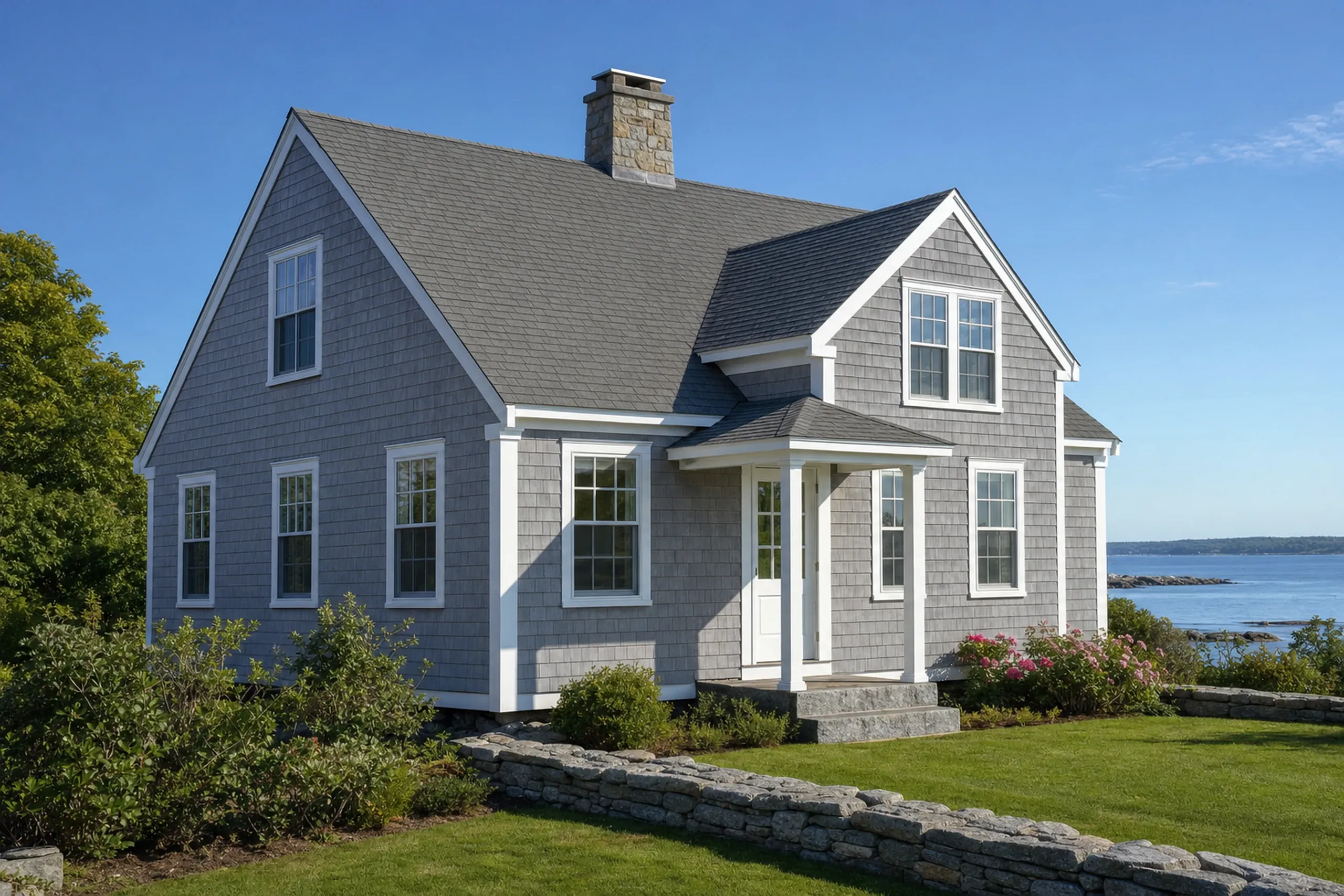
Cedar shingle siding on a southern Maine shingle-style cottage: natural courses weathered silver-gray, white trim and corner boards, a granite step, summer.
  • Type 316 stainless nails within 15 miles of salt water
  • Doubled first course, joints offset course to course
  • Written price and signed contract before work starts

This page covers cedar shingle siding on existing houses across southern Maine: stripping the old wall, fixing the sheathing and flashing it hid, and laying new eastern white or western red cedar courses over fresh housewrap. It is for owners of capes, colonials and shingle-style cottages.

Southern Maine Siding chooses the nail by the house's distance from salt water, finishes corners the way the house first had them, and says plainly when fiber cement or engineered wood lap would serve a house better than cedar.

The figure to keep: cedar shingles average about $2,500 per square of wall in southern Maine, a midpoint drawn from many quotes and never a price for your walls.

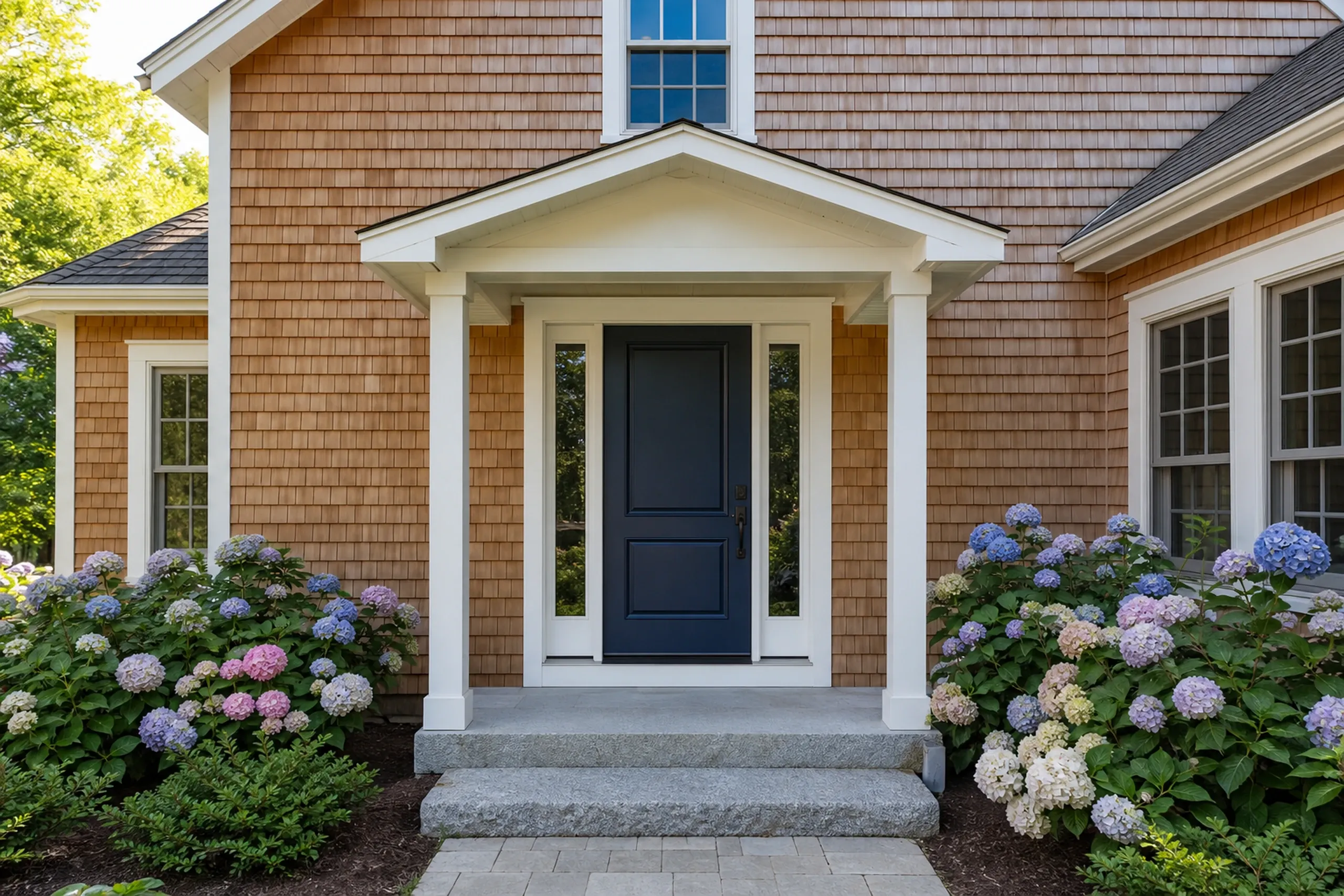
Southern Maine re-sided cedar front entry: Front entry of a re-sided southern Maine shingle-style cottage in summer, shot vertically, a navy blue door with two sidelights, a granite step, warm honey-brown cedar shingles around the door softening toward silver, white trim, hydrangeas in bloom.
  • Stainless nails near the coast
  • Woven or boarded corners
  • Old siding hauled away

Why Do Homeowners Choose Us for Cedar Shingles?

Homeowners choose us for cedar shingles because we build the wall behind them first: sound sheathing, taped housewrap, a flashed head over every window and the right nail for the salt in the air. The courses shed the weather; the layers under them keep the wall sound.

  • Type 316 stainless nails within 15 miles of salt water, the line the Cedar Shake and Shingle Bureau draws
  • Joints offset at least 1 1/2 inches from the courses above and below, and a doubled course at the foundation
  • Outside corners woven or boarded, matched to how the house was first shingled

What Do You Get, and Give Up, With Cedar Shingles?

Cedar asks more of a house and its owner than a lap board does, and it gives back a wall the imitations only approach.

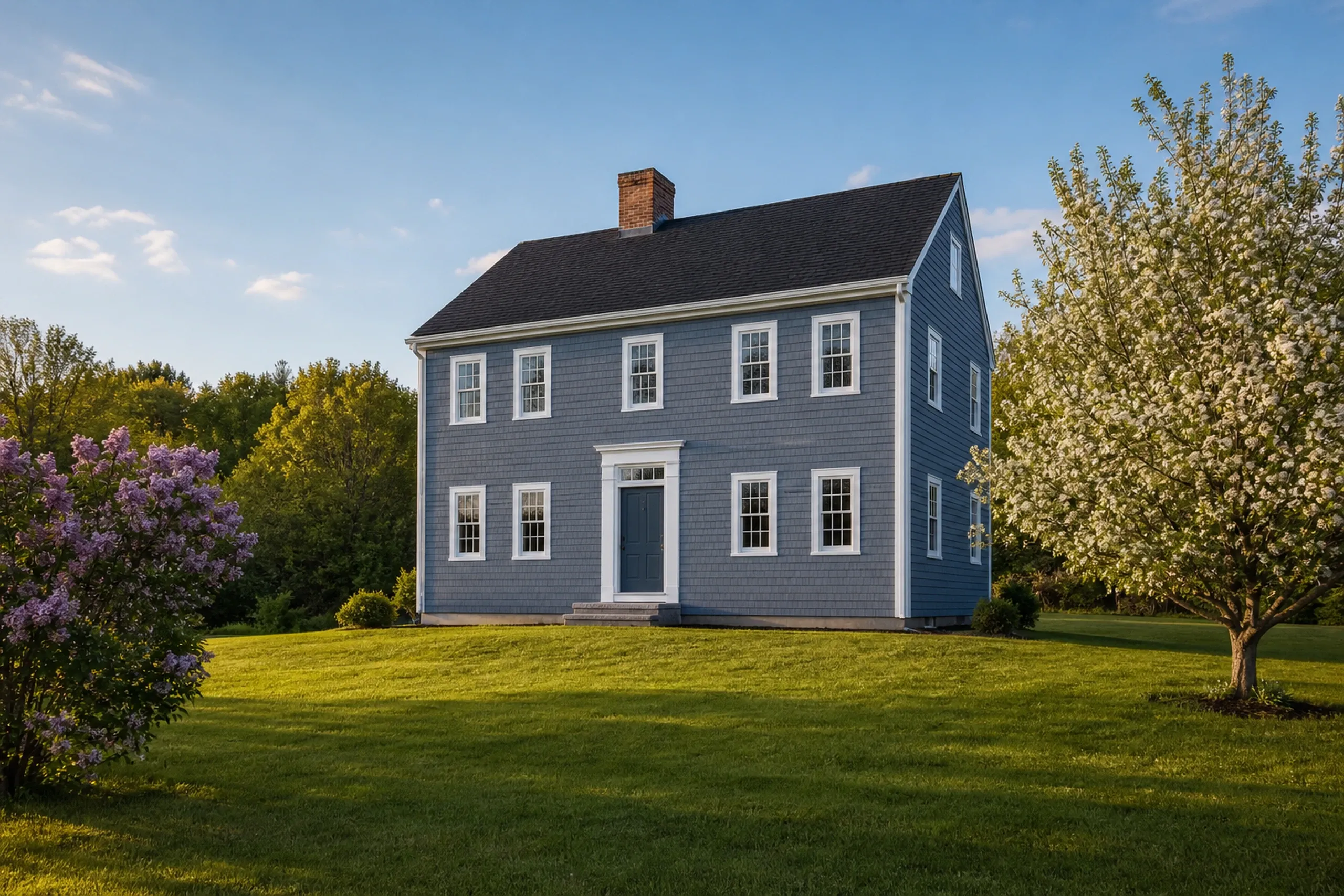
Stained cedar shingles on a southern Maine colonial: courses in a solid gray-blue stain, white window casings and corner boards, a lawn, late spring.

Cedar's Tradeoffs: Look, Upkeep and Grain

Left natural, cedar shingles go silver-gray and need no paint, and that weathered look is the heart of the Shingle Style New England architects made popular. A stained wall is another matter: the Forest Products Laboratory puts semitransparent stain at 4 to 5 years on a south wall and more than 10 on a north one, so each side keeps its own clock.

Grain matters more than most owners expect: the laboratory says flat-grained shingles shrink and swell almost twice as much as vertical-grained ones. The bureau's Blue Label grade of western red cedar is all clear heartwood and edge grain.

Mildew and algae turn up on aging cedar, finished or bare, and the laboratory calls that growth cosmetic. It comes off with an oxygen bleach and a garden hose, while a pressure washer strips wood fiber and shortens shingle life.
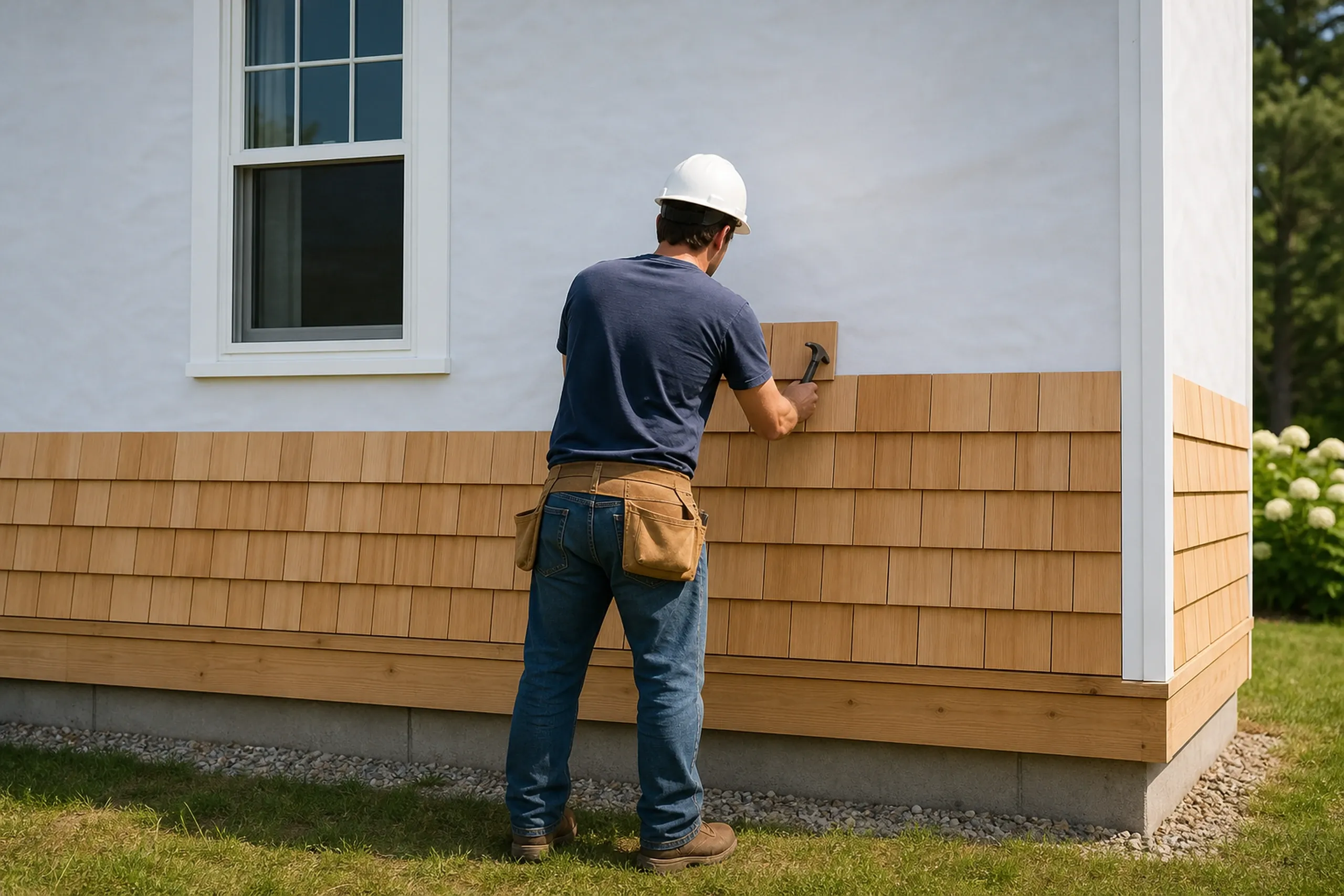
Cedar shingle courses going up on a colonial: one installer seen from behind nailing new shingles over plain white housewrap above a doubled first course, summer.

How We Lay Cedar Courses on a Salt-Air Wall

Within 15 miles of salt water the bureau calls for Type 316 stainless nails, and farther inland it also allows Type 304 stainless or hot-dipped galvanized nails meeting ASTM A153 Class D. We never use electrogalvanized nails: the bureau says they corrode and stain, and the laboratory traces the blue-black streaks on old cedar walls to iron reacting with the wood.

Eastern white cedar makers call for a 5-inch exposure on 16-inch shingles and two nails per shingle, set 3/4 inch in from each edge and an inch above the butt line of the course that will cover them. We offset joints at least 1 1/2 inches course to course and never line them up across three courses.

Behind the courses, every window gets flashed and every spot where a roof edge dies into a wall gets a kick-out, so roof water lands in the gutter. Over foam sheathing the laboratory calls a rain screen necessary: horizontal 1 by 4 boards on vertical furring, vented top and bottom and screened against insects.

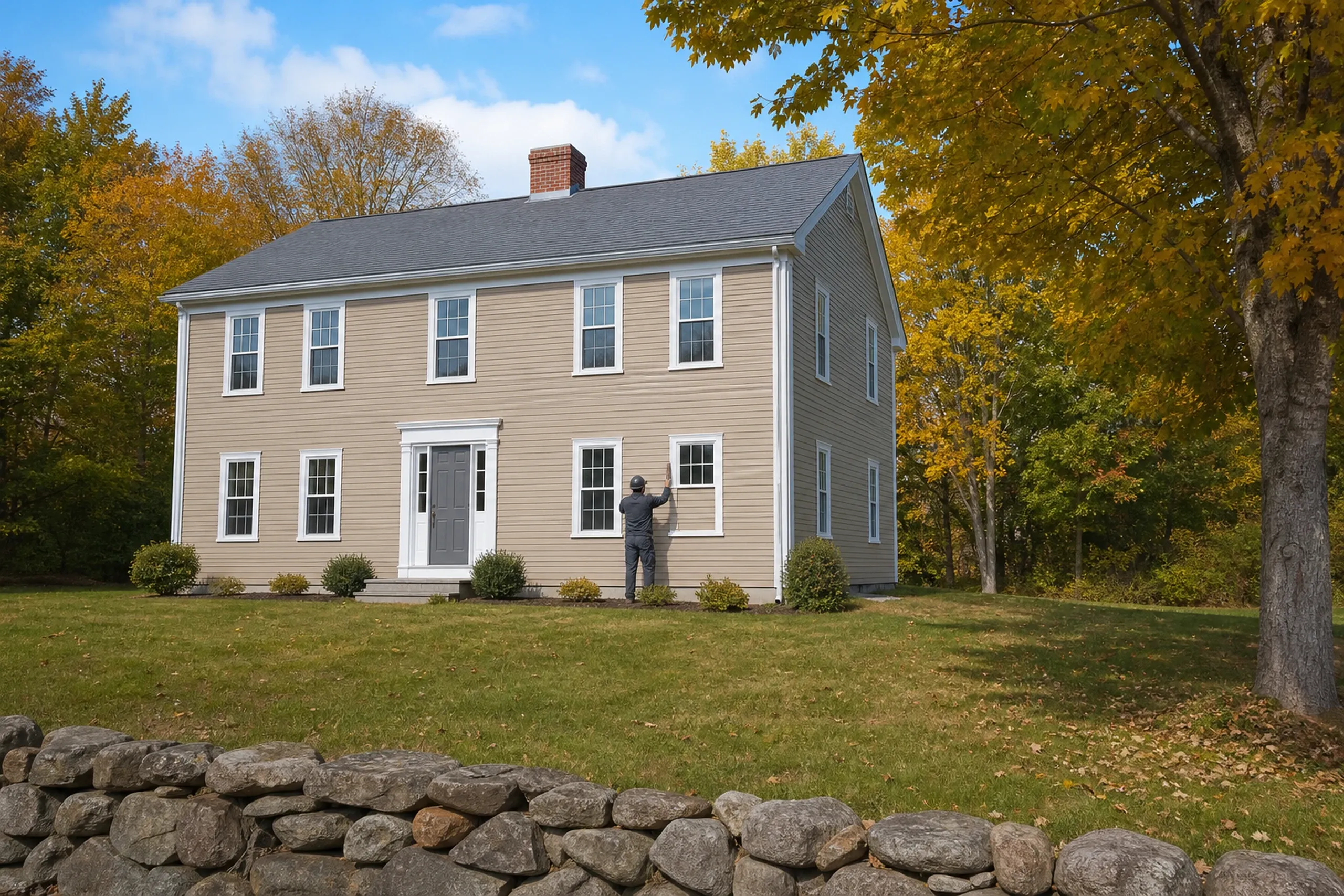
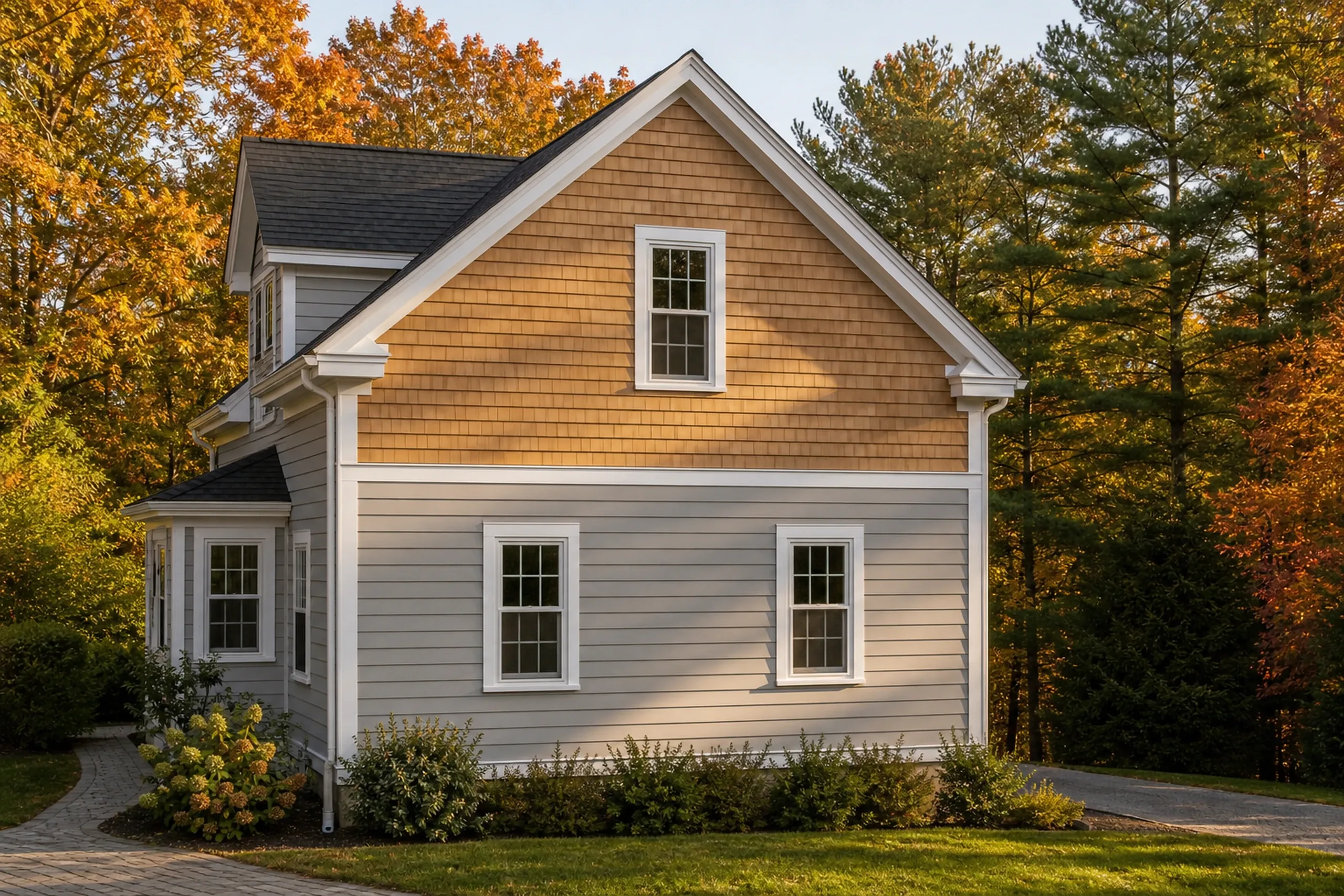
Cedar shingles on the gable of a southern Maine colonial above painted fiber cement lap siding, a white frieze board between them, early fall.

Cedar Shingles Against Fiber Cement and LP Lap

James Hardie fiber cement is our pick over cedar for a clapboarded colonial that should stay a lap wall, or for an owner who wants a painted color instead of weathered wood. It also averages less per square than cedar, which adds up on a big two-story house.

LP SmartSide engineered wood lap makes sense on a 1970s or 1980s ranch where the budget points to a board and the street does too. Most people asking for cedar picture a gray cottage; on that house, or on a cape that wore cedar before someone covered it, the money belongs in shingles.

What Cedar Shingle Services Do We Offer?

Cedar work on an existing house comes down to three jobs.

  • Full re-sides in eastern white or western red cedar, natural, factory-stained or pre-primed
  • Rain-screen furring, housewrap, and window and kick-out flashing laid in before the courses
  • Damaged shingles cut out and new ones woven into the old courses

Every other material we hang, from vinyl to fiber cement, is on our siding services page. If only a patch has failed, that third line may be the whole job.

How Does a Cedar Shingle Project Run?

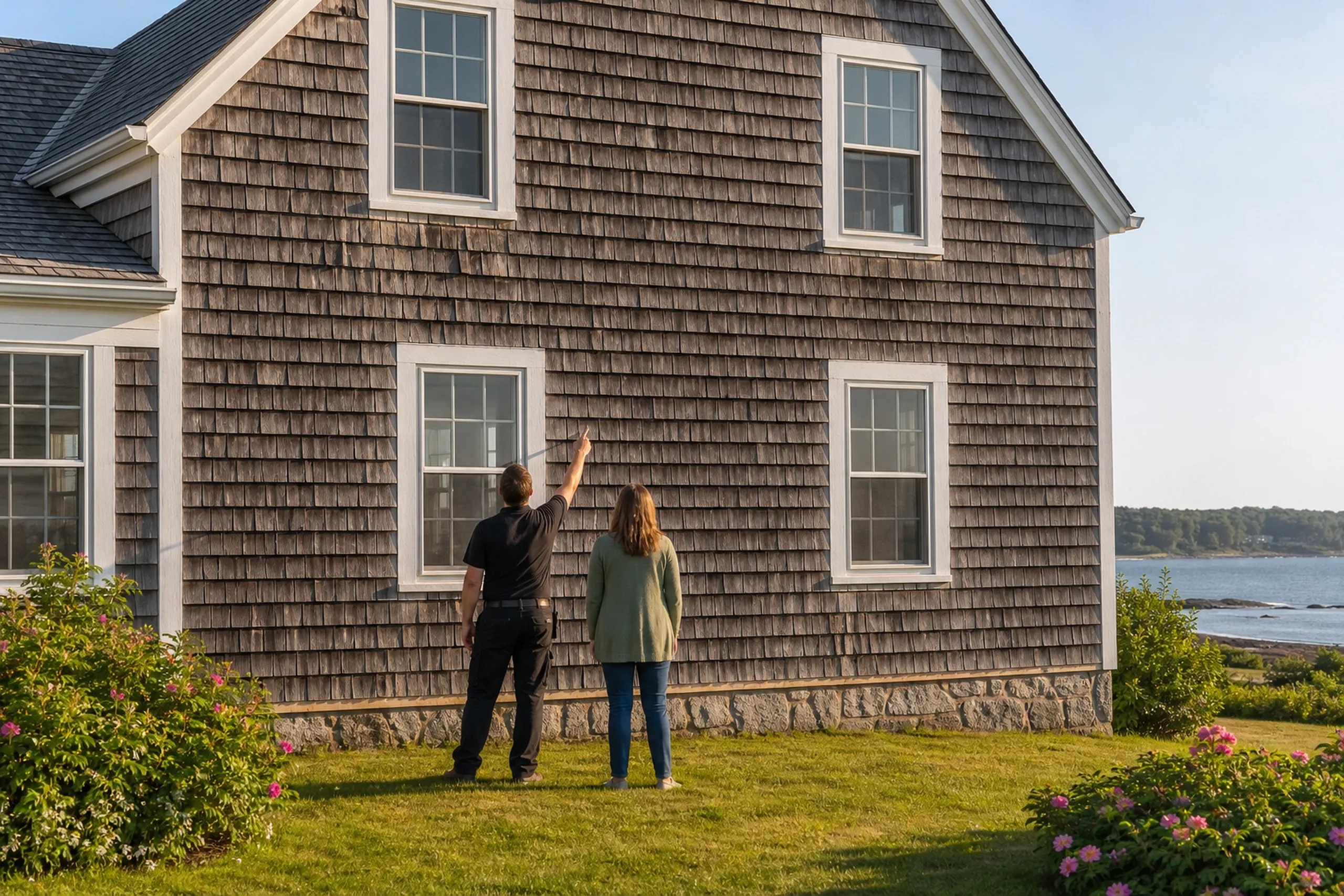
  1. Southern Maine cedar shingle first visit: Beside a southern Maine shingle-style cottage near the shore, two people, a siding installer and a homeowner, seen from behind, face a wall of old cedar shingles cupped and curling at the edges, split in places and streaked dark with moisture, summer sun.

    Step 1: We read the wall before anyone picks a shingle.

    Where you allow it, we lift a few courses at a sill, a corner and a window head, note any old paint or cement shingles, and check the distance to salt water that sets the nail.

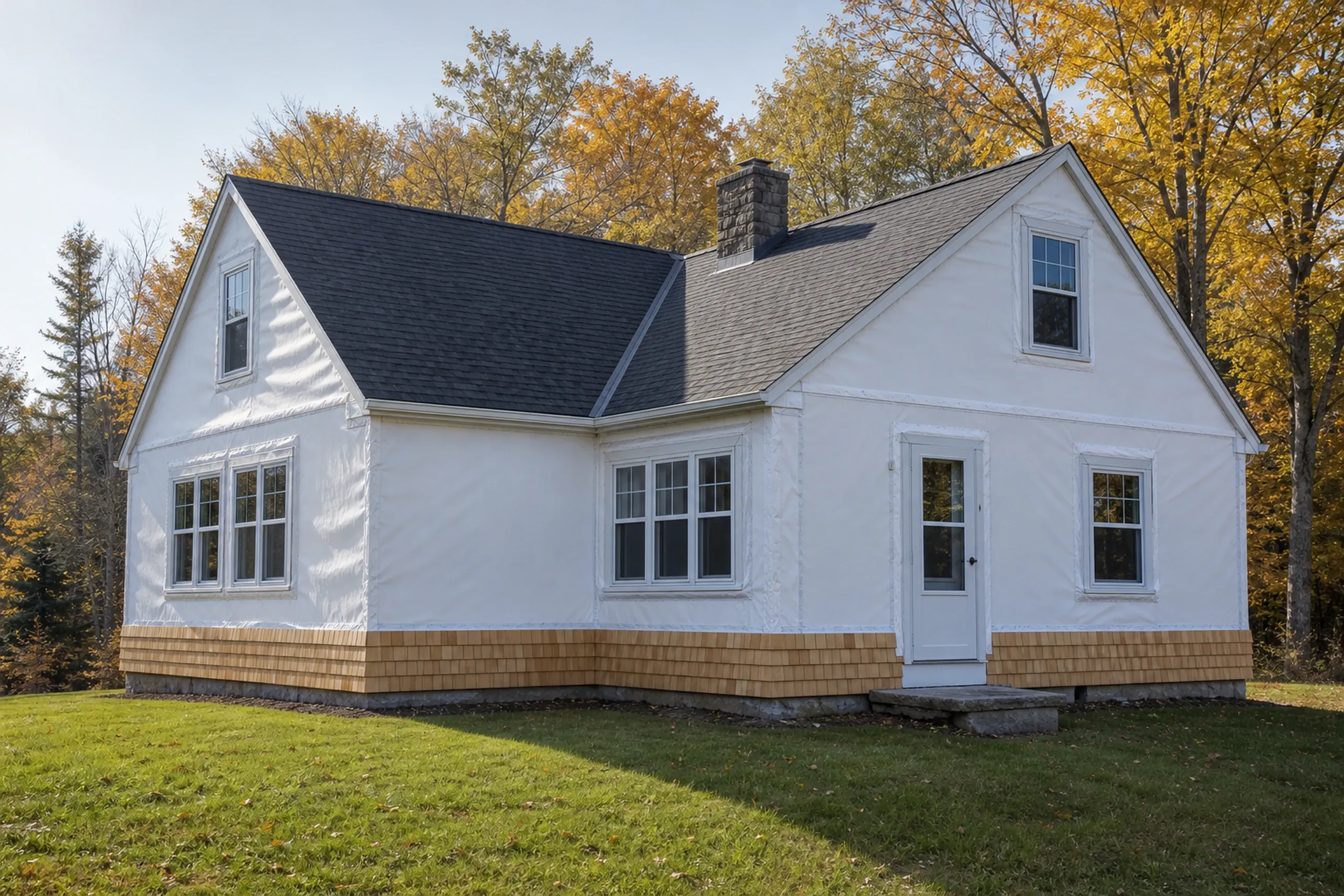
  2. Southern Maine cedar shingle first courses stage: Cedar shingle siding in-progress on a southern Maine shingle-style cottage at the first courses of shingles stage, a doubled starter course and two rows of honey-colored cedar shingles nailed along the base of the wall, plain white housewrap covering everything above, October light.

    Step 2: A written price, then a contract you sign.

    The scope names the species, grade, exposure, nails and finish, and Maine law requires a signed contract on any job over $3,000 with the first payment capped at one third.

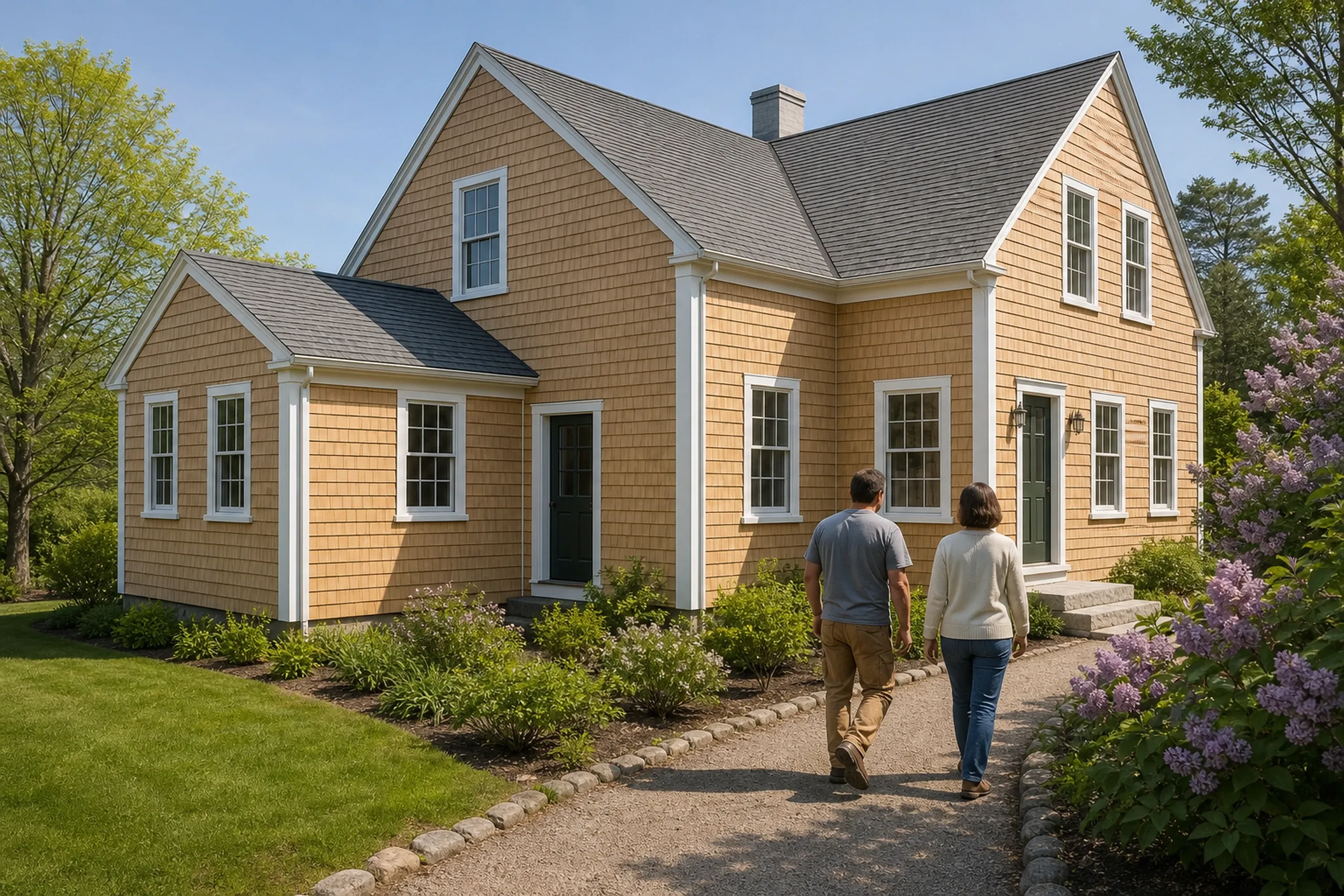
  3. Southern Maine cedar shingle final walkaround: Strolling a garden path beside a re-sided southern Maine shingle-style cottage, two people, a siding installer and a homeowner, seen from behind, look over fresh honey-tan cedar shingles with white window casings, woven outside corners and a granite step, late spring light.

    Step 3: One wall shingled before the next is opened.

    The house never stands stripped on every side at once, and the last step is a walk along the finished courses with you.

When Is Cedar Shingle Siding the Right Choice?

Cedar shingle siding is the right choice when the house was built to wear it: a shingle-style cottage, a cape or colonial that had cedar before vinyl covered it, or a street where the neighbors are shingled. On those houses a lap board, however good, looks borrowed.

It is the wrong choice on a ranch, split-level or raised ranch that never had shingles and is being re-sided on a tight budget. Put that money into sheathing and flashing under a good lap siding instead.

Left to us, a coastal cedar wall stays natural and weathers to silver-gray, and a bleaching oil hurries the color along, the Cedar Shake and Shingle Bureau says. When an owner wants a stained color, we order factory-finished shingles for the walls with short eaves or driving rain, where the Forest Products Laboratory says finishing before installation helps most.

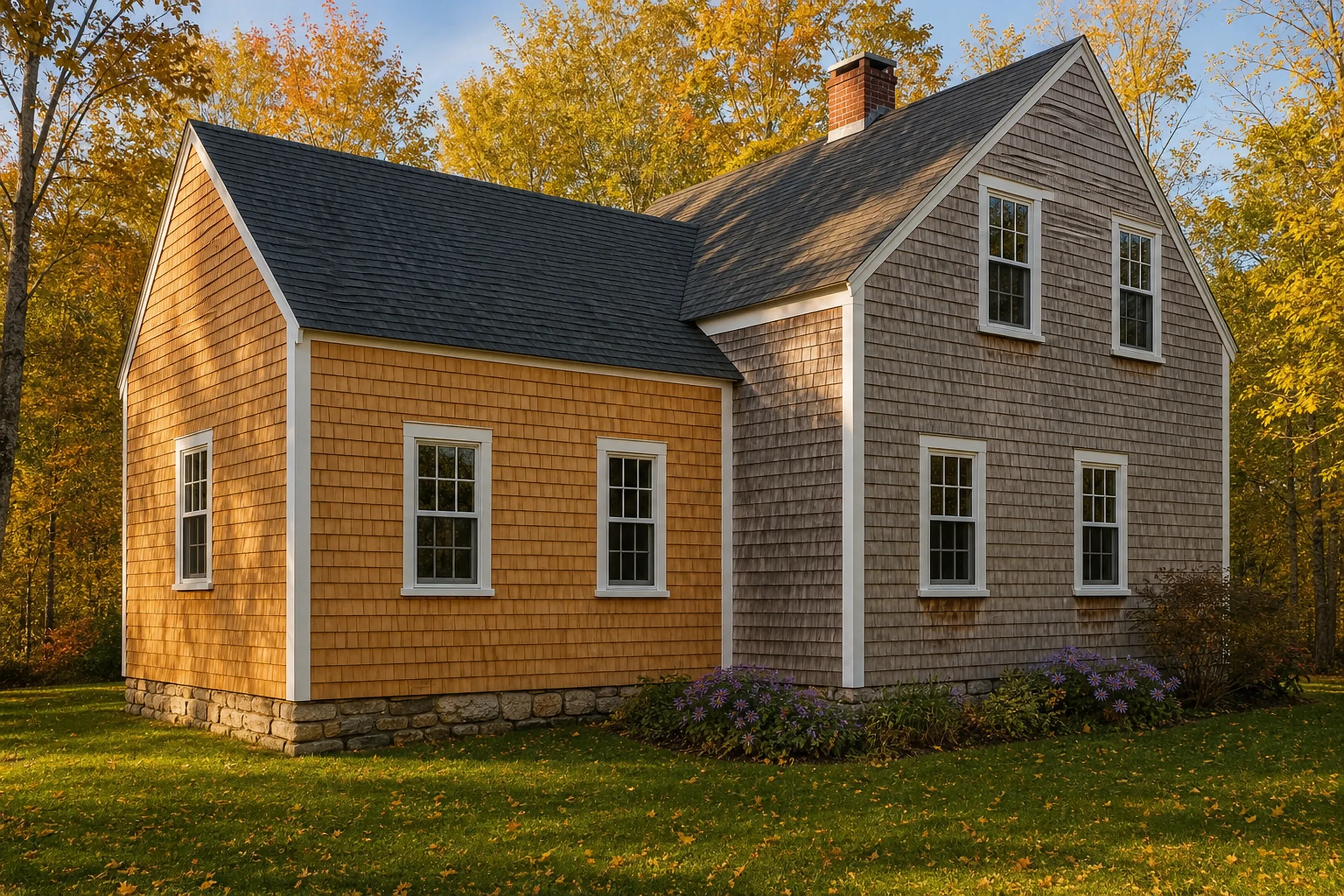
Cedar shingles on a southern Maine cape: a fresh honey-tan shingled ell meeting the silver-gray main wall at a white corner board, early fall.

Who Asks for Cedar Shingles, Where, and When?

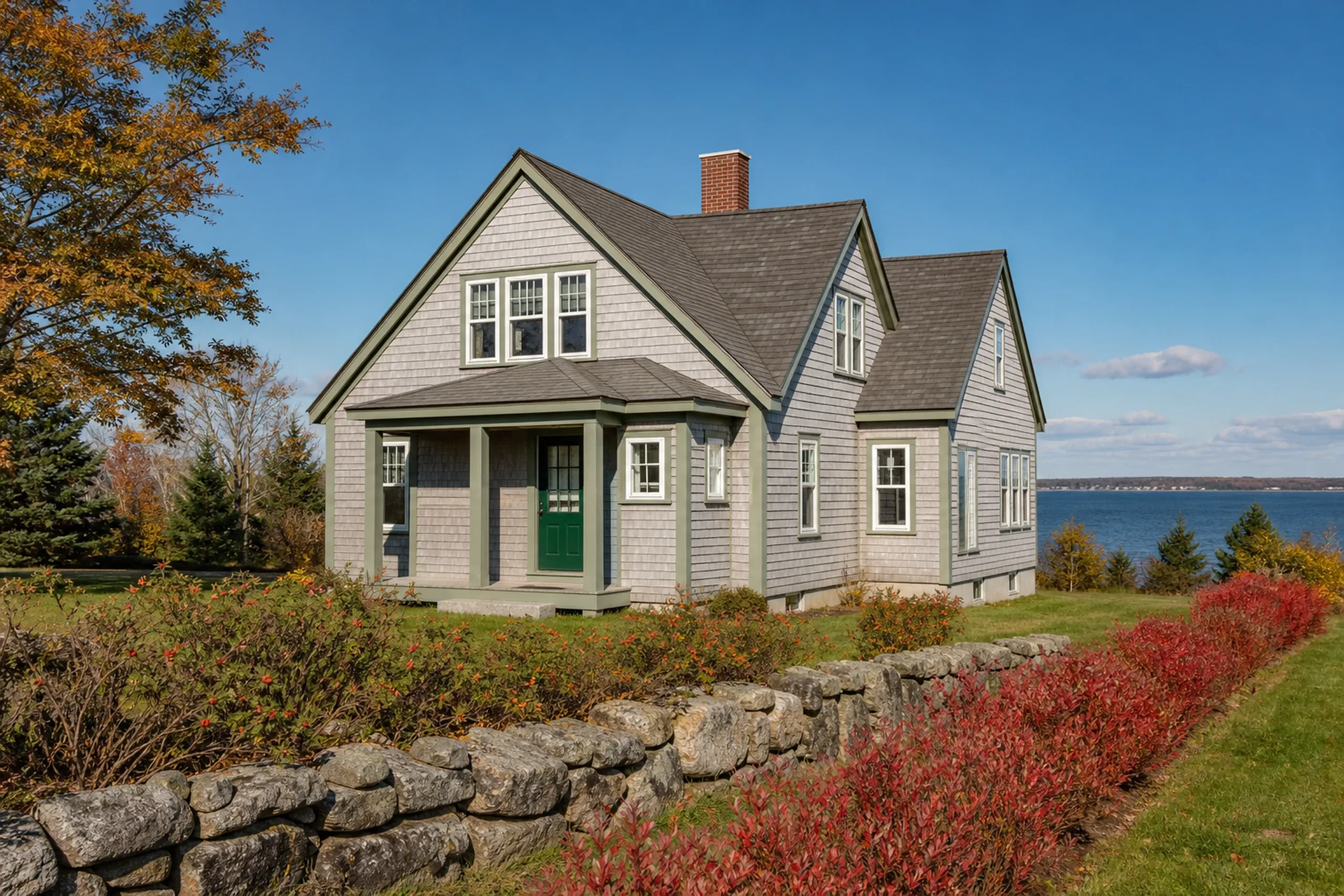
Southern Maine re-sided cedar cottage in autumn: A re-sided southern Maine shingle-style cottage in early autumn, natural cedar shingles weathered to soft silver-gray with sage-green trim and a deep green door, rugosa roses, a stone wall and red-leaved blueberry bushes under crisp light.

Who gets the most out of cedar shingle siding?

The owners who get the most out of cedar shingle siding live in a house that was shingled once and lost it to vinyl or aluminum, or in a cottage whose old courses have gone soft and split. Shingles that feel spongy or crumble under a thumb may be rotting and are due to come off.

Where on a house do cedar shingles belong?

Cedar shingles belong across the whole house when its style calls for them, and on gable ends and dormers when it does not. A shingled gable over a lap wall brings the look onto a colonial for a fraction of a full cedar job.

When should cedar shingles go on?

Cedar shingles should go on between spring and fall, when stain and primer can cure: the Forest Products Laboratory wants finishes applied above 40 to 50 degrees Fahrenheit and kept there for 24 hours. The wood should also be under 20 percent moisture before any finish touches it.

How Much Does Cedar Shingle Siding Cost?

Cedar shingle siding costs about $2,500 per square installed, a square being 100 square feet of wall. That figure is what a big pile of southern Maine quotes averages out to; your own price comes after we see the walls.

How Much Does Cedar Shingle Siding Cost?
House sizeCedar shingles, installed
Small20 to 25 squares$50,000 to $62,500
Medium25 to 32 squares$62,500 to $80,000
Large32+ squaresfrom $80,000

Regional averages across many quotes, never a bid: tear-off, housewrap, flashing, trim and haul-away are in, and rot behind the old siding can push a house past them.

What moves a cedar price most, after the shingle itself?

After the shingle itself, a cedar price moves most with what tear-off finds: wet sheathing, a soft sill, flashing that quit years ago. Most owners expect the bundles to set the total, yet stories, corners and openings, the grade, any rain-screen furring and the nail grade move it too.

Can new cedar shingles go over the old siding?

New cedar shingles can go over the old siding where nails bite solidly into it, one of two methods shingle makers list for an existing wall. It is the cheaper route over asbestos-cement shingles, or over lead-painted clapboards on a house built before 1978, where the EPA's lead renovation rule governs any paint we disturb; a soft or water-stained wall comes off first.

Is swapping a few shingles priced the same way?

Swapping a few shingles is not priced by the square; we look at the damage and quote that work from the visit. Our siding repair page explains when a patch is worth it and when a whole wall should be re-shingled instead.

How Do You Get a Price on Cedar Shingles?

You get a price on cedar shingles by sending a free estimate request: we come out, look under the old siding and write up the species, nails and scope. The work starts only after you have signed the contract.