Experienced Hardie Siding | Southern Maine Siding

Hardie siding is James Hardie's fiber cement lap board, a cellulose fiber-reinforced cement plank we install on southern Maine houses in place of failing wood, hardboard or vinyl. The plank is only as good as the wall behind it, so every one of our jobs starts with the wrap and the flashing.

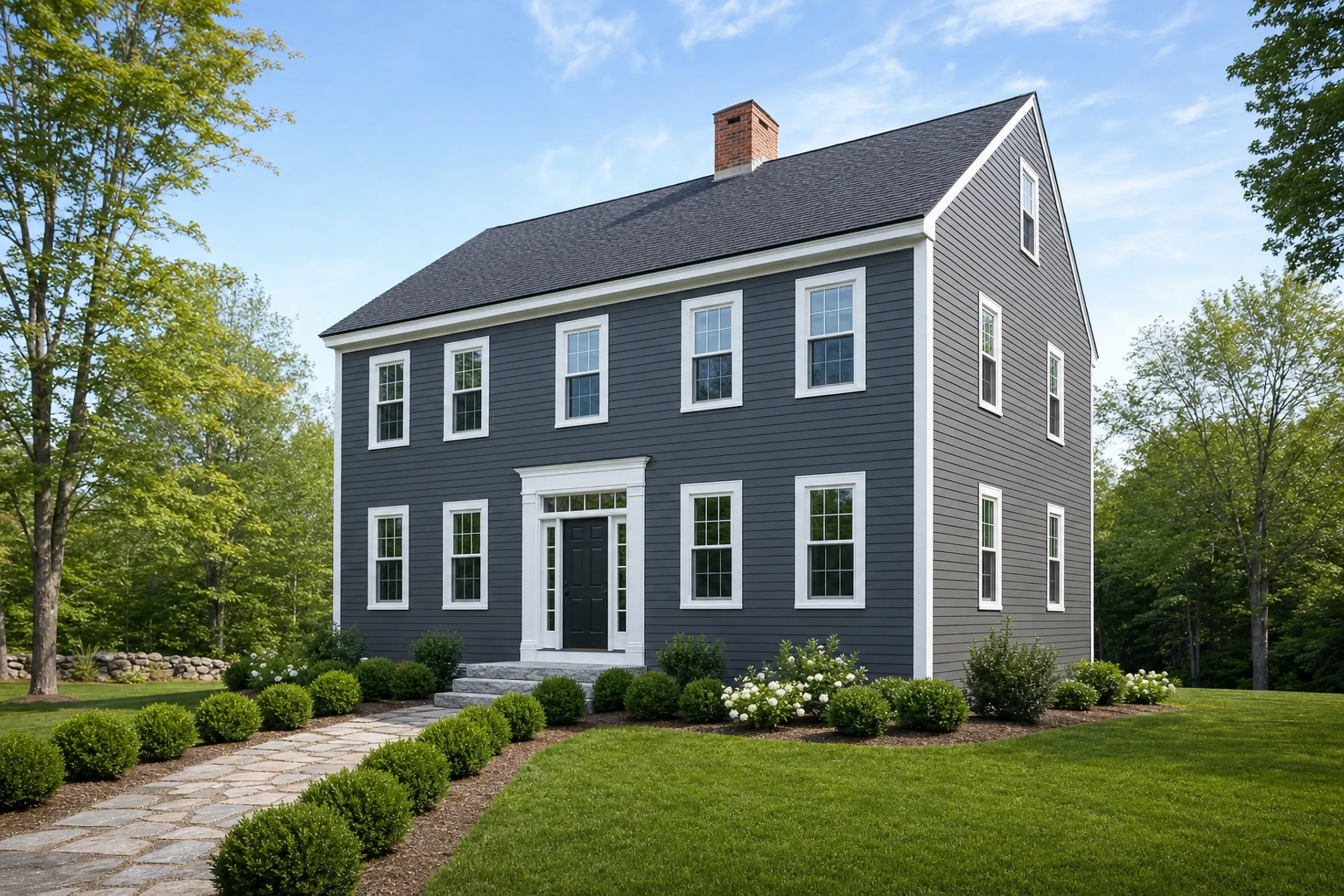
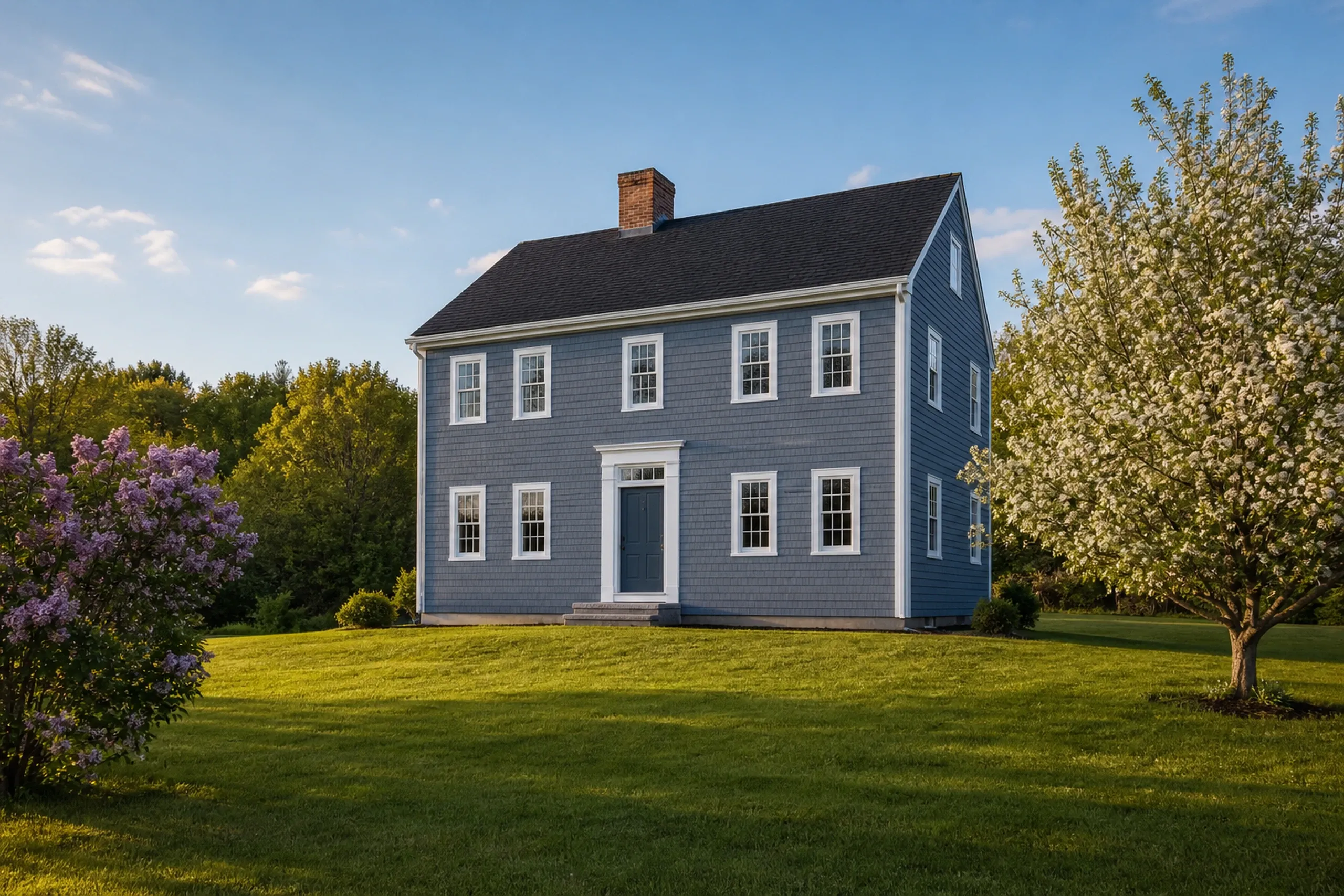
Hardie siding on a southern Maine colonial: finished fiber cement lap boards in a deep slate gray factory finish, bright white corner boards, broad casings around double-hung windows, a fieldstone walk and boxwood shrubs, early summer.
  • HZ5 boards for freezing weather
  • Cut outdoors, dust collected
  • Flashing behind butt joints

This page is about Hardie siding: James Hardie fiber cement lap boards, shingle panels and trim put on existing southern Maine houses once the old siding, any wet sheathing and failed flashing have been dealt with.

Fiber cement fits a homeowner who wants a rigid painted or factory-colored wall that James Hardie classifies as noncombustible. It is heavy and slow to cut, so we cut it outdoors with dust collection and flash every joint instead of trusting caulk.

The number to hold onto: James Hardie fiber cement averages $1,625 to $2,000 per square installed in southern Maine, a planning average drawn from many quotes, not a price for your house.

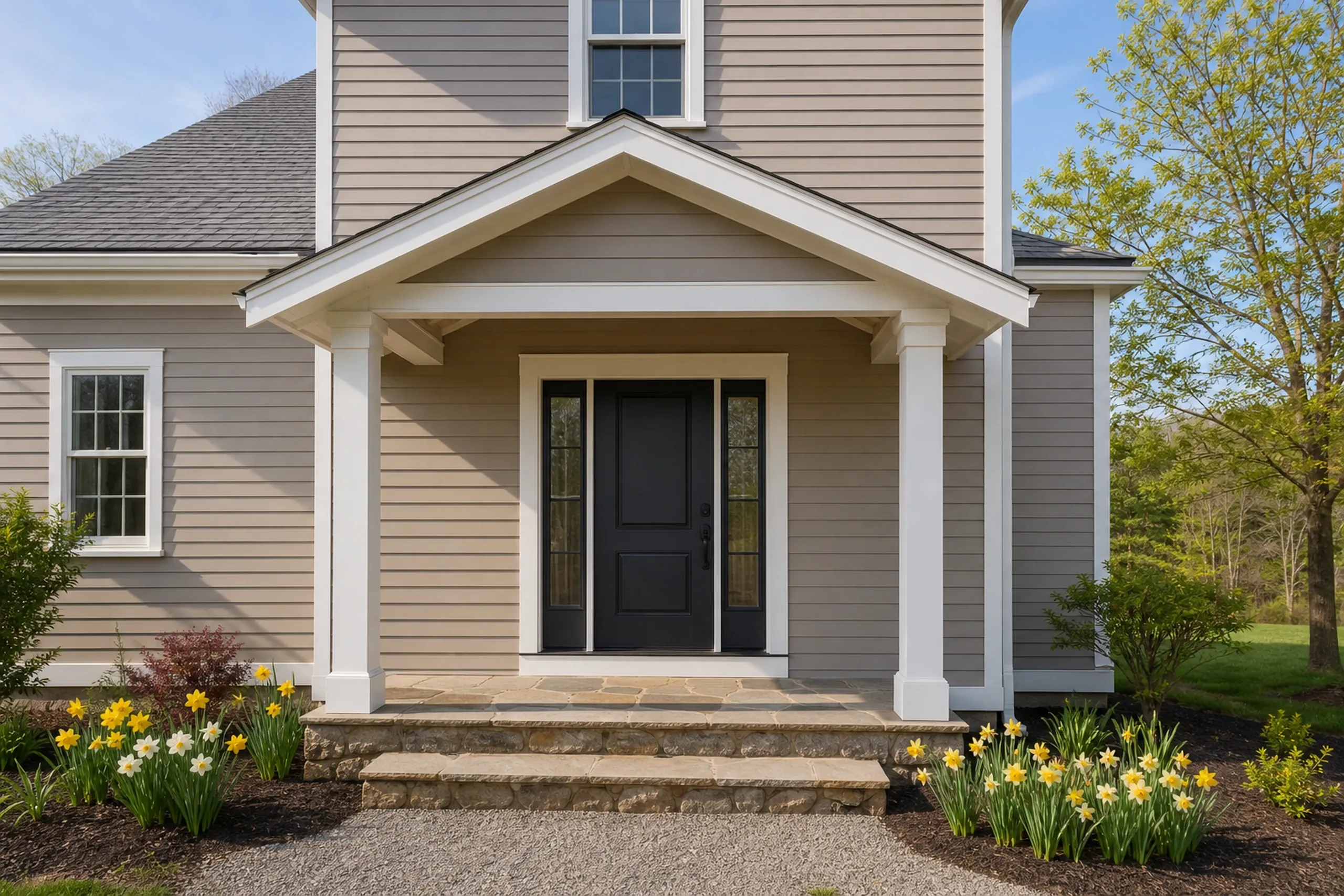
Southern Maine re-sided Hardie front entry: Front entry of a re-sided southern Maine farmhouse in late spring, shot vertically, a black door with two sidelights, a fieldstone step, warm taupe fiber cement lap siding and white trim around the door, daffodils in bloom beside the step.
  • Siding is all we do
  • Cut outdoors, dust collected
  • Old siding hauled off

Why Trust Us With Your Hardie Siding Project?

You can trust us with a Hardie siding project because we treat fiber cement as its own trade: heavier boards, slower cuts and butt joints backed by flashing rather than a bead of caulk. Siding is the only work we take on.

  • Each plank cut outdoors on a saw with dust collection, the method James Hardie and OSHA describe
  • Flashing behind every butt joint, plus kick-out flashing where a roof meets a wall
  • HZ5 boards, the line James Hardie lists for every Maine ZIP code

What Are the Tradeoffs of James Hardie Fiber Cement?

The tradeoffs of James Hardie fiber cement come down to a heavier, slower board in return for one the company calls noncombustible and engineers for wet, freezing climates.

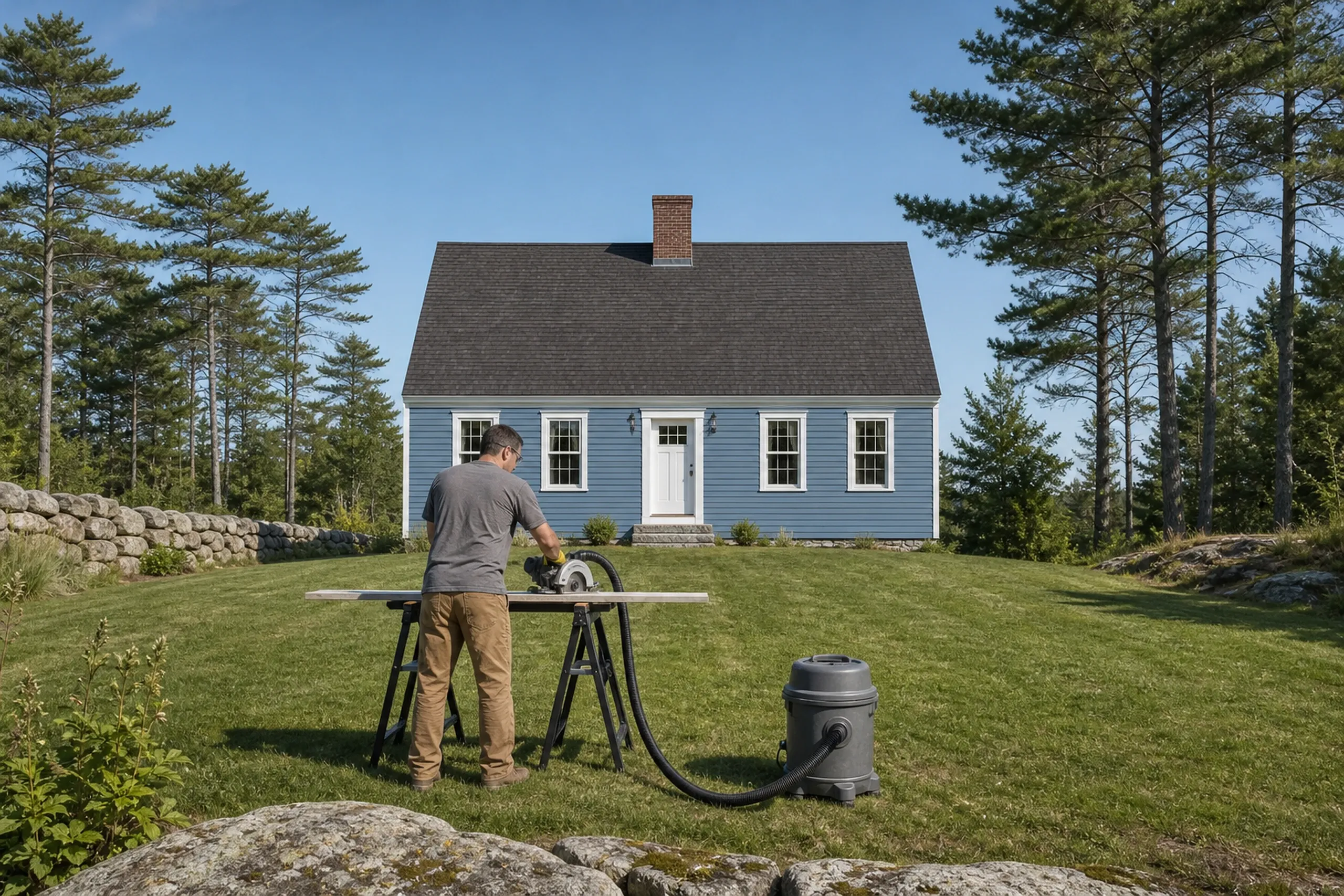
Cutting fiber cement siding outdoors: one installer seen from behind in safety glasses and gloves, cutting a fiber cement plank on a portable saw stand with a circular saw whose dust shroud runs by hose to a vacuum, on a lawn beside a southern Maine cape, summer.

Weight, Cutting and Silica Dust on a Hardie Job

James Hardie's specification sheet puts HardiePlank at 2.31 pounds per square foot, in 5/16 inch boards 12 feet long. The company says to carry each plank on edge, one person holding the middle with arms spread apart, and to store the boards dry on a pallet.

Cutting is the bigger tradeoff. OSHA states that cutting fiber cement with a handheld circular saw can make respirable crystalline silica dust, which can irreversibly damage the lungs when breathed over time.

James Hardie's silica safety page points to OSHA's Table 1 control: a saw with a commercially available dust collection system, used outdoors only. We cut that way, never inside a garage or the house, and clean up with a HEPA vacuum instead of a blower, as OSHA advises.
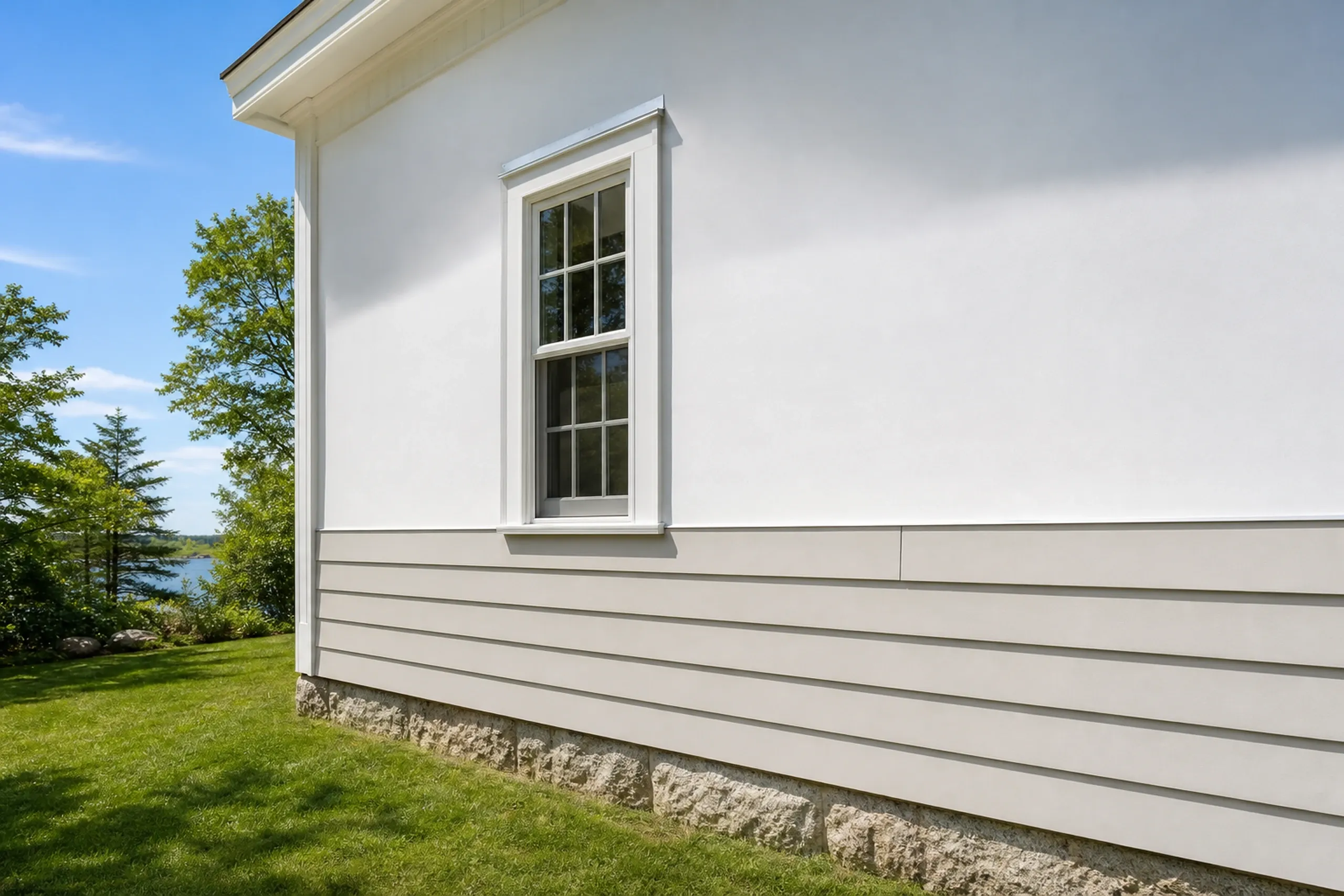
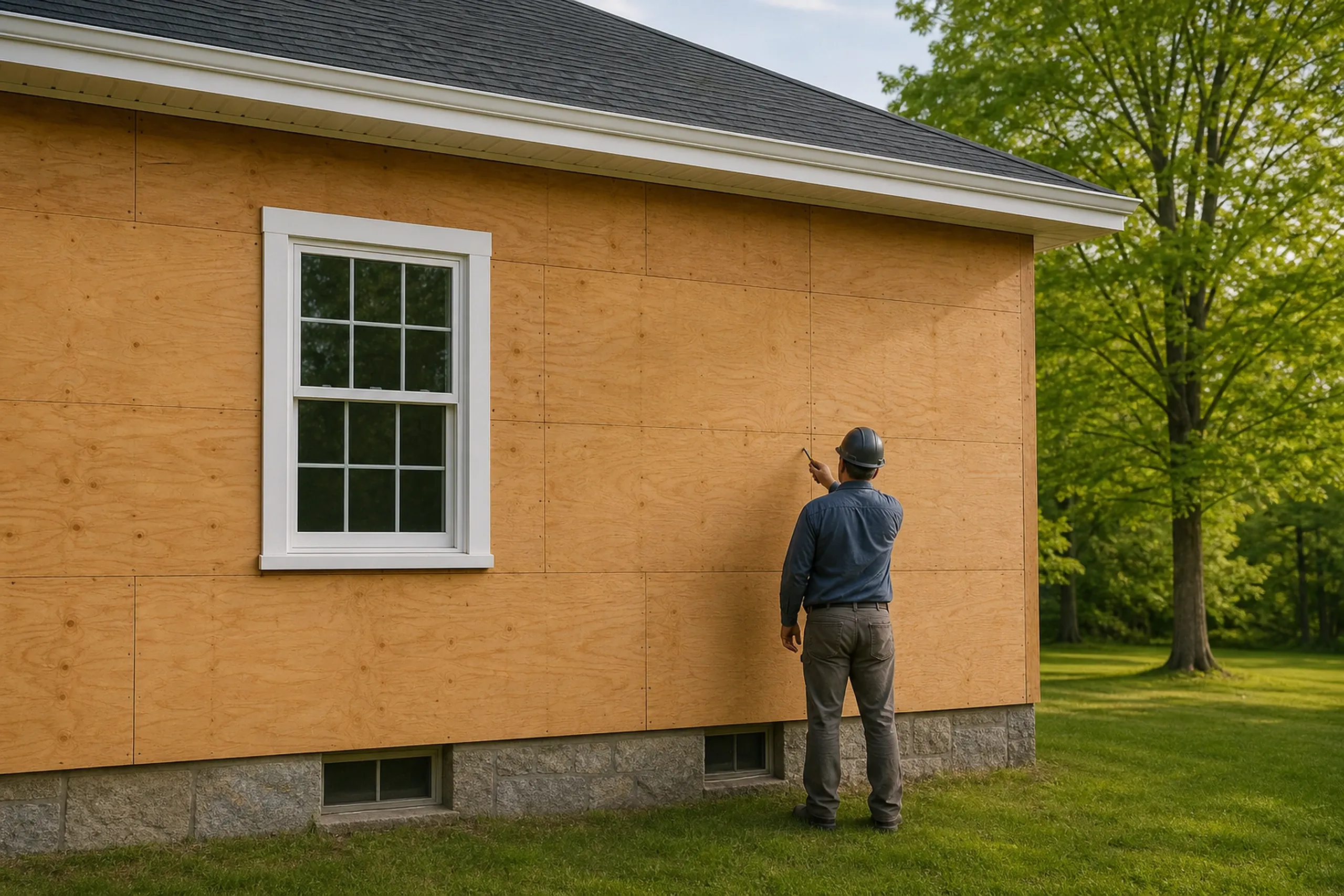
Fiber cement lap boards going on over housewrap: primed planks rising up the sidewall of a southern Maine cape over plain unmarked white housewrap, a strip of flashing visible behind one butt joint and a flashed window head above, late spring.

How Hardie Boards Go On a Southern Maine Wall

Every Maine ZIP code on James Hardie's state and ZIP list falls in its HZ5 zone, which the Hardie zone system describes as made for freezing climates, with a drip edge for water management. We confirm your ZIP on Hardie's lookup before ordering.

James Hardie names code-compliant water-resistive barriers as part of the wall and says joint flashing must be durable, waterproof and safe with cement products. Its Quick Start guide sets 6 inches from siding to the ground, 2 inches to slabs, steps and decks, and 2 inches between a roof and the wall.

We blind nail where Hardie prefers it, with the corrosion-resistant galvanized or stainless fasteners it requires, and keep any face-nail head snug, never countersunk. Hardie also says not to caulk joint flashing or the gap above horizontal Z-flashing, so those spots stay free to drain.

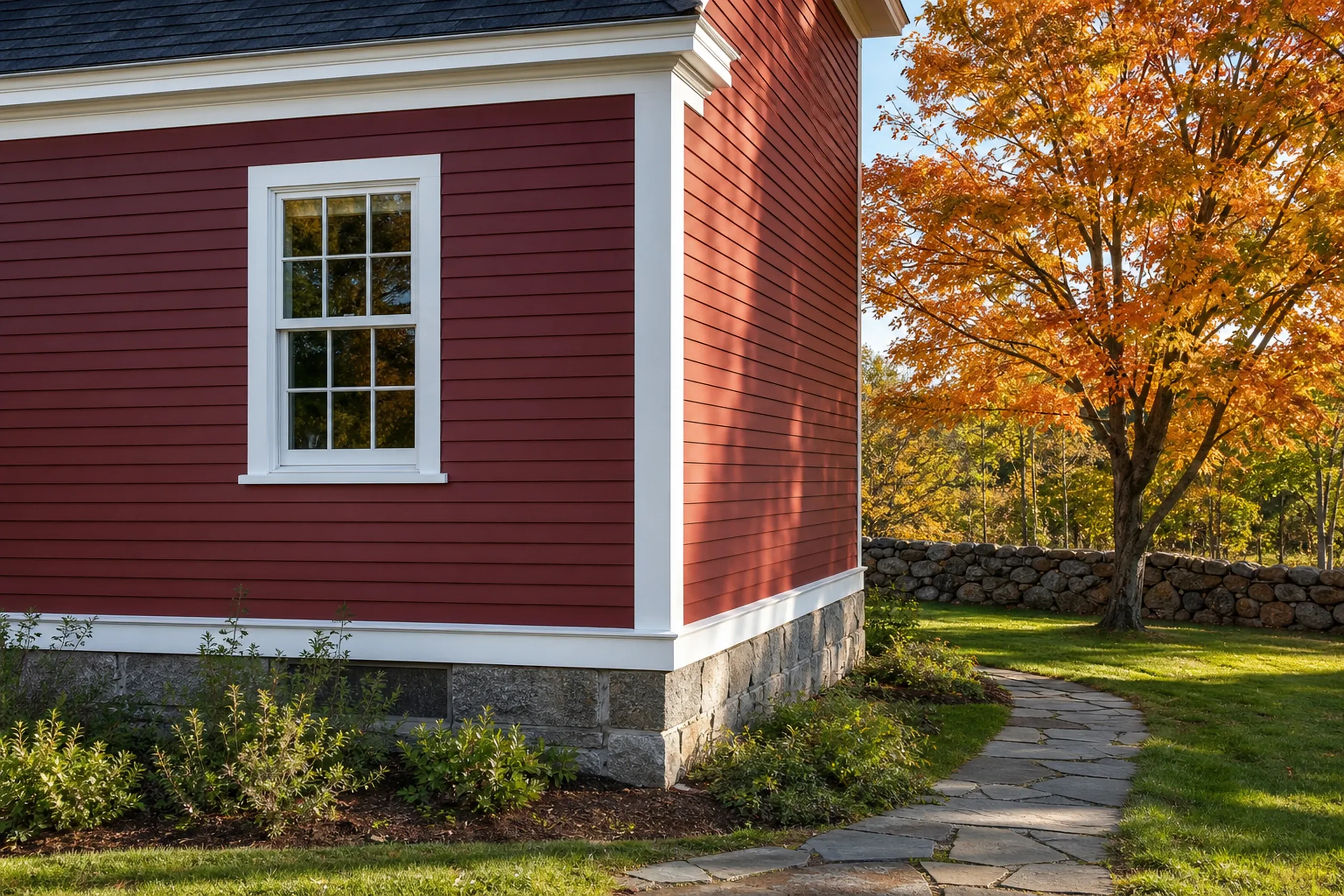
Hardie lap boards at an outside corner of a southern Maine village colonial: fiber cement siding painted deep cranberry red meeting a wide white corner board, crisp trim lines and a white window casing, early fall.

Hardie Against LP, Vinyl and Cedar Shingles

James Hardie fiber cement averages $1,625 to $2,000 per square here, against $1,000 to $1,250 for vinyl. That premium buys a rigid plank with crisp shadow lines, where vinyl siding replacement gives you a panel nailed loose to slide as it warms.

LP siding averages $1,500 to $1,875 per square and cuts with ordinary woodworking tools, LP says, but LP rates it Class C for flame spread. James Hardie states its board will not burn, though it notes the paint on the face can still char.

Against cedar shingle siding at about $2,500 a square, Hardie gives up the hand-laid wall that weathers silver. A house built in cedar shingles should go back in cedar.

What Hardie Siding Services Do We Offer?

Every Hardie job takes in the plank, the trim and everything behind them.

  • HardiePlank lap, Hardie shingle siding and trim, one side or every side
  • Tear-off, a sheathing check and wet or rotted boards replaced
  • Housewrap, joint and kick-out flashing, plus touch-up or a field paint plan

James Hardie sells HardiePlank primed for field paint or factory finished with ColorPlus Technology, a finish it states is baked on, with colors that vary by region. Weigh fiber cement against the other four on our siding services page.

What Are the Steps in a Hardie Siding Project?

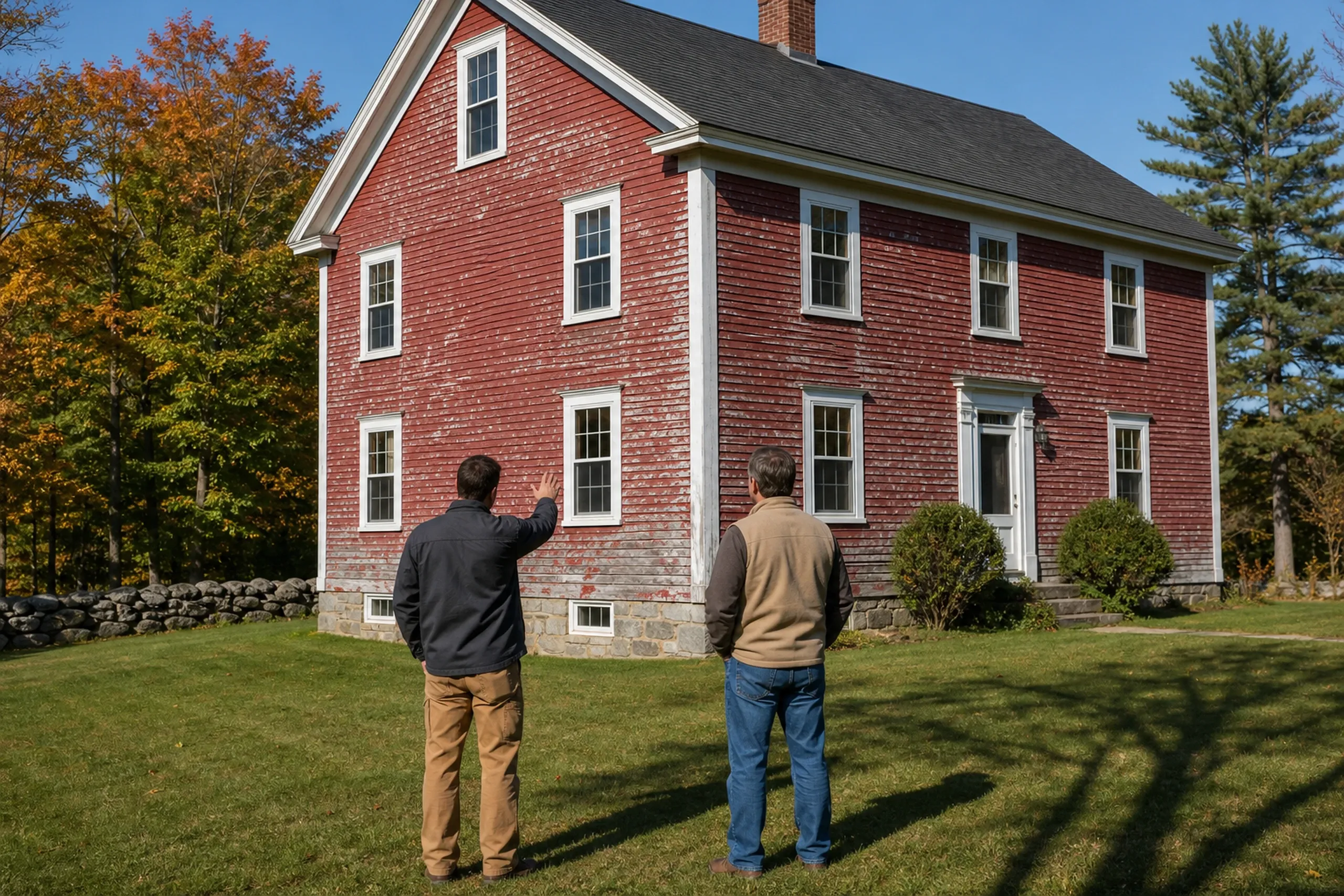
  1. Southern Maine Hardie siding first visit: Facing a southern Maine farmhouse in early autumn, two people, a siding installer and a homeowner, seen from behind, look at old painted boards chalking white at the surface, paint chipping off in flakes and bare gray patches along the lowest courses.

    Step 1: The wall gets checked before it gets priced.

    Before any number is written, we check behind the old siding at the spots water attacks first, and if the house predates 1978 we note old paint for the EPA's lead-safe renovation rule.

  2. Southern Maine Hardie lap boards first courses stage: Fiber cement siding in-progress on a southern Maine farmhouse at the first courses of fiber cement lap boards stage, smooth primed planks fastened in straight rows along the bottom of the wall, plain white housewrap covering everything above, summer afternoon.

    Step 2: Price and contract, both in writing.

    The scope names the plank, the finish and every flashing detail, and under 10 MRSA ยง1487 any job over $3,000 needs a signed contract, with the down payment held to one third.

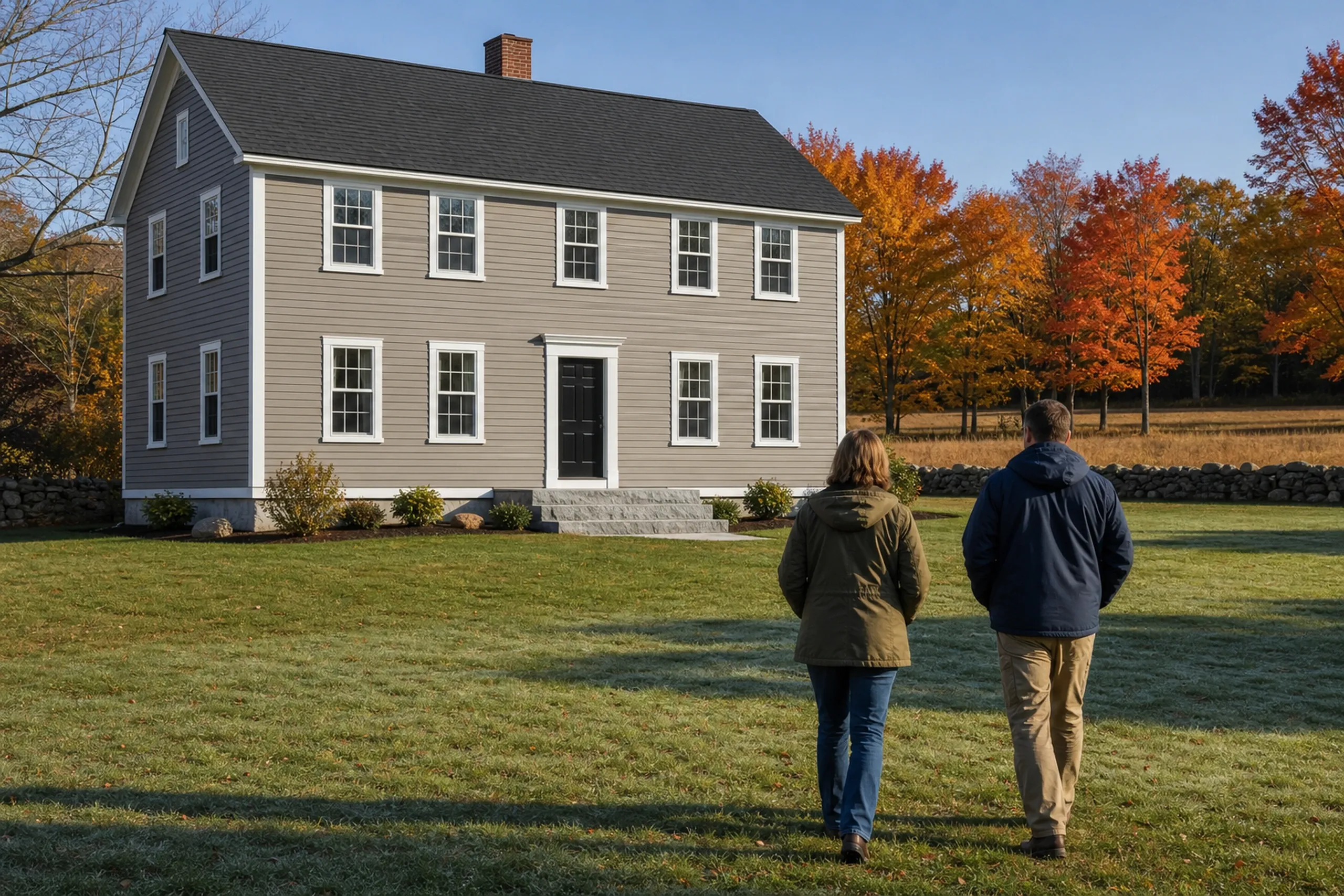
  3. Southern Maine Hardie siding final walkaround: Walking the lawn beside a re-sided southern Maine farmhouse, two people, a siding installer and a homeowner, seen from behind, admire warm taupe fiber cement lap siding with sharp shadow lines, white corner boards, white window casings and a black front door, October morning.

    Step 3: Elevation by elevation, then we inspect it together.

    One elevation is closed in fiber cement before the next one comes open, and the job ends with a walk around every wall together, checking corners, joints and touch-up.

When Does Hardie Siding Earn Its Higher Price?

Hardie siding earns its higher price on walls that take the weather hard: a tall exposed gable, a two-story side facing open fields and the prevailing wind, or a house set close to its neighbor. James Hardie's specification sheet lists freeze-thaw resistance tested to ASTM C1185 as a pass, a test every Maine winter repeats.

It is the wrong buy on a sheltered one-story ranch where vinyl does the same job for less, and on a shingled cottage that belongs in cedar. Skip it as well if nobody will touch up the paint, since James Hardie's care tips call for repainting damaged paint right away and a gentle wash every 6 to 12 months, with no acid or high-pressure washing.

James Hardie's Express Limited Product Warranty, effective February 2024, covers its HZ5 siding and trim for thirty (30) years from purchase, reaches the first buyer, the first owner of the house and the first transferee, and pays nothing toward labor. Coverage rests on Hardie's terms, including written notice within 90 days of finding a defect, so read the warranty itself before you rely on it.

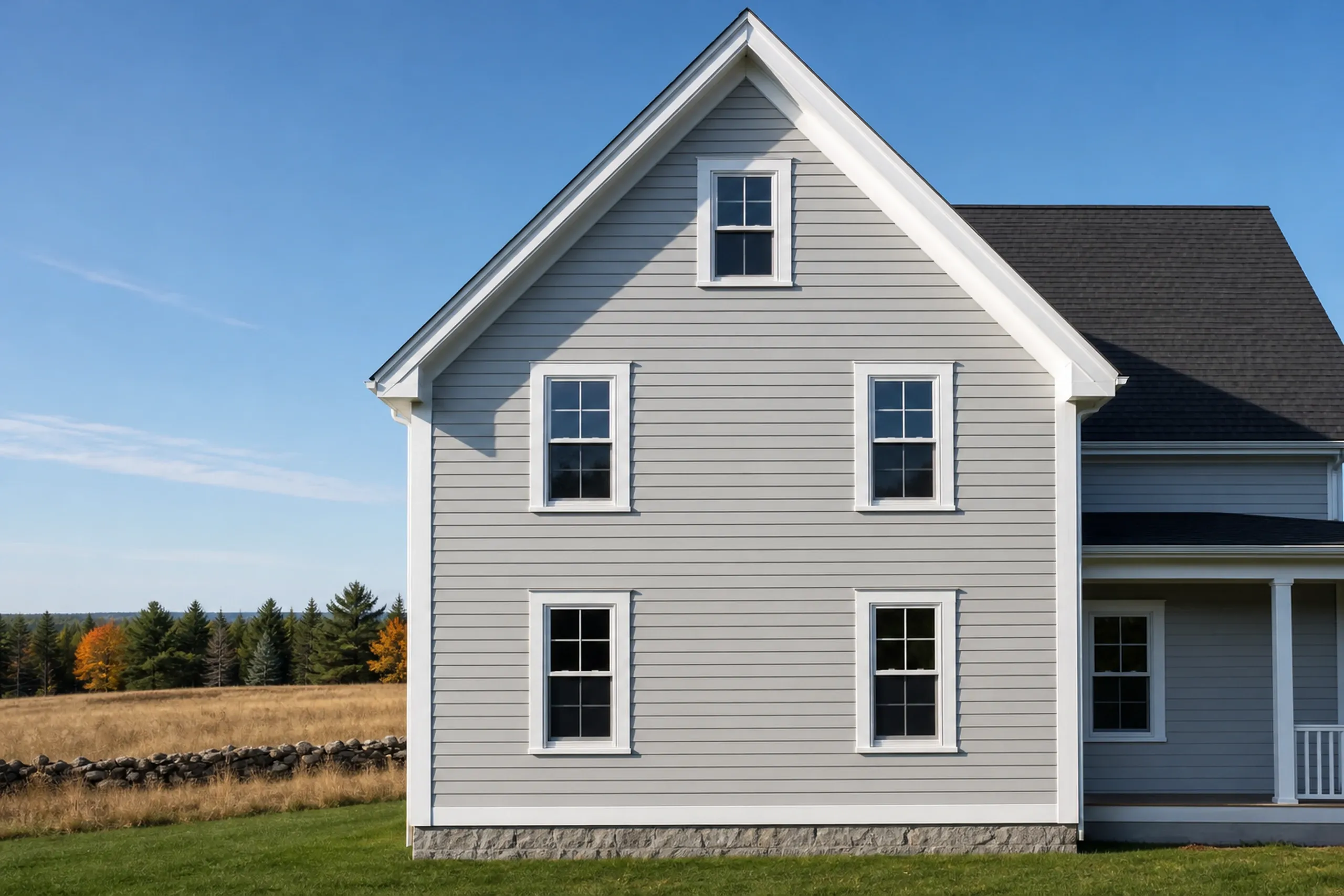
Hardie fiber cement lap siding on the tall gable end of a two-story southern Maine farmhouse: pale gray painted boards with sharp shadow lines and white rake trim, an open hayfield beside the house, early fall.

Who Chooses Fiber Cement, Where on the House, and When?

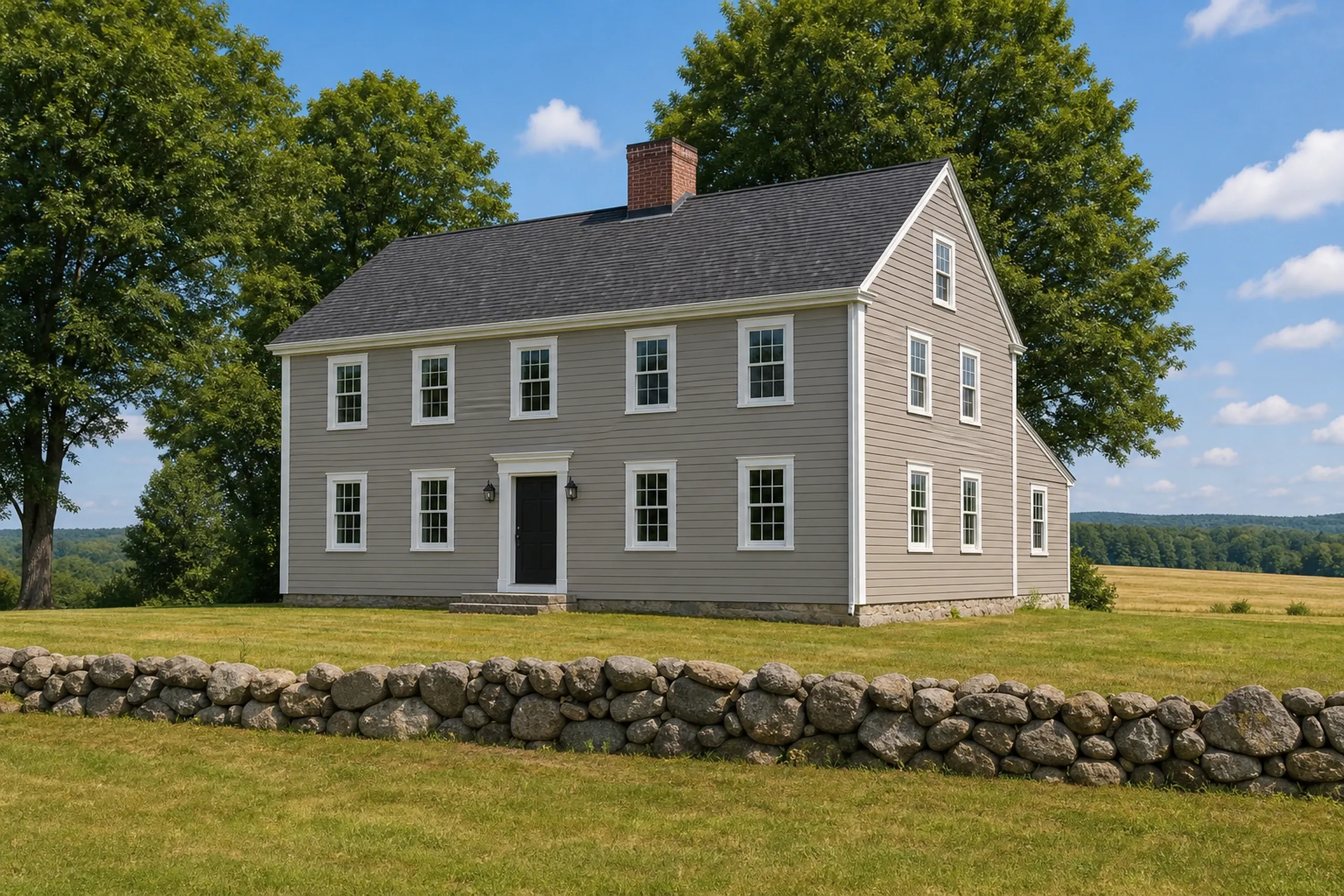
Southern Maine re-sided Hardie house in summer: A re-sided southern Maine farmhouse, warm taupe fiber cement lap siding with crisp white corner boards and window casings, a fieldstone wall, a mown lawn running out to a hayfield and tall maples, bright summer afternoon.

Who tends to choose Hardie siding?

The owners who tend to choose Hardie siding plan to stay for years and want a crisp painted or factory-colored lap wall on a colonial, a cape or a village house. Owners whose hardboard or early vinyl failed ahead of schedule are a common match.

Where on a house can Hardie boards go?

Hardie boards can cover the whole house or a single elevation, such as the weather side that failed first. James Hardie also makes shingle siding for gables and trim for corners and casings.

When is the right time to install Hardie siding?

The right time to install Hardie siding is spring through fall, when planks can stay dry until they go up and every cut can happen outdoors. Primed planks also need dry days for their field paint, so the paint gets scheduled with the install.

How Much Does Hardie Siding Cost Per Square?

Hardie siding costs about $1,625 to $2,000 per square installed in southern Maine, with a square equal to 100 square feet of wall. Read that band as the average of many local quotes; your own walls set the real number.

How Much Does Hardie Siding Cost Per Square?
House sizeJames Hardie, installed
Small20 to 25 squares$32,500 to $50,000
Medium25 to 32 squares$40,500 to $64,000
Large32+ squares$52,000 and up

Per-square James Hardie averages from many southern Maine quotes, not a bid: removal, new wrap, flashing, trim and disposal built in, and rot behind the wall lifts them. James Hardie and HardiePlank are registered trademarks of James Hardie Technology Limited. We are an independent installer and are not affiliated with James Hardie.

What pushes a Hardie price up after the plank itself?

After the plank, a Hardie price climbs with whatever the old siding was hiding: wet sheathing, soft sills or window flashing that failed. Height comes next, then staging on a steep side and dense trim at the corners and openings.

When does siding over the old layer save money?

Siding over the old layer saves the tear-off and disposal, and it is the usual answer for a flat, dry wall of asbestos-cement shingles or lead-painted clapboards. With fiber cement we confirm James Hardie's instructions allow that base first, and a wet or wavy wall gets stripped either way.

Why is a Hardie repair priced only after a visit?

A Hardie repair is priced after a visit because the cost turns on the count of cracked planks, their height on the wall and any water that got in behind them. James Hardie says touch-up pens hide only nail heads and nicks smaller than a dime; once damage runs across a whole elevation, re-siding it is the better spend.

What Happens When You Call Us About Hardie Siding?

When you call us about Hardie siding, we book a visit, look at what the old siding is hiding with your permission and follow up with the price in writing. The deposit waits until you have signed the contract.